Cracking the AI Code: Boosting Your Shopify Store's Visibility in the Age of Conversational AI
Hey everyone! It’s a wild time to be running an online store, isn't it? The world of search and discovery is constantly evolving, and AI is definitely shaking things up. I recently stumbled upon a really interesting discussion in a merchant community that got me thinking, and I wanted to share some insights with you all. The original poster kicked things off by asking about using ads in ChatGPT and enhancing a store's 'GEO' – essentially, SEO but for AI search – to get AI models to recommend their products.
It's a hot topic, and the community had some fantastic points. Let's dive into what we learned.
ChatGPT Ads: Too Early to Call?
When it comes to direct advertising within platforms like ChatGPT, the general consensus is that it's still very early days. One respondent mentioned they'd been testing new ChatGPT ads for Shopify clients but found them to be 'a bit hit-or-miss,' feeling more like a 'brand play than a direct ROAS channel.' Another community member shared that they tried ChatGPT ads for a couple of weeks but 'it didn’t really make a difference' for their store.
An expert weighing in on the discussion advised that anyone claiming definitive performance data right now is likely 'selling something.' They suggested it's 'worth watching, not worth budget yet.' So, while the idea is intriguing, it seems most merchants and experts are advising caution and a 'wait and see' approach before allocating significant ad spend here.
Decoding 'GEO': Optimizing for AI Recommendations
This is where the conversation really got interesting, and where the actionable insights for Shopify merchants truly shine. While one community member initially argued that 'enhanced their Store's GEO' isn't really possible beyond traditional SEO, many others strongly disagreed, offering concrete strategies.
What AI Models Really Look For
One astute respondent suggested a brilliant experiment: 'Ask ChatGPT to recommend a product in your niche, then ask why it chose that product, then ask why it recommended that over your product.' They found that AI models prefer:
- Structured content on the product page: Clear, organized information.
- Knowing exactly who the product is for: Specific target audience details.
- How it compares to other products: 'Good, better, best' scenarios.
- Hard number descriptors over marketing copy: Think 'holds 120lbs' instead of 'extra strong.'
This same person noted a 'measurable uptick in ChatGPT traffic and sales' after making these types of updates. It seems Shopify's built-in Agentic features are a start, but they don't replace your own optimized content.
Making Your Store AI-Readable and Credible
Several experts highlighted crucial technical and content strategies:
- Ensure AI Crawlability: A major point raised was that many AI crawlers 'do NOT run JavaScript.' To test this, open your product page, hit 'view-source' (not 'inspect'), and search for key product details like name, price, and unique features. If these facts aren't in the raw HTML, AI assistants can't learn them. Themes that render content client-side are essentially invisible.
- Publish Structured Authority Content: Creating blog posts that establish your brand as an authority in your niche helps AI models see you as a credible source. Think 'best X' or 'how-to' guides.
- Get Mentioned in Third-Party Sources: AI models don't just look at your site. They lean on third-party sources like 'best X' roundups, review sites, and community forums (Reddit, Quora). Consistent mentions across independent places signal consensus and credibility. This isn't about a new 'GEO tool' but about good old-fashioned PR and review management.
- Monitor Your AI Presence: One expert suggested tracking 'when AI models mention your brand and what prompts competitors are winning.' This helps you understand where you stand and what gaps to fill.
The sentiment is clear: while direct AI ads are in their infancy, optimizing your store for AI understanding and credibility is a 'lottery ticket that costs almost nothing if you do it yourself,' and 'early movers in boring categories are winning recommendations already.'
EShopSet Team Comment
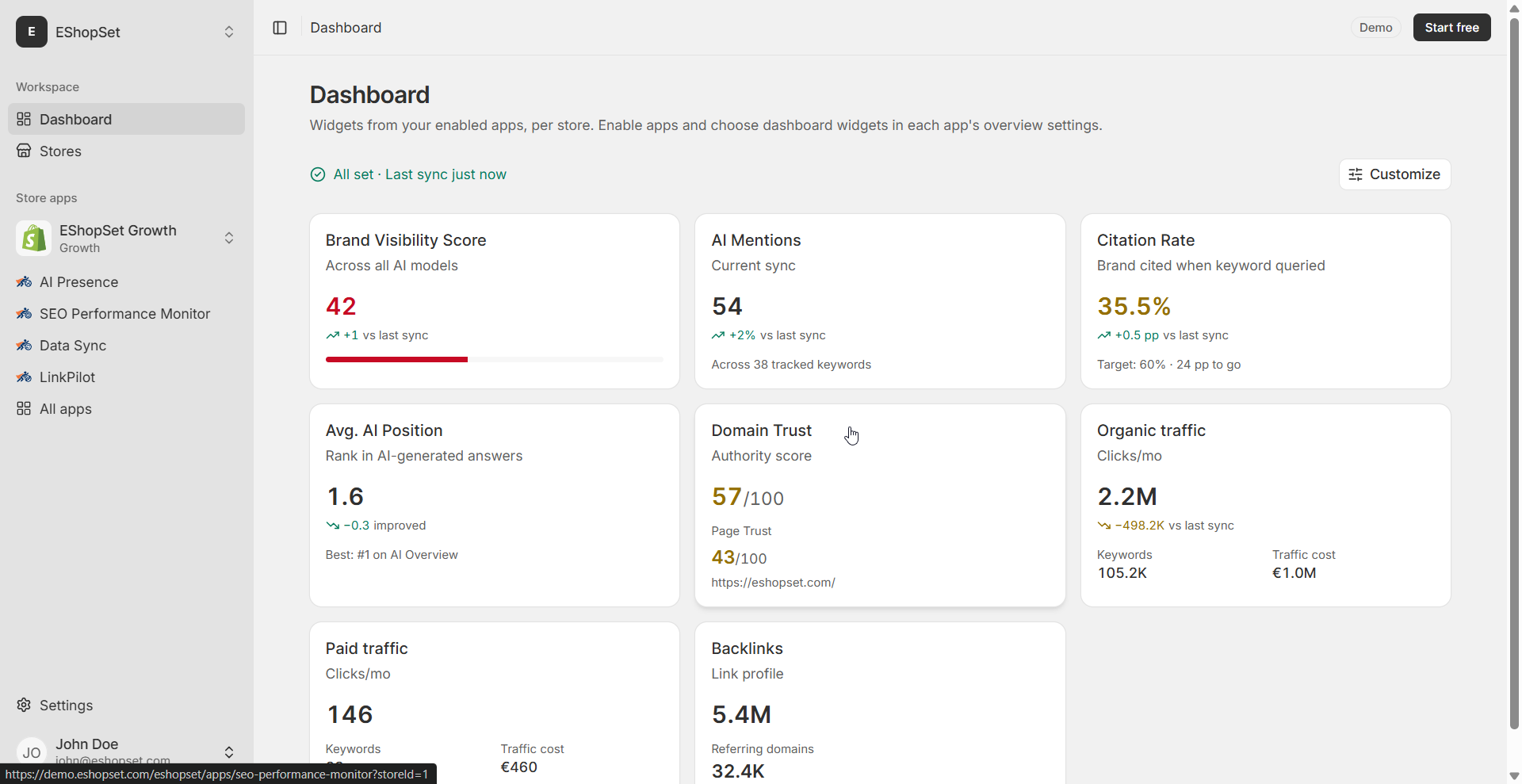
The EShopSet team strongly agrees with the community's insights on optimizing for AI visibility. While direct ChatGPT ads are still unproven, focusing on making your store and products 'AI-readable' is a critical, low-cost strategy with significant potential. Our SEO Performance Monitor can help you track overall visibility and identify content gaps, while AI Presence is specifically designed to help you monitor brand mentions and optimize your content strategy for AI discovery. And for structured product data, Sheet2Cart makes it easy to ensure your product pages have the precise, factual information AI models crave. We see this as a fundamental shift in SEO that every merchant should be addressing.
The Path Forward for Shopify Merchants
So, what does this mean for you, a Shopify merchant or store operator?
- Focus on Foundational SEO: AI models still rely on crawlable, well-structured content. Ensure your product pages and category pages are optimized, with clear, descriptive content in the raw HTML.
- Enhance Product Descriptions: Go beyond marketing fluff. Provide hard facts, specific use cases, and clear comparisons. Help AI understand your product's unique value proposition.
- Build Authority Through Content: Use your blog to create valuable, informative content that positions your brand as an expert. This is a classic SEO play that now has added benefits for AI discovery.
- Cultivate Third-Party Mentions: Encourage reviews, seek mentions in industry roundups, and engage in relevant online communities. The more credible, independent sources mention your brand consistently, the more likely AI models are to recommend you.
- Monitor and Adapt: Keep an eye on how AI models are evolving and how your store is being mentioned (or not mentioned). This isn't a one-time setup; it's an ongoing process.
This discussion really highlights that while the tools and platforms change, the core principles of making your store discoverable and trustworthy remain. For those working with or within a Shopify agency partner program, these are excellent insights to share with clients looking to get ahead of the curve. By focusing on solid content, technical SEO, and building brand authority, you're not just optimizing for today's search engines, but for tomorrow's AI-driven recommendations too. It's a smart investment in your store's future.