Unmasking Malicious SEO Redirects: Protecting Your Shopify Store's Integrity
Ever stumbled upon something online that just felt... off? Like a highly authoritative website suddenly pointing you to something completely unrelated, or worse, suspicious? We've seen a lot of chatter in the ecommerce community about these kinds of bizarre digital detours, and it's a topic that hits close to home for any Shopify merchant serious about their online presence.
Recently, a community member brought up a particularly perplexing scenario: a 404 page on a university website, ranking high for a specific keyword, then mysteriously redirecting to an online gambling site. The original poster was understandably curious, asking, "How do they pull this off?"
The Anatomy of a Malicious Redirect: Hack, Cloak, Redirect
It sounds like something out of a spy novel, but these tactics are unfortunately real and can undermine legitimate SEO efforts. As one respondent in the discussion succinctly put it, the process boils down to three core actions:
- Hack: Gaining unauthorized access to a website. Educational sites, often with older infrastructure or less vigilant security, can sometimes be easier targets. Once inside, malicious actors can inject code, create new pages, or alter existing ones.
- Cloak: This is where the real trickery happens. Cloaking means showing different content or URLs to search engine bots than to human visitors. A bot might see a perfectly legitimate university 404 page (or even a page optimized for a specific keyword), while a human user clicking the search result is instantly redirected to the nefarious gambling site. This allows the malicious site to leverage the hacked site's domain authority and ranking power without overtly displaying forbidden content to search engines.
- Redirect: The final step, sending the unsuspecting user from the high-ranking, compromised page to the ultimate destination – in this case, an online gambling platform.
The goal? To exploit the hard-earned authority and trust of a legitimate domain to boost the search rankings and traffic of a less reputable site. It's black-hat SEO at its most brazen, and it's a stark reminder that the digital landscape requires constant vigilance.
Why This Matters for Your Shopify Store
You might be thinking, "My Shopify store isn't a university, and I'm not running a gambling site. Why should I care?" Here's why:
- Your Own Site's Security: While Shopify provides a highly secure platform, your store's ecosystem (third-party apps, custom code, even employee access) can still present vulnerabilities. You need to ensure your store isn't compromised and used for similar malicious redirects or cloaking.
- Brand Reputation: Imagine if your brand's name or a link to your site somehow got tangled in such a scheme. The damage to your reputation could be significant.
- Competitive Landscape: Understanding these tactics helps you recognize when competitors might be using unethical means to gain an advantage. More importantly, it reinforces the need for robust, ethical SEO strategies for your own store.
- Backlink Profile Integrity: If you've built backlinks from various sites, ensuring those sites remain legitimate and haven't been compromised is crucial. A hacked backlink could point to a malicious site, potentially harming your own SEO standing.
Protecting Your Shopify Store's SEO & Data Integrity
Staying ahead of these dark patterns requires proactive monitoring and robust data management. Here's how you can safeguard your Shopify store:
1. Monitor Your SEO Performance Like a Hawk
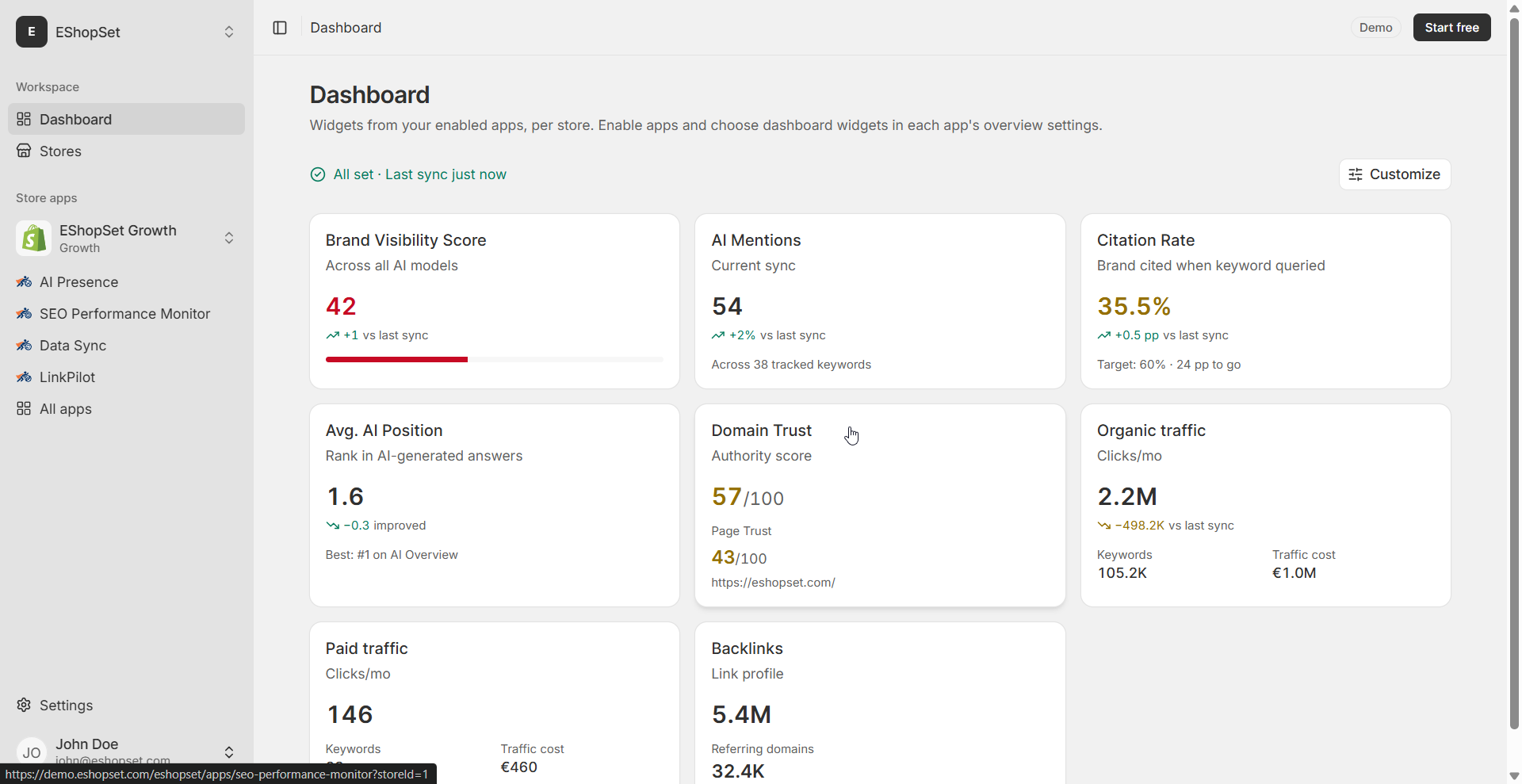
Keep a constant eye on your search rankings, indexed pages, and any unexpected changes. Tools like EShopSet's SEO Performance Monitor are designed for this. They can alert you to sudden drops in rankings, unexpected 404 errors appearing on pages that shouldn't have them, or suspicious redirects that might indicate a problem. Detecting these anomalies early is key to mitigating potential damage.
2. Ensure Pristine Product Data with Sheet2Cart
Your product catalog is the heart of your Shopify store, and its data integrity directly impacts your SEO. Malicious actors thrive on disorganization. By using Sheet2Cart, you can ensure your product information is always accurate and up-to-date. Features like Shopify column mapping Google Sheets allow you to precisely control how your data translates to your store, preventing errors that could be exploited. Furthermore, using Shopify match products by handle from Sheets ensures that updates are applied correctly, maintaining consistent product URLs and preventing unintended redirects or broken links that could be mistaken for legitimate 404s.
3. Cultivate a Strong, Authentic AI Presence
While AI Presence doesn't directly prevent hacks, maintaining a strong, consistent, and legitimate online presence across all AI-driven platforms and search results is your best defense against black-hat tactics. It ensures that your authentic brand message and product information are what search engines and AI models prioritize, making it harder for fraudulent content to gain traction.
4. General Security Best Practices
Beyond app-specific solutions, always adhere to fundamental security practices: use strong, unique passwords for all accounts, enable two-factor authentication, regularly review user permissions, and keep all your Shopify apps and themes updated.
EShopSet Team Comment
This discussion highlights a critical, often unseen, aspect of maintaining a healthy online presence. While the specific example is extreme, the underlying tactics of hacking, cloaking, and redirecting are a constant threat to SEO integrity. We strongly advocate for proactive monitoring with SEO Performance Monitor to catch suspicious activity early and maintaining impeccable data hygiene with Sheet2Cart to ensure your store's foundation is solid and less prone to internal SEO issues. Don't wait for a problem to arise; be vigilant.
The digital world is full of amazing opportunities, but it also has its dark corners. For Shopify merchants, understanding these malicious tactics isn't about becoming a security expert overnight, but about being aware and equipping your store with the right tools and practices. By focusing on robust SEO monitoring, meticulous data management, and strong security, you can ensure your Shopify store remains a beacon of trust and reliability for your customers. And for those agencies helping merchants navigate these waters, explore our Shopify agency partner program to see how we can collaborate in building more secure and successful ecommerce ecosystems.