Navigating the AI Crawler Wild West: What Shopify Merchants Need to Know
Hey fellow Shopify merchants and store operators! Let's talk about something buzzing in the tech community that directly impacts your online store: the explosion of AI crawlers, agents, and scrapers hitting websites. You might not even realize the extent of it, but understanding this landscape is becoming crucial for maintaining your store's health and SEO.
I recently came across a fascinating discussion where an expert shared some eye-opening numbers after analyzing 150 different AI crawlers. The findings? Most of these AI agents hitting your site cannot be reliably verified, and that presents a real challenge for us.
The Unseen Visitors: Who's Really Crawling Your Site?
The original poster in the community discussion dug deep into how these AI crawlers identify themselves and whether their claims can be verified. Here's the breakdown:
- Only 33 out of 150 crawlers provide a solid way to verify their requests, like forward confirmed reverse DNS or a published list of IP ranges. This is the gold standard for knowing a bot is legitimate.
- A concerning 9 openly admit they ignore your
robots.txtfile. That's right, the very instruction manual you give to bots about what to crawl and what not to, some just disregard. - A staggering 88 publish absolutely nothing about themselves. For these, the user agent string – essentially just a text label – is your only clue. And as the expert pointed out, anyone can send any user agent string they want. It’s like someone ringing your doorbell and saying they’re the pizza delivery, but they have no uniform, no car, and no pizza box.
Why does this matter more now than ever? Changes are coming, like Cloudflare's default blocking of mixed-use crawlers on pages with ads for new sites and existing free accounts. This means many of us will be looking to tweak our crawler policies, and it's vital to know that for a large chunk of these AI agents, your robots.txt is your primary (and often only) line of defense. The problem is, you have no way to tell if it's being respected.
What This Means for Your Shopify Store and SEO
As Shopify merchants, our focus is on selling products, managing inventory, and ensuring a smooth customer experience. But behind the scenes, your website is constantly interacting with bots. Legitimate search engine crawlers (like Googlebot) are essential for your SEO, helping your products appear in search results. However, a swarm of unverified or malicious AI crawlers can create several problems:
- Resource Drain: Unnecessary crawling can consume server resources, potentially slowing down your site for real customers.
- Data Integrity: If your content is being scraped by unknown entities, you lose control over how your product descriptions, pricing, and other crucial information are being used or misrepresented by AI models.
- Skewed Analytics: A high volume of unverified bot traffic can muddy your analytics data, making it harder to accurately assess real user engagement and traffic sources.
- Impact on SEO: While direct penalties are rare, excessive bot activity can indirectly affect your SEO. If legitimate crawlers struggle to access your site due to resource contention, or if your content is being widely republished by AI without proper attribution, it could impact your Shopify ranking distribution 1-10 over time. You want Google to easily find and index your latest product updates, not get bogged down by thousands of unidentifiable requests.
The expert in the thread even mentioned that operators are reaching out to them to correct their entries in the directory, providing verifiable IP addresses. This shows that some operators *do* care about being legitimate, but it's a manual process to verify them.
Taking Action: Your Bot Management Strategy
So, what can a Shopify merchant do in this evolving landscape?
- Audit Your
robots.txt: Ensure yourrobots.txtfile is up-to-date and correctly configured. While it won't stop everyone, it's still the foundational instruction for well-behaved bots. This includes directing crawlers away from non-essential pages like admin areas or internal search results. - Monitor Your Logs (If Possible): If you have access to server logs or detailed analytics, keep an eye out for unusual spikes in traffic from unfamiliar user agents. Tools like Google Search Console can also show you Googlebot's crawl activity.
- Focus on Core SEO Principles: The best defense is a strong offense. Continue to optimize your product pages, blog content, and site structure for legitimate search engines. High-quality content and a good user experience will always be prioritized.
- Stay Informed: The world of AI and web crawling is changing rapidly. Keep an eye on updates from platforms like Cloudflare and Google regarding crawler policies and best practices.
EShopSet Team Comment
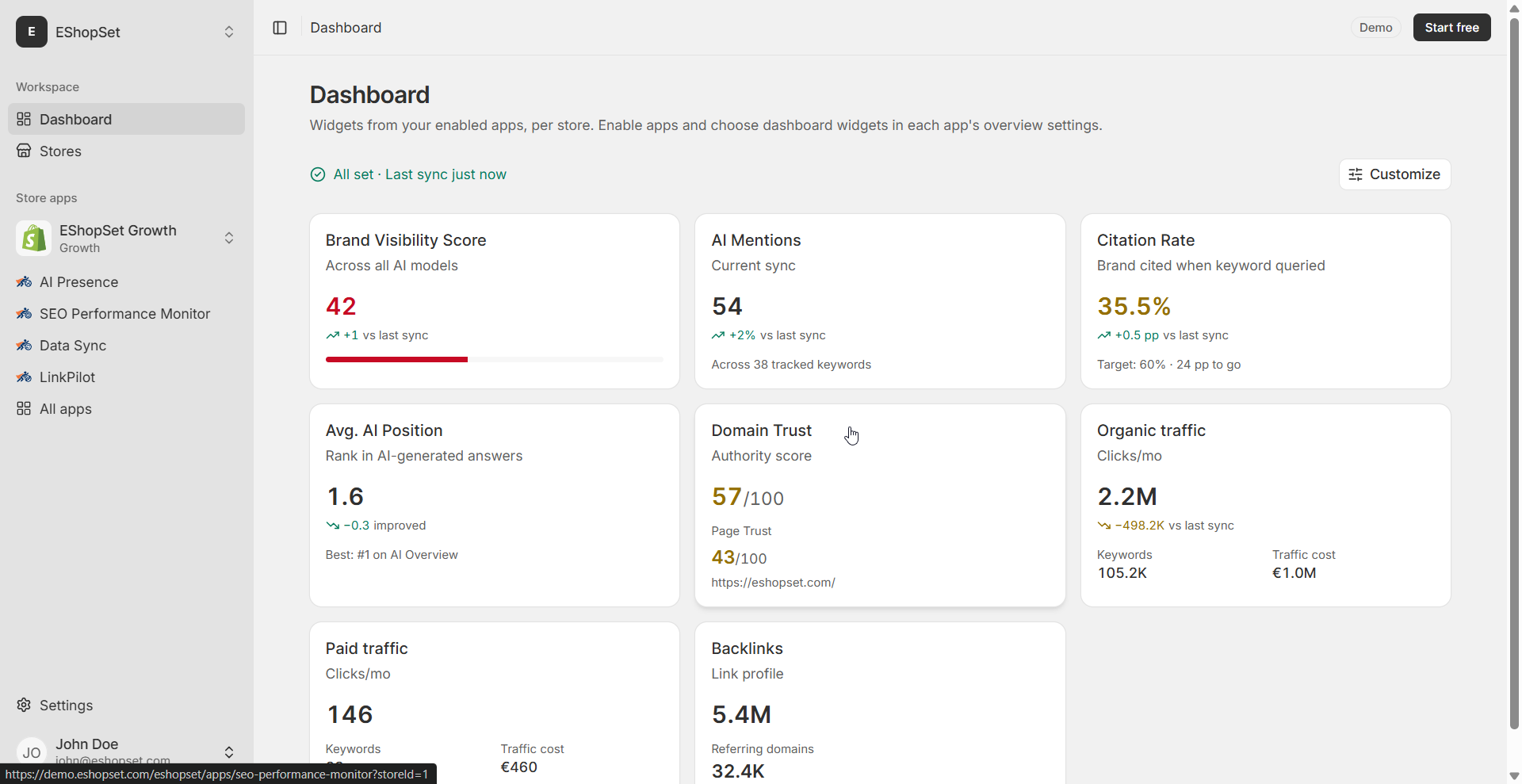
This discussion highlights a critical, evolving challenge for all online businesses. While directly blocking every unverified AI crawler can be complex for Shopify merchants, understanding their presence and potential impact is vital. We believe that focusing on your site's overall performance and how legitimate search engines perceive it is key. Our SEO Performance Monitor can help you keep a close watch on your rankings and visibility, ensuring your site remains healthy despite the noise. Furthermore, AI Presence helps optimize your content for how AI models consume information, turning a potential threat into an opportunity for better visibility.
Ultimately, the goal is to ensure your Shopify store's content is discovered, indexed, and presented accurately by the search engines and AI that matter most for your business. By being aware of the 'wild west' of AI crawlers and taking proactive steps, you can protect your store's integrity and maintain its competitive edge in the bustling ecommerce world.