Mastering AI Content for Shopify: Balancing Innovation with SEO Safety
Hey there, fellow Shopify merchants and store operators! You know how fast the world of ecommerce moves, right? Especially with all the buzz around AI. It feels like every other day there’s a new tool promising to revolutionize how we do things. But with great power comes… well, sometimes, great questions about safety and reliability.
I recently stumbled upon a really insightful discussion started by a community member, asking a crucial question about using Large Language Models (LLMs) to generate static HTML. The original poster wisely brought up the point that "Static HTML done with LLMs is not perfectly safe." And honestly, that hit home for me, as it should for anyone leveraging AI in their daily operations, especially when it comes to something as fundamental as your store’s web presence and SEO.
Let's dive into why this concern is so valid and what it means for your Shopify store.
The Double-Edged Sword of AI-Generated Content
AI, particularly LLMs, can be incredibly powerful for generating product descriptions, blog posts, meta tags, and even snippets of HTML. It’s a huge time-saver and can help you scale content creation like never before. But here's the catch: these models learn from vast amounts of data, and sometimes that data can be flawed, outdated, or even biased. When an LLM generates HTML or content, it's essentially predicting the most probable sequence of words or tags. While often brilliant, this process isn't infallible.
The "not perfectly safe" aspect refers to several potential pitfalls:
- Hallucinations and Inaccuracies: LLMs can sometimes "hallucinate" information, presenting false facts or making up details. For product descriptions or critical information, this can be disastrous, leading to customer confusion, returns, or even legal issues.
- SEO Quality Concerns: Search engines like Google are constantly evolving their algorithms to prioritize high-quality, unique, and helpful content. If AI-generated HTML or text is repetitive, generic, or lacks true depth, it can be flagged as low-quality content. This could severely impact your search rankings and, consequently, your Shopify paid vs organic traffic balance. You don't want to inadvertently tank your organic reach and become overly reliant on expensive paid campaigns.
- Technical Flaws: While LLMs are getting better, they might still generate HTML that isn't perfectly semantic, accessible, or optimized for performance. Broken tags, incorrect attributes, or inefficient structure can lead to poor user experience and hinder search engine crawling and indexing.
- Brand Voice and Consistency: Maintaining a consistent brand voice is crucial. AI-generated content, if not carefully guided and edited, can sometimes sound generic or off-brand, diluting your store's unique identity.
It's not about avoiding AI altogether. It's about being smart and strategic with how you use it.
Original Post by ObviousInvestment346:
 | submitted by /u/ObviousInvestment346 [link] [comments] |
How Shopify Merchants Can Harness AI Safely and Effectively
So, how do you get the benefits of AI without falling into these traps? It boils down to a few key practices:
1. Always, Always Review and Refine
Think of AI as your incredibly fast, albeit sometimes quirky, assistant. It can give you a fantastic first draft, but it’s up to you (the expert) to review, fact-check, and refine. This is especially true for anything customer-facing or SEO-critical. Check for accuracy, tone, and overall quality before publishing.
2. Provide Clear and Specific Prompts
The better your input, the better the AI's output. Don't just ask for "product description." Instead, specify target audience, key features, benefits, desired tone, keywords to include, and even examples of your existing content style. This helps the AI stay on brand and relevant.
3. Validate Technical Output
If you're using AI for generating HTML snippets, always validate them. Ensure they adhere to web standards, are accessible, and don't introduce any errors that could hurt your site's performance or SEO. For critical elements like schema markup, manual verification is non-negotiable.
4. Focus on Value and Uniqueness
AI excels at summarizing and rephrasing, but true value often comes from unique insights, personal experiences, or original research. Use AI to augment human creativity, not replace it. Ensure your content offers something genuinely valuable to your customers that they can't find elsewhere.
5. Monitor Your Performance Closely
After deploying AI-generated content, keep a close eye on its impact. Track your organic traffic, keyword rankings, bounce rates, and conversion rates. Are they improving, stagnating, or declining? Early detection of issues allows for quick adjustments.
EShopSet Team Comment
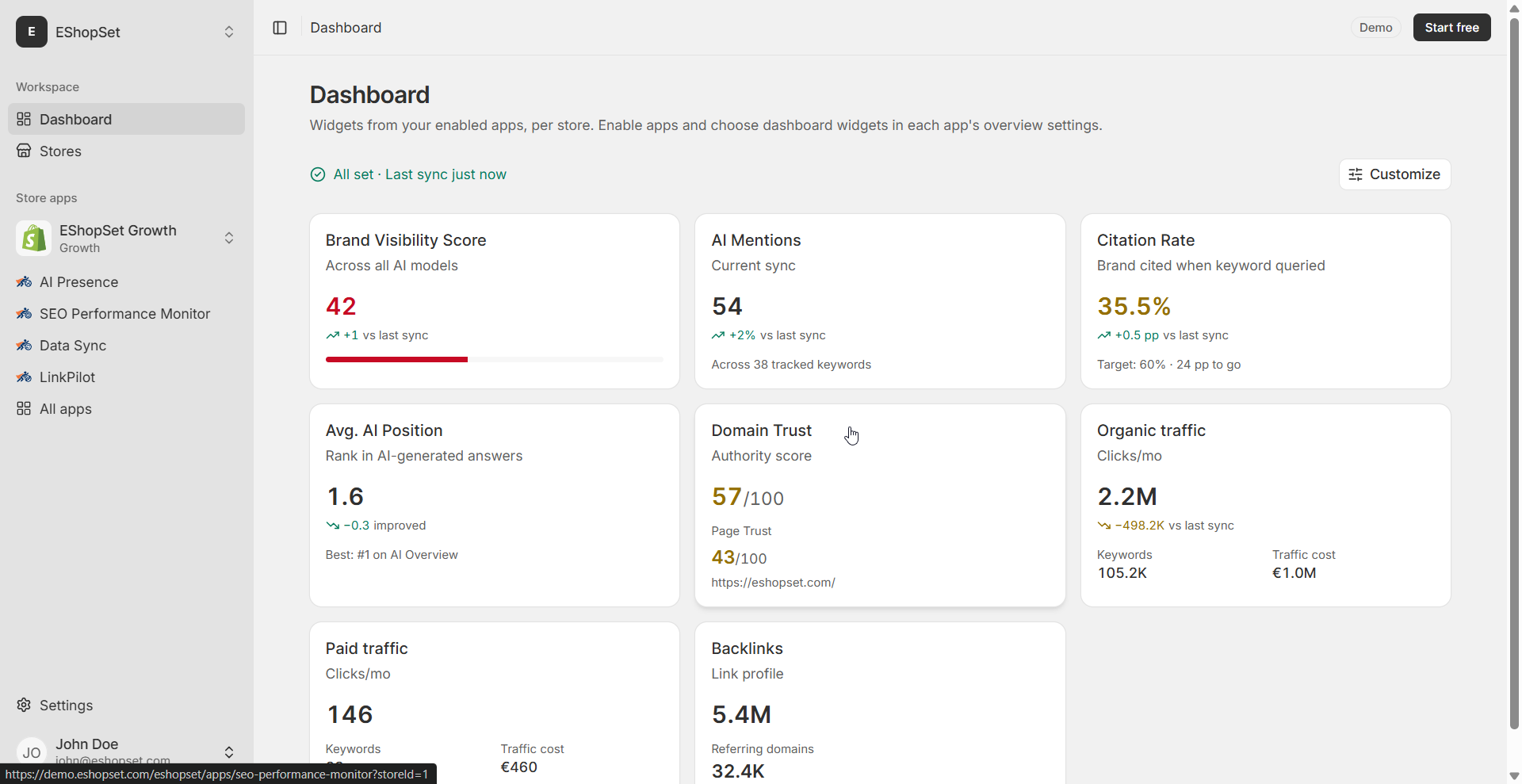
The original poster raised a profoundly important point that resonates with our mission at EShopSet. While AI offers incredible potential for efficiency, it's a tool that requires thoughtful application and vigilant oversight. We firmly believe that integrating AI into your Shopify operations should enhance, not endanger, your store's performance. That's why AI Presence is designed to help you manage your AI-generated content with control, ensuring brand consistency and quality, while SEO Performance Monitor provides the crucial insights to track the real-world impact of your content strategy on your search rankings and organic visibility.
Embracing AI in your Shopify store is a journey of continuous learning and adaptation. By understanding its limitations and implementing smart oversight, you can leverage these powerful tools to grow your business effectively and safely. Keep experimenting, keep monitoring, and always prioritize delivering value to your customers. Your store's success, both in terms of attracting new visitors and converting them into loyal customers, depends on it!