Shopify Store Security: Why It's a Non-Negotiable Part of Your SEO Success
Hey there, fellow Shopify merchants and store operators! Let's dive into a topic that recently sparked some great conversation in an online community, and it's one that often gets overlooked in the hustle and bustle of daily operations: the intersection of website security and technical SEO.
When we talk about technical SEO audits, our minds usually jump to things like making sure Google can crawl and index our pages, checking Core Web Vitals for speed, handling redirects, canonical tags, and structured data. These are all absolutely critical for getting your products seen.
But here’s a question that the original poster in a recent discussion brought up, and it’s a brilliant one: Should basic website security checks also be a standard part of a technical SEO audit? They were thinking about things like proper HTTPS configuration, security headers, mixed content issues (where secure pages load insecure resources), and general SSL problems. Even if these don't always directly hit your rankings, they certainly affect user trust and, by extension, your store's long-term health.
Security: More Than Just a Technicality, It's a Trust Signal
The consensus from the community discussion was pretty clear: while you might hope your webmaster or platform handles core security, these aren't just SEO things. As one community member aptly put it, they are "trust signals to everyone." Think about it: when a customer lands on your Shopify store, they expect a secure browsing experience. A broken SSL certificate, mixed content warnings, or a general sense of insecurity can instantly erode that trust, leading to abandoned carts and lost sales.
However, the discussion also highlighted where security issues absolutely become SEO issues. If your site gets compromised with malicious content injection – perhaps through a vulnerability that allows spammy links or even malware to appear in your search results or on your site's internal search pages – then Google will notice. And trust me, Google does not like showing malicious content. Such an issue can lead to serious ranking drops, warnings in search results, and even de-indexing until the problem is resolved. So, while foundational security might be a 'webmaster' task, its implications for your visibility are undeniably an SEO concern.
What Shopify Merchants Need to Know About Security and SEO
The good news for Shopify merchants is that the platform handles a significant portion of your baseline security automatically. Shopify provides free SSL certificates for all stores, ensuring your site loads over HTTPS. This is a massive win, as HTTPS is a known ranking factor and a fundamental trust signal. It also protects your customers' data during transactions.
However, "automatic" doesn't mean "set it and forget it" entirely. Here's what you should still be mindful of:
- Mixed Content: Even with HTTPS, if you're pulling in images, scripts, or other resources from insecure (HTTP) sources, your browser will flag it as mixed content. This can break functionality, display security warnings, and impact user experience. Regularly audit your content, especially if you're adding custom code or third-party integrations.
- Third-Party Apps: While Shopify vets apps, always be diligent about the apps you install. Ensure they come from reputable developers and don't introduce vulnerabilities or slow down your site, which indirectly impacts Core Web Vitals and user trust.
- Site Monitoring: Keep an eye on your site's health. Are there sudden drops in traffic? Unusual content appearing? These could be signs of a security breach that needs immediate attention.
- Core Web Vitals: While not directly a security metric, a compromised site can become slow, leading to poor Core Web Vitals scores, which are a direct ranking factor.
Ultimately, a secure website fosters trust, encourages longer visits, and reduces bounce rates – all positive signals for search engines. It's about creating a safe and reliable environment for your customers, which naturally aligns with what search engines want to promote.
EShopSet Team Comment
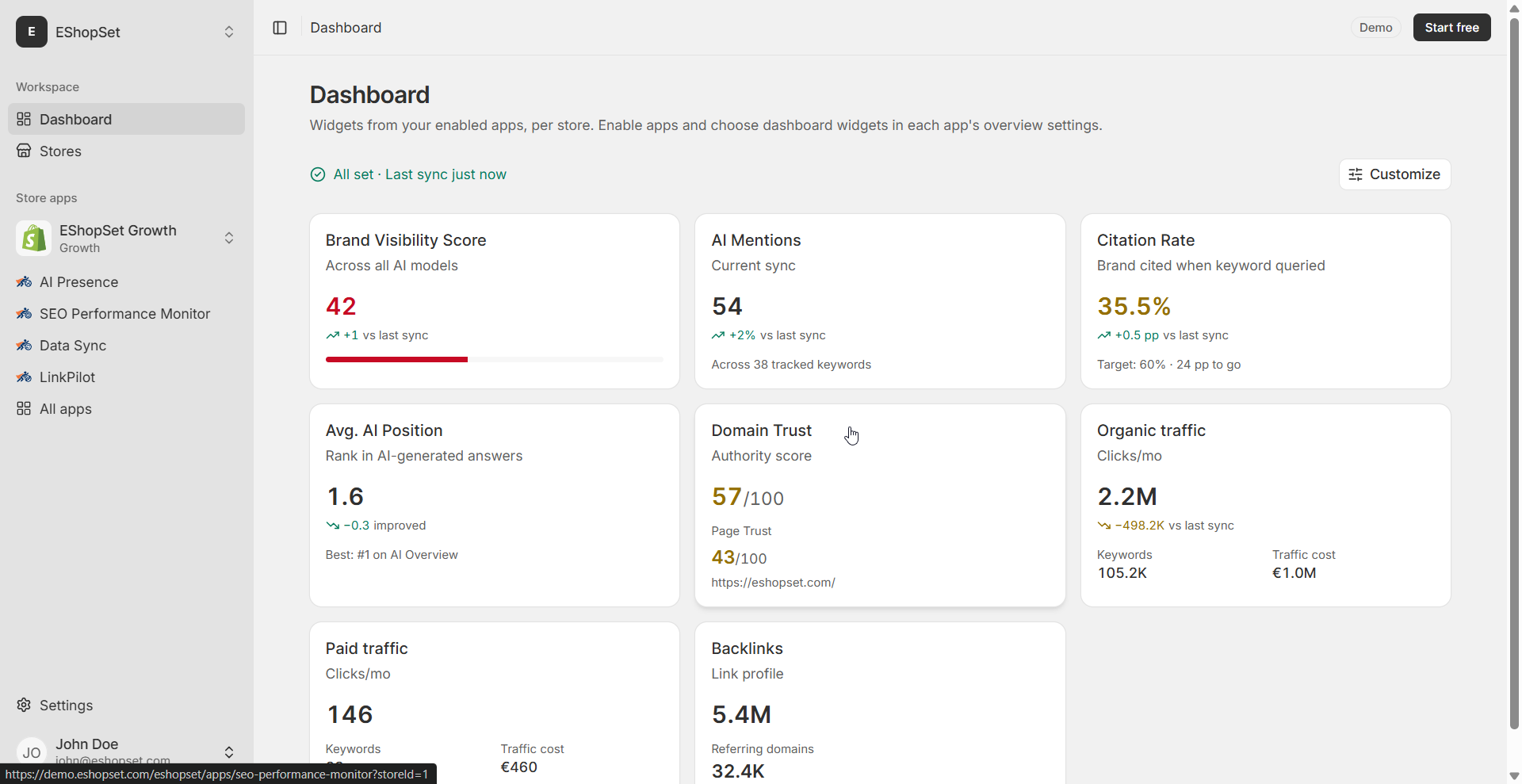
We absolutely agree that security is foundational for any successful Shopify store. While Shopify handles core SSL, actively monitoring your store's performance and content for any issues, security-related or otherwise, is crucial. Our SEO Performance Monitor, one of our essential Shopify apps for daily operations, helps you keep an eye on critical metrics and potential issues that could arise from security vulnerabilities, ensuring your store's health and visibility. Furthermore, AI Presence helps ensure your content is clean and trustworthy for AI models, avoiding potential flags, and Sheet2Cart ensures your product data is accurately and securely synced, preventing data integrity issues that could be exploited.
Integrating Security into Your Daily Shopify Operations
Thinking about security as an integral part of your daily operations, rather than a separate, occasional audit, is key. For Shopify merchants, this means leveraging the platform's inherent security strengths while remaining vigilant about your own content, app choices, and overall site health.
Many embedded Shopify Admin apps are designed to help you manage various aspects of your store, including performance and content integrity. By regularly reviewing your site's performance data, checking for broken links or mixed content, and ensuring all your third-party integrations are secure and up-to-date, you're not just doing 'security' or 'SEO' – you're doing smart ecommerce operations.
So, the next time you're thinking about your store's SEO, remember to cast a wide net. Security isn't just a technical detail; it's a cornerstone of trust, user experience, and ultimately, your search engine success. Keep your store safe, and your customers (and Google) will thank you for it!