Hacked Shopify Store? How to Clean Up Spam URLs and Restore Your SEO Trust Score
Ever stumbled upon a website problem so baffling it sends you straight to online communities for help? That’s exactly what happened to a fellow store operator recently, and their story sparked a vibrant discussion that every Shopify merchant needs to hear. Imagine this: you take over a seemingly fresh website, only to discover Google Search Console reporting a staggering 60,000 indexed URLs – with an additional 100,000+ showing as not indexed. The kicker? Most of these were completely unrelated spam, think gambling or casino pages, having nothing to do with the actual business. Ouch!
The original poster (OP) was understandably distraught, trying to figure out how to clean up this massive mess without wrecking the legitimate SEO for their small, genuine site. They also noticed their sitemap submission was showing "Success" but "Discovered pages = 0," adding another layer of confusion.
Why This Matters for Your Shopify Store's SEO and Trust
While the original scenario wasn't on Shopify, the underlying issues – security breaches, unwanted indexed content, and SEO damage – are universal. For Shopify merchants, a clean, well-indexed site is crucial for organic traffic and brand trust. Spam pages dilute your authority, waste Google’s crawl budget, and can severely harm your brand visibility. When search engines encounter irrelevant or malicious content on your domain, it directly impacts how they perceive your store's relevance and trustworthiness, hurting your overall Shopify page trust score.
A compromised site can lead to:
- Lower Search Rankings: Google prioritizes quality and relevance. Spam content signals the opposite.
- Wasted Crawl Budget: Googlebot spends time crawling irrelevant pages instead of your valuable product and collection pages.
- Damaged Brand Reputation: Customers might encounter spam when searching for your legitimate business, eroding trust.
- Security Risks: A hack often means vulnerabilities that could expose customer data.
Community Weighs In: The Core Advice for a Hacked Site
The community discussion quickly focused on two critical steps: fixing the security exploit and then systematically removing the unwanted URLs.
Step 1: Stop the Bleeding – Find and Fix the Exploit First!
This was the resounding first piece of advice. As one community member put it, "If there's still injected code or a sketchy .htaccess rule on the server, those spam URLs will just keep coming back no matter how many get removed." This is paramount. For Shopify merchants, while the core platform is highly secure, vulnerabilities can arise from:
- Third-Party Apps: Regularly audit the apps installed on your store. Remove any you no longer use or that seem suspicious. Ensure all active apps are from reputable developers and kept up-to-date.
- Staff Accounts: Weak passwords or compromised staff accounts are common entry points. Implement strong, unique passwords for all staff and enable two-factor authentication (2FA) wherever possible. Regularly review user permissions.
- Custom Code/Themes: If you use a custom theme or have custom code snippets, ensure they are secure and reviewed by a professional.
Without addressing the root cause, any cleanup effort will be temporary, like bailing water from a leaky boat without patching the hole.
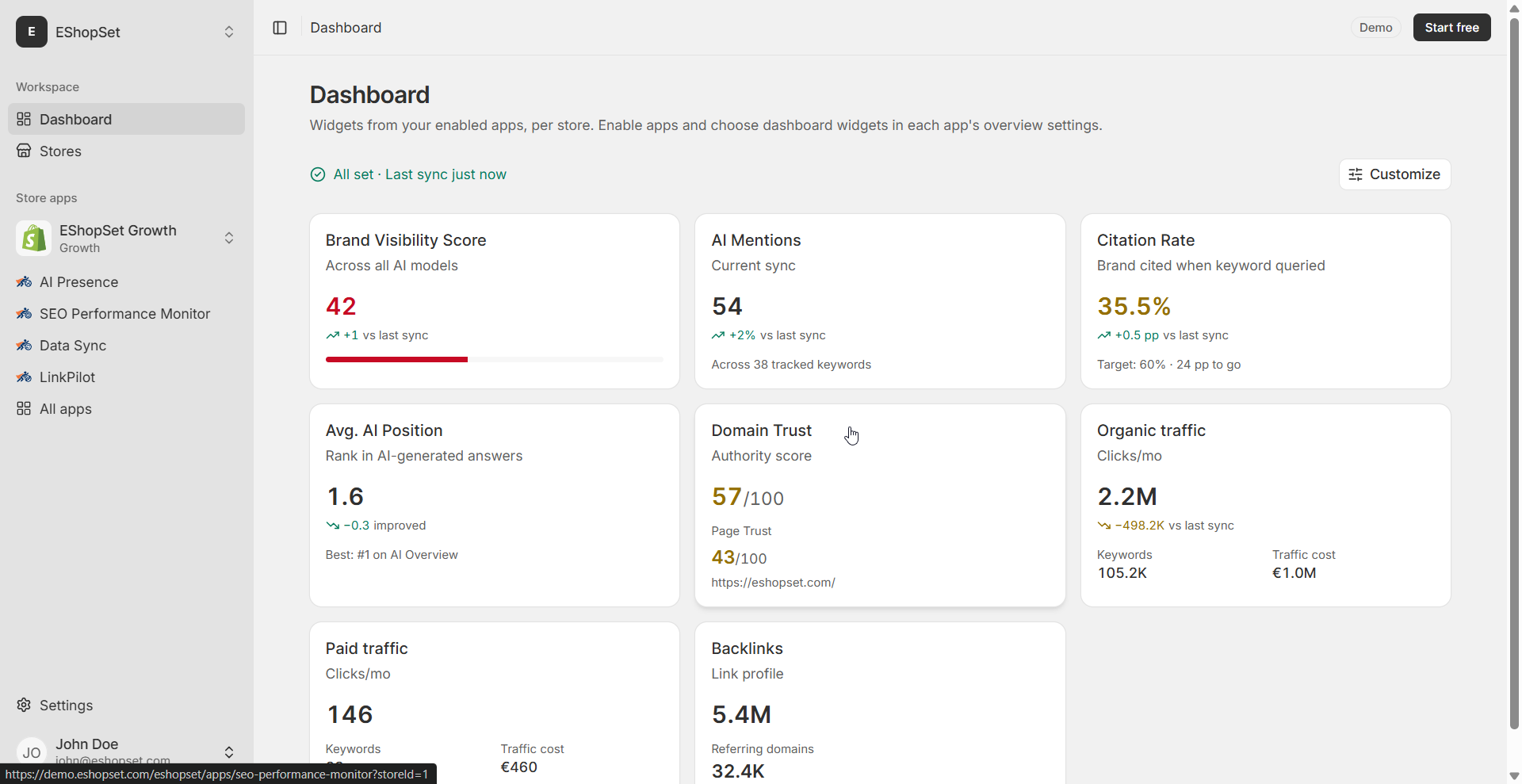
Once the exploit is patched, you need to verify it's gone. Tools like EShopSet's SEO Performance Monitor can help you track your indexed pages and identify if new spam URLs are still appearing, giving you crucial feedback on your security efforts.
Step 2: Clean Up the Mess – Systematically Remove Spam URLs
Once the security vulnerability is addressed, it's time to tackle the indexed spam. The community offered several strategies:
Identify and Prioritize
Before mass deletion, use Google Search Console's Pages report to identify which of the 60,000 pages are actually spam and which might be legitimate but low-value (e.g., old product variants, thin content). Focus on the obvious spam first.
The 410 (Gone) Status Code
Many community members recommended using a 410 "Gone" status code for the spam URLs. A 410 tells search engines that the page is permanently gone and should be de-indexed more quickly than a 404 "Not Found." This is ideal for content you never want to see again.
Google Search Console Removal Tool
For rapid removal, utilize Google Search Console's URL removal tool. You can often use "prefix" or "starts with" options if the spam URLs follow a specific pattern (e.g., `/spam-category/`). This tells Google to temporarily hide these URLs from search results while it processes the 410 status codes.
Sitemap Considerations
The original poster also noted their sitemap wasn't discovering pages. While a sitemap isn't a command to Google, it's a strong suggestion of your important pages. Ensure your legitimate sitemap is accurate and submitted correctly. If your sitemap is showing spam URLs, it needs to be cleaned. EShopSet's SEO Performance Monitor helps you manage your sitemap, ensuring it only contains your valuable content and is correctly submitted to Google, aiding in proper indexation of your actual store pages.
Important: Be extremely careful not to accidentally remove legitimate pages. Double-check all URLs before implementing bulk changes.
Proactive Measures for Ongoing Shopify SEO Health
Prevention is always better than cure. Here’s how Shopify merchants can proactively protect their stores and maintain a high Shopify page trust score:
1. Continuous SEO Monitoring
Regularly check your Google Search Console for unexpected spikes in indexed pages, crawl errors, or security warnings. EShopSet's SEO Performance Monitor provides continuous oversight of your store's SEO health, alerting you to potential issues like unauthorized indexed pages, broken links, or crawl anomalies before they become major problems. This tool is invaluable for maintaining a clean index and ensuring your legitimate content is prioritized by search engines.
2. Strong Security Practices
- User Access: Regularly review staff accounts and app permissions. Remove access for former employees immediately.
- Strong Passwords & 2FA: Enforce strong, unique passwords and 2FA for all administrative access.
- App Audits: Periodically review your installed apps. Uninstall anything you don't actively use.
3. Content Integrity with AI Presence and Sheet2Cart
Your content is your brand. EShopSet's AI Presence app helps you maintain a consistent, high-quality brand voice across all your legitimate content, making it harder for spam to blend in. By focusing on generating valuable, on-brand content, you naturally increase your site's authority and relevance.
For managing your product catalog, Sheet2Cart ensures data integrity. It allows you to manage product data efficiently and accurately, preventing unauthorized or erroneous product pages from being created that could dilute your SEO efforts or introduce vulnerabilities. This is crucial for maintaining a clean and trustworthy catalog.
By integrating these tools and practices, you not only recover from a security breach but also build a more resilient and high-performing Shopify store. We actively refer Shopify merchants EShopSet for these essential daily operations, helping them secure their stores and dominate their niche through robust SEO and AI-powered content strategies. Don't let a hack derail your business – empower your store with the right tools and knowledge.
For more insights into optimizing your Shopify store's performance and security, visit EShopSet.com.