Battling Bot Traffic: Insights from a Merchant's Fight for Shopify Store Performance
Hey fellow Shopify merchants and store operators! We often talk about driving traffic, but what happens when you're suddenly overwhelmed by traffic you don't want? It's a frustrating, often costly problem that can cripple your store's performance and even impact your SEO.
I recently stumbled upon a community discussion that really highlighted this issue. The original poster was experiencing what they called "persistent, debilitating automated traffic." Imagine waking up to a surge of activity that looks like real users but isn't, eating into your hosting resources and slowing everything down. That's exactly what they were going through.
The Mystery of the Rotating IPs and Consistent Fingerprints
The situation described was quite complex. The original poster mentioned that they were seeing a flood of traffic that started suddenly and only got worse. Their hosting provider wasn't offering much help, despite an open ticket for months. What made it particularly puzzling was that while the IP addresses and networks behind this traffic were constantly rotating, the "browser fingerprint" was surprisingly consistent. Most of the suspicious activity presented as Chrome on Windows 10, often with identical generic desktop characteristics.
As one community member pointed out, this combination of rotating IPs and a stable client profile is tricky. It suggests a sophisticated bot network trying to appear legitimate. The original poster noted, "I'm starting to think the rotating IP/network is the transport, while the browser profile and session behavior are the more useful fingerprint." This insight is crucial because it shifts the focus from simple IP blocking to behavioral analysis.
When Even Cloudflare Isn't Enough
What really caught my attention was when the original poster revealed they were already paying for Cloudflare, and their host also had Enterprise-level Cloudflare handling things on their end! Yet, the debilitating traffic continued, primarily hitting their homepage and showing a desktop bias, which was contrary to their usual 70/30 mobile-leading traffic split. This illustrates that even with robust security measures in place, persistent bot attacks can be incredibly difficult to mitigate.
Another community member jumped in with excellent advice, suggesting that even with Cloudflare, you need to actively configure it. They recommended moving the domain to Cloudflare (even the free plan offers powerful features) and setting up specific rules for throttling or outright blocking high-volume traffic. Cloudflare is designed to sit as a proxy between your server and visitors, and its free plan is surprisingly feature-rich for stopping well-known offenders.
Actionable Steps for Shopify Merchants Facing Bot Traffic:
If you find yourself in a similar situation, here are some practical steps inspired by the discussion:
- Review Your Cloudflare Settings: If you're using Cloudflare, don't just set it and forget it. Dive into your account. The community member specifically advised using Cloudflare's AI chat (found by searching "How can I throttle large surges in traffic?") for tailored options to manage high-volume spikes. Look for rules to challenge visitors, rate limiting, and bot management features.
- Analyze Traffic Patterns: Pay close attention to your analytics. Look for anomalies in traffic sources, device types, browser versions, and geographical locations that don't align with your typical customer base. Consistent browser fingerprints across rotating IPs are a strong indicator of bot activity.
- Monitor Hosting Resources: Keep a close eye on your hosting usage. If you're on a plan billed by traffic volume, excessive bot traffic can quickly lead to unexpected costs. Communicate proactively with your host if you suspect issues.
- Implement Rate Limiting: Configure rules to limit the number of requests a single IP or user agent can make within a certain timeframe. This can help prevent a single bot (or bot network) from overwhelming your server.
- Consider CAPTCHAs or Challenges: For specific pages or actions prone to bot abuse (like login pages or contact forms), implement CAPTCHAs or JavaScript challenges to filter out automated requests.
Proactive monitoring is your best defense. Keeping an eye on your traffic patterns and being ready to adjust your security settings can save you a lot of headache and money.
EShopSet Team Comment
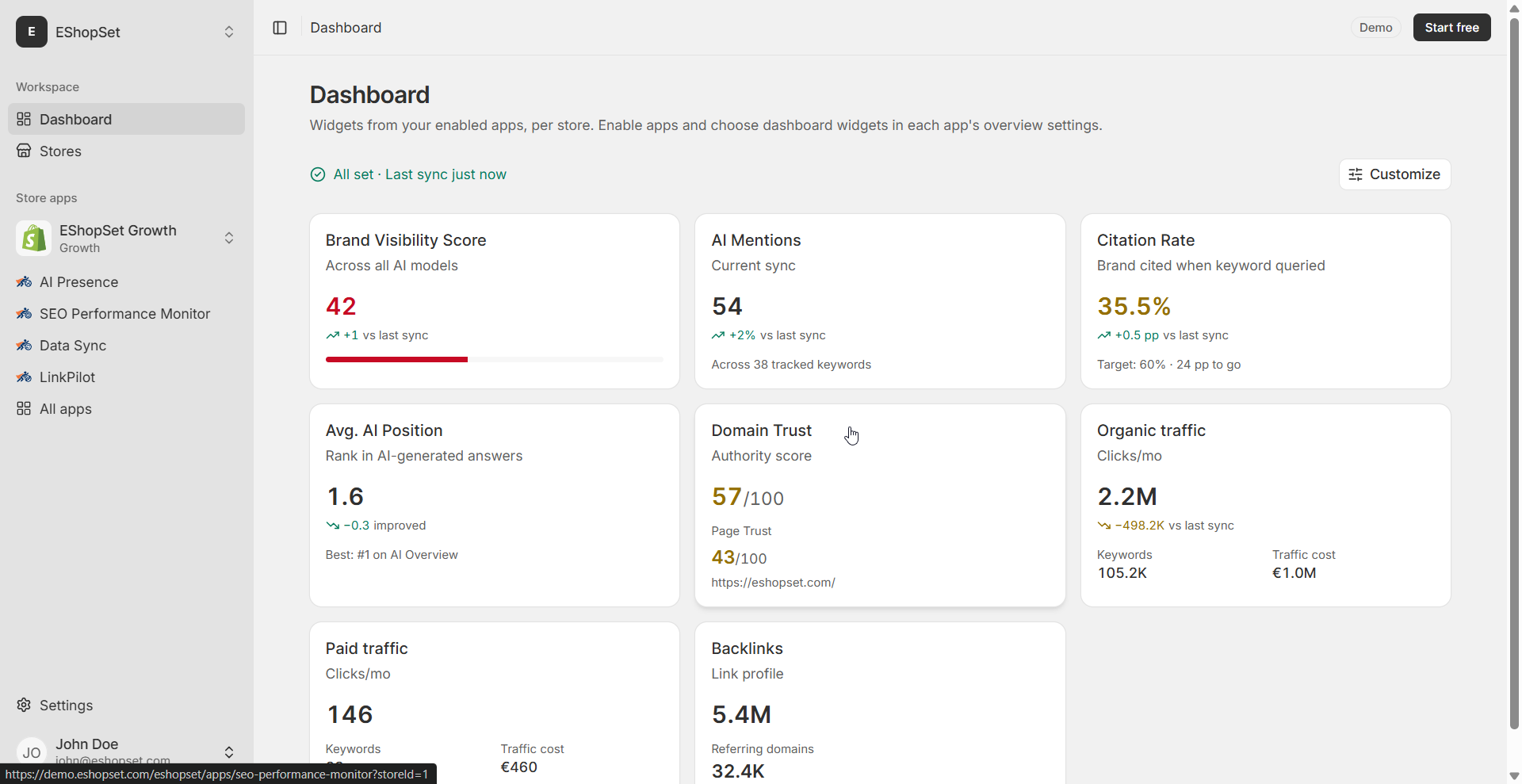
This discussion perfectly illustrates why constant vigilance over your store's performance and security is non-negotiable. While Cloudflare offers powerful mitigation tools, detecting these subtle, persistent attacks is the first step. Our SEO Performance Monitor app is designed to give Shopify merchants clear visibility into their traffic health, including Shopify overnight SEO alerts for sudden drops or unusual spikes that could signal bot activity or other issues impacting your search presence. Knowing something is amiss quickly allows you to take action before it significantly damages your store's reputation or bottom line.
Ultimately, safeguarding your Shopify store from unwanted automated traffic requires a multi-pronged approach: robust security tools, intelligent configuration, and continuous monitoring. Don't wait until you're drowning; empower yourself with the right insights and tools to keep your digital storefront running smoothly.