Shopify Store Upgrades and SEO: Protecting Your Google Rankings
Hey there, fellow Shopify merchants and store operators! Ever found yourself wondering if making big changes to your website, like upgrading your plan or switching domains, could mess with your hard-earned Google rankings? It's a common concern, and one that recently sparked a lively discussion in an online community. The original poster, a photographer, was doing great on a free website builder plan, even ranking on page one for a key phrase. But they wanted to upgrade for more features – custom code, unlimited blogs, and a custom domain. Smart move for legitimacy and growth, right? But the big question was: how would these changes impact their SEO?
As a Shopify merchant, you're constantly looking for ways to enhance your store, whether it's through new features, better branding, or streamlined operations. But every significant change brings potential SEO implications. Let's dive into the core questions from that discussion and distill the expert advice into actionable insights for your Shopify store, leveraging tools like EShopSet's suite of apps to navigate these waters successfully.
Will Switching to a Custom Domain Affect My Google Ranking Negatively?
This was the original poster's primary concern, and it's a valid one. The consensus from the community was clear: switching to a custom domain is generally a good idea for long-term branding and control, but it absolutely requires careful handling to avoid SEO setbacks. Several community members stressed the importance of proper 301 redirects.
- The Solution: Proper 301 Redirects. If you're moving from a subdomain (like
yourstore.platform.com) to your own custom domain (yourstore.com), you MUST implement 301 redirects from all your old URLs to their new counterparts. This tells search engines that the content has permanently moved. Without these, Google sees your new site as entirely new, and your old ranking signals are lost. Shopify makes setting up redirects relatively straightforward, but ensuring every relevant page is covered is crucial. - Potential Fluctuations: Even with perfect 301s, one respondent noted that rankings could fluctuate temporarily. There are no guarantees everything will remain the same immediately. Google needs time to crawl and understand the new structure. This is where continuous monitoring becomes vital.
- Google Search Console: After implementing redirects, update your domain in Google Search Console (GSC) and submit a new sitemap for your custom domain. This helps Google discover your new URLs faster.
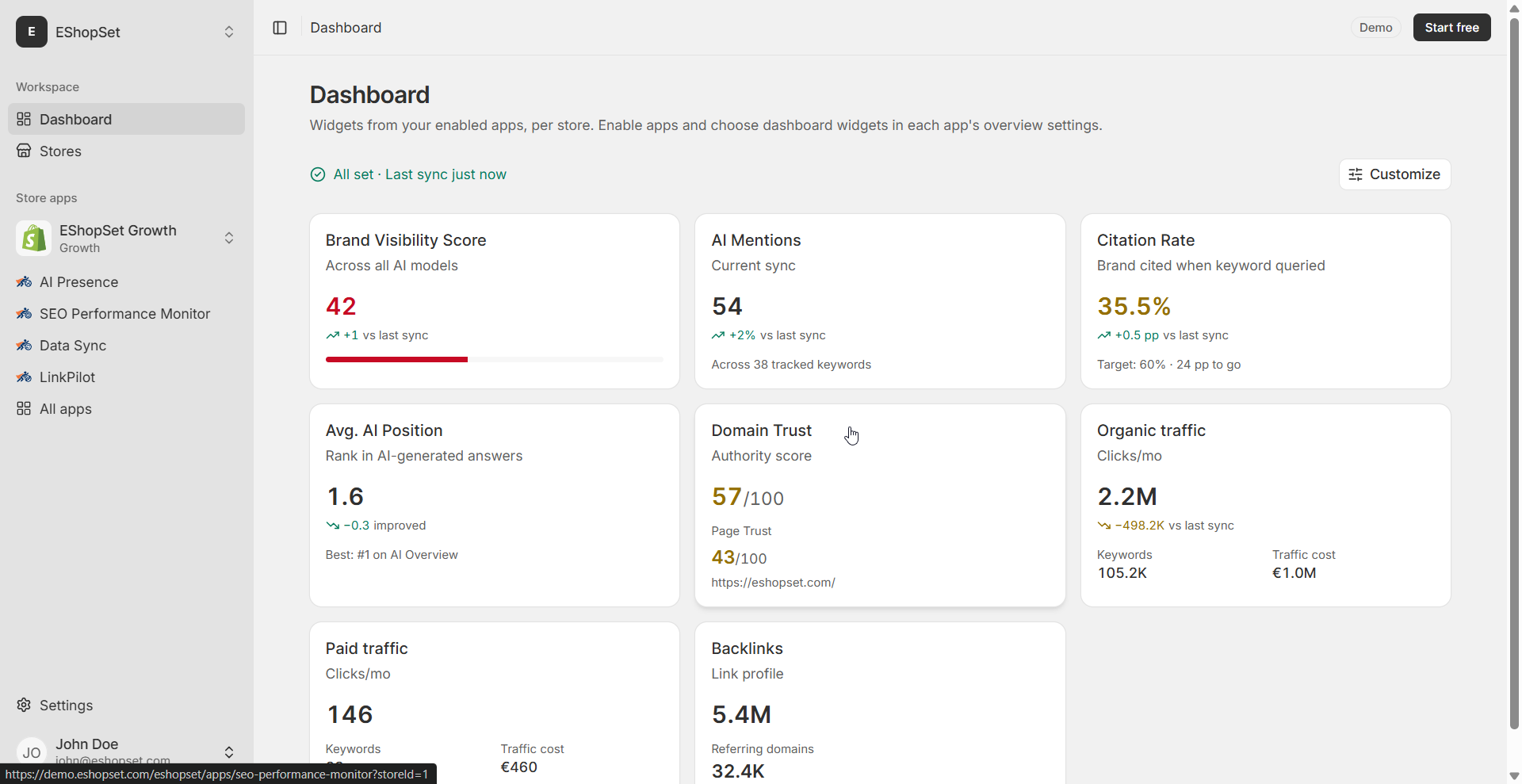
- Beyond the Switch: Once your custom domain is live, continue to monitor your SEO performance. Tools like EShopSet's SEO Performance Monitor can help you keep a close eye on your keyword rankings, traffic, and overall site health, especially if you're managing multiple markets and need robust Shopify Markets SEO monitoring. It provides the insights you need to quickly identify and address any dips or changes.
Does Using a Subdomain Matter for SEO?
The original poster also asked if their current subdomain was negatively impacting their rankings. While a subdomain isn't inherently "bad" for SEO, the community's general sentiment leaned towards owning your primary domain for long-term stability and control. As one community member pointed out, you don't truly "own" a subdomain provided by a platform, and you could potentially lose it or have less control over its configuration.
- Control and Branding: A custom domain offers superior branding and gives you full control over your online presence. It's a professional statement that builds trust and legitimacy with your customers.
- Long-Term Asset: Your custom domain is a valuable digital asset. It accumulates authority and backlinks over time, which are critical for SEO. Relying on a platform's subdomain means that authority is tied to their domain, not yours.
- Simplicity: While search engines are sophisticated enough to understand subdomains, a clean, consistent custom domain often presents a simpler, more authoritative structure for both users and crawlers.
Do "Badges" from Vendor Directories Matter for SEO?
The original poster inquired about "badges" from vendor directories and their SEO value. The consensus here was quite direct: generally, these badges do not directly impact your Google ranking in a positive way. As one expert succinctly put it, these badges are primarily designed to benefit the directory by providing a link back to their site.
- Trust and Credibility (Not Ranking): While badges might not be an SEO ranking factor, they can serve as a trust signal for your visitors. Displaying affiliation with reputable directories can enhance your store's credibility and authority in the eyes of potential customers, which indirectly supports conversions.
- Backlink Quality: If a badge includes a link, ensure it's from a high-quality, relevant source. Low-quality or spammy backlinks can actually harm your SEO. Focus on earning natural, high-quality backlinks through valuable content and strong relationships, rather than relying on directory badges for SEO juice.
Beyond the Migration: Sustaining Your Shopify Store's Digital Presence
Upgrading your store and managing domain changes are just part of the journey. Maintaining and growing your digital presence requires continuous effort. EShopSet's bundle of Shopify apps is designed to support your daily operations and long-term growth:
- SEO Performance Monitor: As discussed, this app is your eyes and ears for SEO. It helps you track keyword rankings, monitor competitor performance, and understand your organic traffic trends. After a domain migration, it's indispensable for ensuring your new domain is gaining traction and identifying any areas that need attention. It's crucial for effective Shopify Markets SEO monitoring, ensuring your global reach is optimized.
- AI Presence: In an evolving search landscape, particularly with the rise of AI Overviews and conversational AI, understanding your brand's presence beyond traditional search results is paramount. EShopSet's AI Presence helps you monitor how your brand is perceived and mentioned across AI-driven platforms. This allows you to track brand in AI Overviews Shopify, ensuring your narrative is consistent and positive where customers are increasingly getting information.
- Sheet2Cart: For merchants managing extensive product catalogs or needing to update product information frequently, efficiency is key. Sheet2Cart simplifies your product management by enabling seamless Google Sheets to Shopify sync. Whether you're adding new products, updating inventory, or adjusting prices across thousands of SKUs, this app ensures your Shopify store is always up-to-date with minimal manual effort.
Key Takeaways for Shopify Merchants
Making significant changes to your Shopify store, like upgrading your plan or switching to a custom domain, is a strategic move for growth. While it presents SEO considerations, with careful planning and the right tools, you can navigate these changes without losing your hard-earned rankings. Always prioritize:
- Proper 301 Redirects: The cornerstone of any successful domain migration.
- Owning Your Domain: For long-term branding, control, and SEO authority.
- Continuous Monitoring: Use tools like EShopSet's SEO Performance Monitor to track performance and adapt quickly.
- Holistic Digital Strategy: Beyond traditional SEO, consider your brand's presence in AI-driven search and streamline daily operations with powerful apps like AI Presence and Sheet2Cart.
By taking a proactive approach, your Shopify store can not only survive but thrive through website evolution, ensuring your digital presence remains strong and your business continues to grow.