Conquering 'Discovered – Currently Not Indexed': Your Shopify Guide to Google Visibility
Hey there, fellow Shopify merchants and store operators!
Ever checked your Google Search Console and seen that dreaded message: "Discovered – currently not indexed" next to one of your vital product pages? It’s a common head-scratcher, and frankly, it can be pretty frustrating when you know you have great products that deserve to be seen. This exact issue recently sparked a really insightful discussion within an online community, and I wanted to break down the expert advice shared there, adding our EShopSet spin to help you tackle it head-on.
Understanding "Discovered – Currently Not Indexed"
First off, let's clarify what this status actually means. When Google reports a page as "Discovered – currently not indexed," it means their crawlers have found the page (perhaps through a link from another site, or your sitemap), but they haven't yet decided to crawl it thoroughly or include it in their search index. Think of it like a librarian seeing a new book on a shelf but deciding not to catalog it because they're not convinced it's important enough, or they have other, more pressing books to get to first.
As one community member wisely pointed out, in these cases, simply "requesting indexing" in Google Search Console often won't fix the underlying problem. Google isn't ignoring your request; it's telling you there's a deeper reason why it's not prioritizing that page for indexing.
Why Google Hesitates: Key Reasons & Solutions
The core of the problem, as highlighted by the discussion, often boils down to two main areas:
1. Lack of Internal Authority & Crawl Prioritization
Google has a 'crawl budget' – a finite amount of resources it allocates to crawl your site. If a page isn't well-linked internally, it might appear less important to Google. The original poster's situation likely stemmed from this. A brilliant piece of advice from a respondent was to focus on getting internal links from pages that already get crawled and have traffic, like a category page or the main navigation.
How to Boost Internal Authority:
- Strategic Internal Linking: Ensure your product pages are linked from relevant category pages, collection pages, and even blog posts. The more high-authority pages link to your product page, the more "link equity" it receives, signaling its importance to Google.
- Main Navigation & Footer: For your most important products or collections, ensure they are easily accessible from your main navigation or footer.
- Sitemaps: While not a direct indexing guarantee, a well-maintained sitemap helps Google discover all your important pages. Ensure your Shopify sitemap is submitted and up-to-date in Google Search Console.
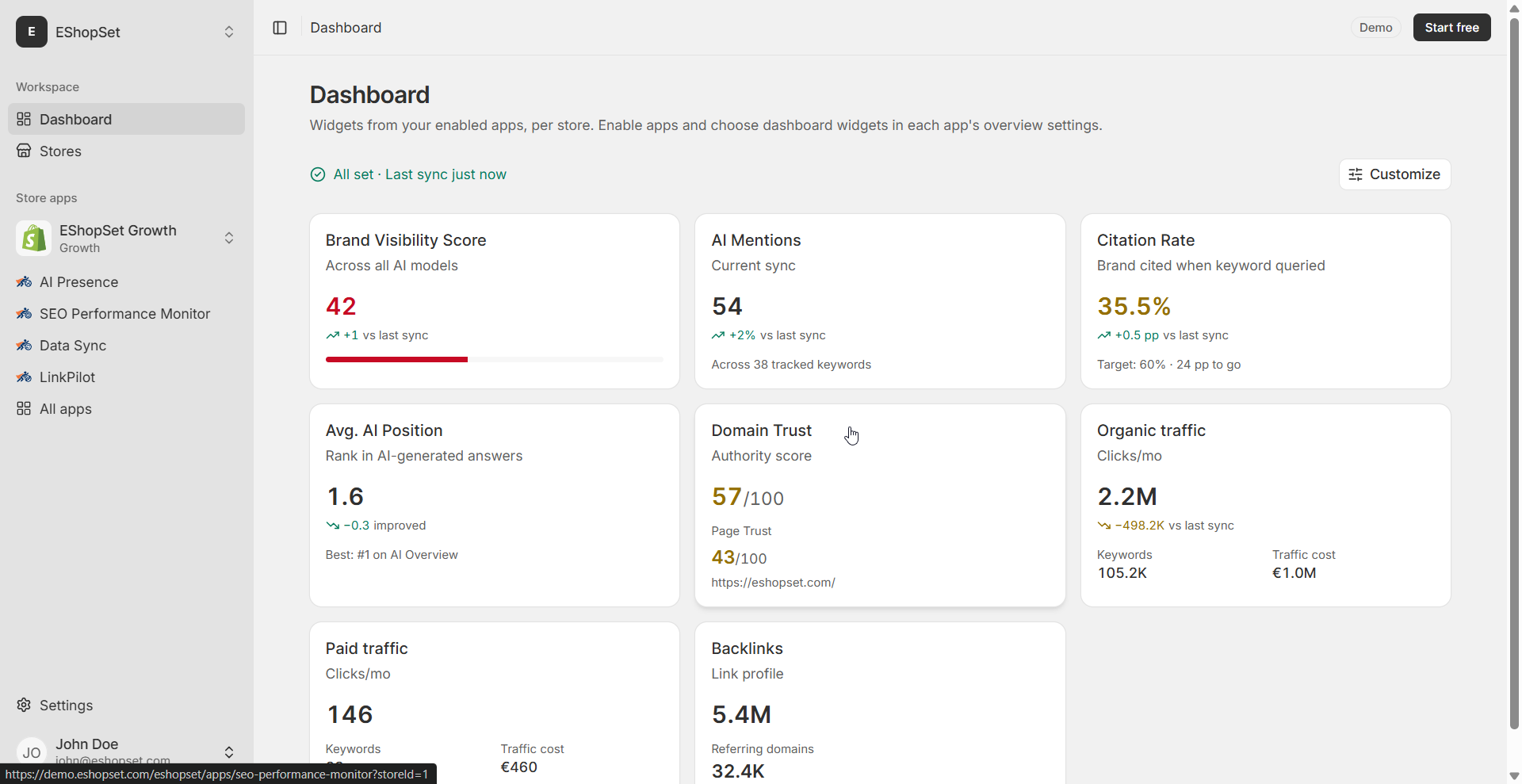
EShopSet Solution: Our SEO Performance Monitor app for Shopify can help you identify pages with weak internal linking, track your indexing status over time, and provide insights into your site's overall SEO health. It’s your vigilant partner in ensuring Google sees and values all your hard work.
2. Thin or Duplicate Content
Another critical reason Google might hesitate to index a page is the quality and uniqueness of its content. As a community member suggested, "check the product description isn't just copied from the manufacturer." Google prioritizes unique, valuable content that offers a good user experience. If your product descriptions are generic, too short, or identical to those found on dozens of other sites, Google might deem them less valuable to index.
Crafting Indexable Content:
- Unique Product Descriptions: Go beyond manufacturer descriptions. Highlight unique selling points, benefits, and specific details that differentiate your product. Think about your target audience and what questions they might have.
- Rich Media: Incorporate high-quality images, videos, and even customer reviews to enrich the page content. This not only makes the page more engaging for users but also signals quality to Google.
- Sufficient Word Count: While there's no magic number, ensure your descriptions are comprehensive enough to fully describe the product. Aim for helpfulness over brevity.
EShopSet Solution: This is where AI Presence shines. Leveraging advanced AI, it helps you generate unique, engaging, and SEO-friendly product descriptions quickly. Say goodbye to generic manufacturer copy and hello to compelling content that Google (and your customers) will love. It ensures every product page stands out, reducing the risk of being flagged for thin or duplicate content.
Streamlining Product Data for Better Indexing with Sheet2Cart
Managing a large catalog of products on Shopify can be challenging, especially when you need to ensure every product page is rich with unique content, accurate details, and proper SEO elements. This is where efficient product data management becomes paramount.
Imagine needing to update hundreds of product descriptions to make them unique, or adding new internal links across your store. Doing this manually for each product can be a monumental task.
EShopSet Solution: Our Sheet2Cart app is designed precisely for this. It allows you to manage your Shopify product data directly from Google Sheets, enabling powerful and efficient bulk updates. With Sheet2Cart, you can:
- Bulk Edit Descriptions: Easily update product descriptions across your entire catalog, ensuring they are unique and optimized, perhaps even after generating initial drafts with AI Presence.
- Manage Product Attributes: Ensure all product attributes, variants, and meta fields are complete and accurate, providing Google with more context about your products.
- Facilitate Internal Linking: While Sheet2Cart doesn't directly create internal links within content, by having all your product data in a structured sheet, you can more easily plan and implement internal linking strategies across your site.
The ability to perform a seamless Google Sheets to Shopify sync for your product catalog means you can maintain high data quality and content richness without the manual overhead. This efficiency directly contributes to better crawlability and indexing potential, as Google sees a well-maintained, information-rich store.
Beyond the Fix: Continuous Monitoring
Getting your pages indexed isn't a one-time fix; it's an ongoing process. Regularly monitor your Google Search Console for any new "Discovered – currently not indexed" warnings or other indexing issues. Use tools like the SEO Performance Monitor to keep a pulse on your site's health and ensure your efforts are paying off.
Conclusion
The "Discovered – currently not indexed" status is a signal from Google, not a dead end. By understanding the underlying reasons – primarily lack of internal authority and thin/duplicate content – and implementing strategic solutions, you can significantly improve your product pages' chances of getting indexed and ranking. With the right tools like EShopSet's SEO Performance Monitor, AI Presence, and Sheet2Cart, you have a powerful bundle at your fingertips to ensure your Shopify store is fully visible to Google and, most importantly, to your potential customers. Don't let your amazing products remain hidden – empower them with superior SEO and content!