Beyond GSC: Unlocking Deeper SEO Insights with Log File Analysis for Shopify Stores
As a Shopify merchant, you're constantly balancing a myriad of tasks: product updates, marketing campaigns, customer service, and, crucially, ensuring your store is highly visible online. When it comes to search engine optimization (SEO), Google Search Console (GSC) is often your primary tool. It provides invaluable data on indexing status, core web vitals, and overall search performance. But what if there's a deeper layer of insight that GSC doesn't fully reveal?
Recently, a compelling discussion emerged in an online community that resonated with this very question. The original poster, managing a site with approximately 45,000 monthly visits, shared their experience: they had previously delved into server log files and uncovered 'weird crawl patterns' that GSC simply didn't flag. Yet, after pausing this analysis for several months, no apparent issues arose. This sparked a critical debate: When is log file analysis (LFA) truly worth the effort for smaller Shopify sites, or is GSC sufficient?
The Great Debate: GSC vs. Log Files for Shopify Stores
The community's responses highlighted a fascinating divergence of opinions and practical experiences. Many agreed that for a well-structured Shopify store with fundamental SEO practices in place, GSC often covers the most critical issues. As one community member noted, if your pages are consistently crawled and indexed, and your internal linking structure is robust, extensive log analysis might seem unnecessary.
However, a powerful counter-argument quickly formed, emphasizing why log files offer invaluable insights, even for smaller sites:
- Uncovering Hidden Crawl Patterns: GSC provides a high-level overview, but logs present the raw, unfiltered truth of every bot interaction with your store. A community member highlighted that GSC might miss specific, subtle crawl patterns that only logs reveal. These could include search engine bots repeatedly hitting non-existent product pages (404s), ignoring crucial new content, or getting caught in redirect loops, all of which waste valuable crawl budget and can hinder your store's visibility.
- Googlebot Isn't Omnipresent: A common misconception is that Googlebot crawls every page regularly. However, as an expert in the thread pointed out, Google might not crawl all pages, even on a relatively small site with just 100 pages, for extended periods. If you update a product description, add a new collection, or publish a fresh blog post, and it doesn't appear to impact your search rankings, log files can confirm if Googlebot has even visited the updated page. This is particularly vital for merchants performing a weekly Shopify catalog sync using tools like EShopSet's Sheet2Cart; you need to ensure those updates are seen promptly.
- Spotting Technical Issues Earlier: Log files are often the first place to spot technical glitches before they escalate. One contributor shared an instance where logs revealed unexpected 'www' subdomains appearing in documentation, catching duplicate content issues before Google indexed them. These types of issues are often invisible to GSC's broader reports.
- Beyond Google: Other Search Engine Bots: GSC focuses primarily on Google. But what about other search engines? Another community member recounted a scenario where Bingbot was failing 14 out of 21 fetches on a small site, while other crawlers (and GSC) showed everything clean. Log files provide a holistic view of all bot interactions, allowing you to optimize for a wider audience.
- AI User Bots and Impressions: Logs can even reveal activity from AI user bots, providing a proxy metric for AI impressions. These insights can be invaluable when optimizing your store's content strategy and understanding how AI models interact with your site, especially if you're leveraging tools like EShopSet's AI Presence to enhance your store's conversational capabilities.
- Building Alert Systems: The granular data in logs allows for the creation of custom alert systems, notifying you of sudden spikes in 404s, unusual crawl patterns, or other anomalies that could indicate a problem.
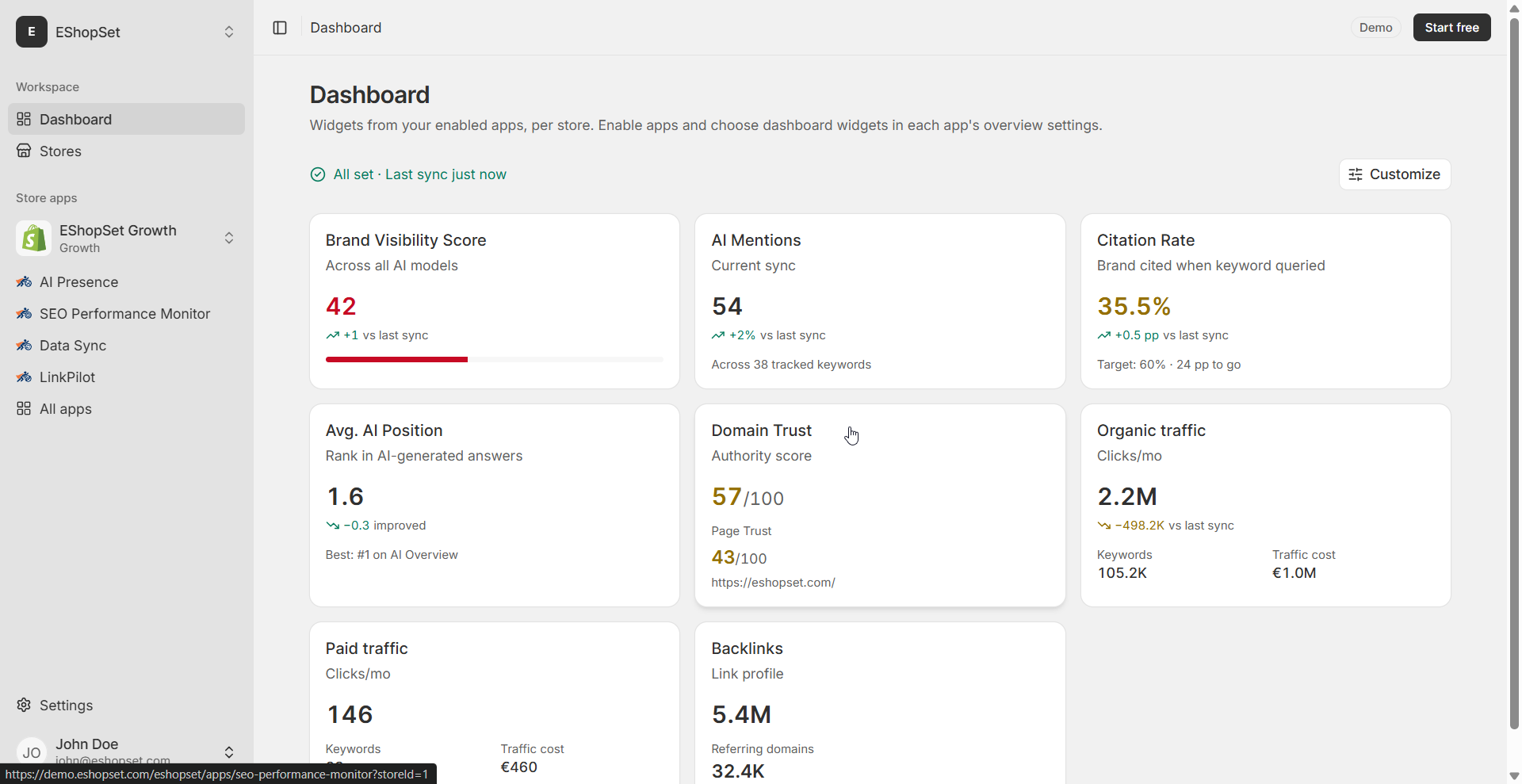
While tools like EShopSet's SEO Performance Monitor give you a powerful Shopify SERP ranking tracker and help you track Shopify keyword positions, understanding the underlying crawl behavior from logs can explain why those positions fluctuate or why new content isn't gaining traction. It's about moving from 'what' is happening to 'why' it's happening.
"Log analysis is underrated for small sites. I've been meaning to set up a crawler but keep getting pulled into content work instead."This sentiment from a community member perfectly encapsulates the challenge: the perceived effort versus the potential reward. Historically, log file analysis was seen as a complex, resource-intensive task reserved for large enterprises. However, with modern tools and cloud-based solutions, extracting and analyzing log data has become significantly more accessible, even for independent Shopify merchants.
Practical Steps for Shopify Merchants
So, how can a busy Shopify merchant integrate these insights without getting lost in a rabbit hole?
- Prioritize a Well-Structured Site: As several community members emphasized, a well-structured site with proper internal linking significantly reduces the need for constant, deep log analysis. Focus on clear navigation, logical product categories, and relevant internal links between pages.
- Use GSC as Your First Line of Defense: Continue to rely on GSC for its high-level reports on indexing, mobile usability, and performance. It's an excellent starting point for identifying broad issues.
- Consider LFA When Something Feels Off: If you notice a sudden drop in organic traffic, new products aren't getting indexed, or your Shopify SERP ranking tracker shows unexpected declines despite your best efforts, it might be time for a deeper dive.
- Focus on Key Metrics: If you do look at logs, focus on specific metrics: crawl frequency of important pages (e.g., new products, bestsellers), status codes (looking for 4xx or 5xx errors), and bot activity on non-existent pages.
For merchants relying on EShopSet's Sheet2Cart for efficient, perhaps even a weekly Shopify catalog sync, ensuring that search engine bots are promptly crawling and indexing these updates is paramount. Log analysis can provide direct confirmation that your updated inventory is being discovered as intended.
Conclusion: A Proactive Approach to Shopify SEO
While Google Search Console remains an indispensable tool for every Shopify merchant, the community discussion clearly illustrates that log file analysis offers a layer of granular insight that can be incredibly valuable. It's not about replacing GSC, but complementing it to build a more robust, proactive SEO strategy.
Understanding how search engine bots truly interact with your store allows you to catch hidden issues, optimize crawl budget, and ensure your valuable content is seen. By leveraging EShopSet's suite of apps—from the SEO Performance Monitor to track your rankings, AI Presence to optimize for conversational AI, and Sheet2Cart for seamless catalog management—you empower your Shopify store with the tools to not only react to SEO challenges but to anticipate and prevent them, ensuring sustained growth and visibility in a competitive online landscape.