Smart Automation for Shopify: The Tasks You Should Never Hand Over to AI Completely
Hey there, fellow Shopify merchants and store operators! We've all seen the incredible buzz around AI lately. It feels like every week there's a new tool promising to revolutionize how we run our businesses. But amidst all the excitement, a crucial question often gets overlooked: Where do we draw the line? What ecommerce tasks, no matter how tempting, should we never fully trust AI to automate?
This very question sparked a lively discussion in an online community recently, and it really hit home for us here at EShopSet. The original poster beautifully articulated the core dilemma: there’s a big difference between automating repetitive work and handing over important decisions. Let's dive into what real-world operators had to say about where they draw that line.
The Non-Negotiables: Money and Sensitive Customer Interactions
One of the strongest themes emerging from the discussion was a unanimous caution around anything that directly touches money or requires sensitive human judgment. Several community members quickly pointed to "auto-refund" as a task they would never fully automate. Imagine the potential for error or even abuse if an AI could unilaterally issue refunds without human review!
Another respondent echoed this sentiment, stating they wouldn't trust AI with "Anything where accuracy needs to be 100% and where it touches money." This makes perfect sense, right? While AI can process data incredibly fast, the nuances of a refund request – understanding a customer's specific issue, verifying return conditions, or even de-escalating a potentially frustrating situation – often require empathy and critical thinking that current AI models just aren't built for.
Similarly, "customer complaints and refunds" were grouped together as tasks best left to human hands. While AI can certainly draft initial responses or categorize complaints, the final send-off, especially for an angry customer, needs a human touch. A bot might provide a technically correct answer, but it's unlikely to convey genuine understanding or offer a creative solution in a complex scenario. The goal isn't just to resolve an issue, but to retain a customer, and that often comes down to how they feel they were treated.
Maintaining Authenticity: The Face of Your Brand
Beyond finances and direct customer service, an interesting point was raised about the visual and emotional connection with customers, particularly in advertising. One community member highlighted that while AI can be fantastic for "draft briefs, sort applications, write the first cut of the copy, even pick which variations to test next," the "person in the ad" itself must be real. The moment viewers sense a synthetic face or voice saying "this actually worked for me," the entire ad loses credibility. Trust is paramount in ecommerce, and an authentic human connection builds that trust.
This insight extends to your overall brand presence. While tools like EShopSet's AI Presence can assist in generating compelling product descriptions, blog post ideas, or social media content, the final review and infusion of your unique brand voice should always come from a human. AI is a powerful assistant, not a replacement for your brand's soul.
The Sweet Spot: Where AI Truly Empowers Shopify Merchants
So, if there are tasks AI shouldn't handle alone, where does it truly shine for Shopify store operators? The consensus is clear: AI excels at tasks that are data-heavy, repetitive, or require analysis beyond human capacity – always under human supervision. Think of it as a super-efficient co-pilot.
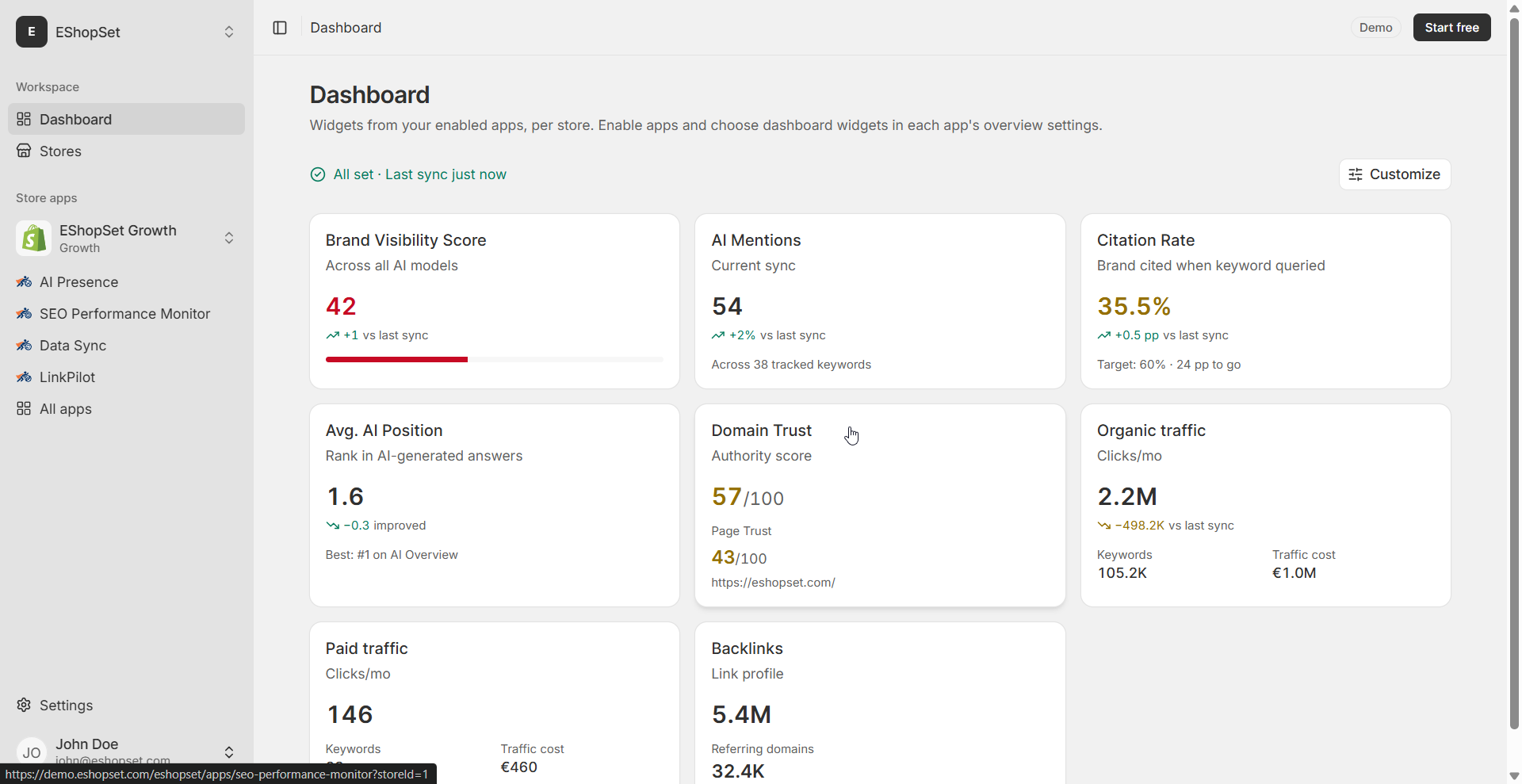
- Data Analysis & Monitoring: AI can continuously monitor vast amounts of data, identifying trends and potential issues. For instance, an app like EShopSet's SEO Performance Monitor leverages smart algorithms to keep an eye on crucial metrics. It can track your Shopify organic keyword rankings, alert you to drops, or even help analyze competitor strategies. While an AI might flag a sudden dip in your Shopify backlink monitor, a human needs to investigate the cause and strategize a recovery.
- Content Generation (Drafts): As mentioned, AI is brilliant for generating first drafts, brainstorming ideas, or creating variations. Need ideas for a new product description or a quick social media caption? AI Presence can give you a fantastic starting point, saving hours of staring at a blank screen.
- Catalog Management: While not strictly AI, automation tools like EShopSet's Sheet2Cart exemplify how smart systems can handle repetitive, accuracy-critical tasks. Syncing product data from a Google Sheet directly to your Shopify store, ensuring prices, inventory, and descriptions are always up-to-date, is a perfect example of automation that frees up your time for more strategic work.
The key takeaway from the community discussion and our own experience is that AI is a tool for augmentation, not abdication. It can enhance efficiency, provide insights, and handle the grunt work, but the final decision-making, especially concerning money, customer relationships, and brand integrity, remains firmly in human hands.
EShopSet Team Comment
We absolutely agree with the community's insights: AI is a powerful ally, but human judgment is irreplaceable for critical ecommerce operations. Tasks involving direct financial decisions, sensitive customer interactions, or the authentic voice of your brand demand human oversight. Our EShopSet apps are designed to empower merchants by automating the analytical and repetitive, freeing you to focus on strategic decisions. For example, our SEO Performance Monitor handles the complex data tracking, so you can make informed decisions about your SEO strategy, while AI Presence provides creative assistance, ensuring your brand's unique character shines through with your final human touch.
In essence, the future of ecommerce isn't about replacing humans with AI; it's about a powerful collaboration. Leverage AI for its incredible speed and analytical prowess in areas like monitoring your Shopify organic keyword rankings or generating content drafts. But always remember to bring your unique human empathy, critical thinking, and strategic vision to the table for those tasks that truly define your brand and customer relationships. It's about working smarter, not just harder, by knowing exactly where to draw the line.