Beyond the Sale: How Shopify Merchants Can Unlock Hidden Revenue with Smart Operations
Hey there, fellow Shopify merchants and store operators! Ever find yourself pondering how the big players in the digital world manage to squeeze every bit of value out of their customer interactions? I recently stumbled upon a fascinating discussion in an ecommerce community that really got me thinking, and I knew I had to share these insights with you.
The original poster in this community thread did a deep dive into how giants like Uber Eats and DoorDash monetize their orders, not just through the obvious transaction fees, but across the entire customer journey: before, during, and after checkout. While we might not be building multi-billion dollar delivery platforms, the underlying lessons are pure gold for any Shopify store looking to optimize its operations and unlock new revenue opportunities.
The Big Picture: Monetizing the Full Customer Journey
The core takeaway from the discussion was brilliant in its simplicity: don't just focus on the sale itself. Look at everything that happens around it. The original poster broke down their analysis into three key areas:
- Before Checkout: Selling Visibility Through Ads. Once a platform has enough merchants, competition for customer attention becomes fierce. This creates an opportunity to sell premium visibility. Think sponsored listings or in-app promotions. For us, this translates directly to how we get customers to our store in the first place.
- During Checkout: Transaction and Service Fees. This is the bread and butter, the core exchange of value. For Shopify stores, this is straightforward: a customer buys a product, and you earn revenue (minus platform fees and costs).
- After Checkout: Membership and Fulfillment Infrastructure. This is where the long-term relationship building comes in. Subscriptions (like Uber One or DashPass) encourage repeat business and loyalty. And platforms can even offer their fulfillment services to merchants who take orders on their own sites, essentially white-labeling their infrastructure. For us, this means fostering loyalty and ensuring smooth post-purchase experiences.
Now, I know what you're thinking: "My Shopify store isn't Uber Eats!" And you're absolutely right. The original poster explicitly stated that directly copying these models isn't feasible for most ecommerce businesses. However, the crucial insight is to look at the *activity around your main transaction* and identify where you can genuinely make things easier or more valuable for your customers.
Translating Big Tech Lessons to Your Shopify Store
1. Boosting Visibility 'Before Checkout'
For large platforms, this means selling ad space. For Shopify merchants, it's all about effective marketing and, crucially, Search Engine Optimization (SEO). How do you make sure potential customers find your products when they're searching online?
- SEO is Your Ad Space: Instead of paying a platform for visibility, you earn it through strong SEO. This means optimizing your product titles, descriptions, blog content, and overall store structure to rank higher in search results. The better your SEO, the more organic traffic you attract, which is essentially 'free' visibility.
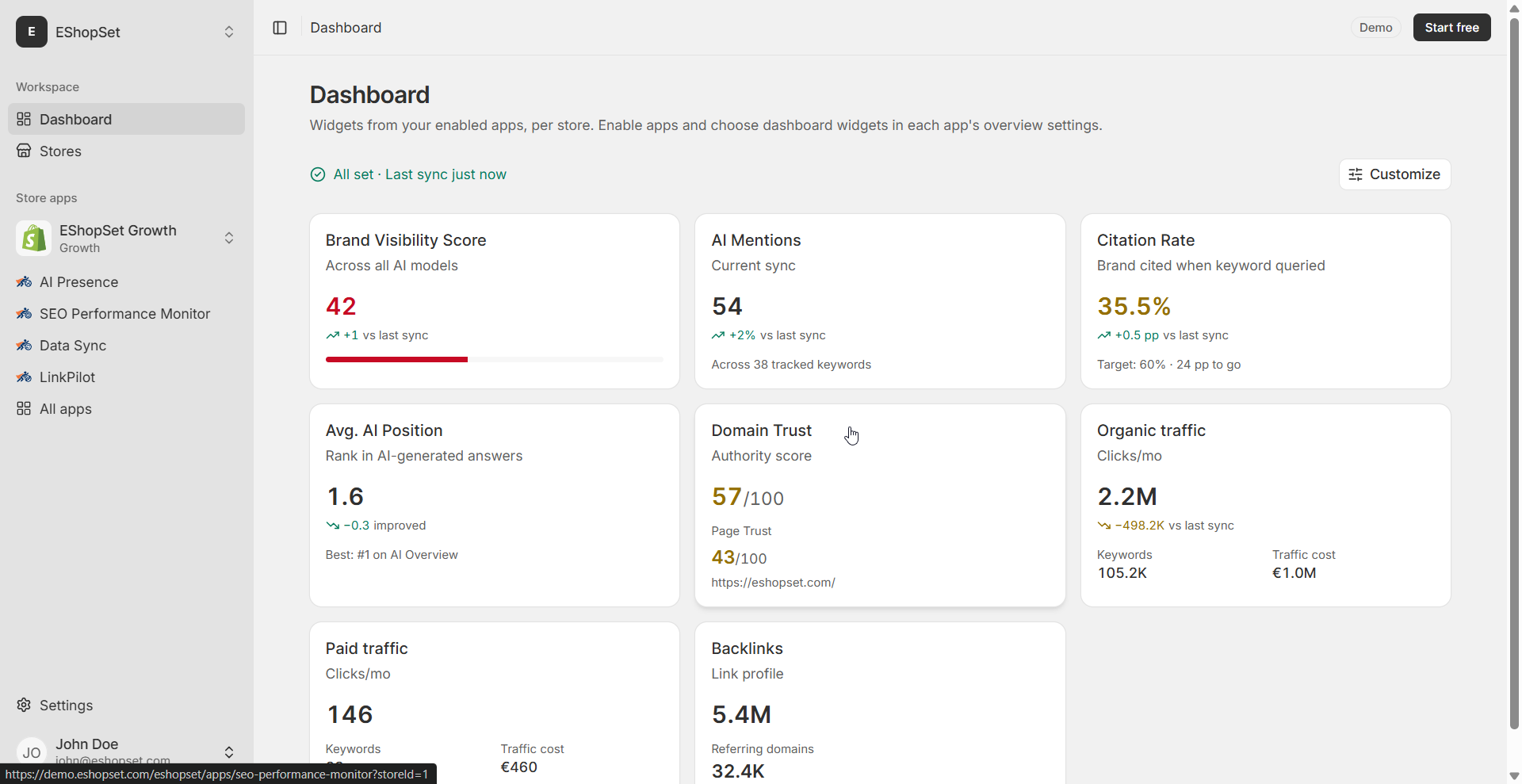
- Monitor Your Performance: You can't improve what you don't measure. Tools like EShopSet's SEO Performance Monitor are invaluable here. They help you track Shopify keyword positions, see how your competitors are doing, and identify opportunities to climb the rankings. Knowing exactly where you stand for critical keywords is like having an X-ray vision into your organic ad effectiveness.
- Engaging Content for Presence: Beyond technical SEO, creating compelling content that resonates with your audience can significantly boost your online presence. This is where AI tools come into play. EShopSet's AI Presence can help you generate high-quality, SEO-friendly product descriptions, blog posts, and marketing copy, ensuring your store is not just visible, but also engaging and authoritative. This contributes heavily to your 'before checkout' efforts.
2. Streamlining 'During Checkout' & Beyond with Strong Infrastructure
While we don't handle fulfillment for other businesses, the idea of robust 'merchant infrastructure' applies directly to how we manage our own product catalogs and store data. A smooth, error-free checkout experience relies on accurate product information and efficient operations.
- Master Your Product Data: Imagine trying to run a delivery platform with incorrect restaurant menus. Chaos! The same applies to your Shopify store. Accurate, up-to-date product information is foundational. Managing large catalogs, especially with frequent updates, can be a major headache.
- Automate Your Catalog Management: This is where EShopSet's Sheet2Cart shines. It allows you to seamlessly sync your product data between Google Sheets and Shopify. Need to update prices, inventory, or descriptions for hundreds of products? Do it in a sheet, and Sheet2Cart handles the rest. This drastically improves your operational efficiency, ensuring your 'during checkout' experience is flawless with accurate product details. It's your internal 'merchant infrastructure' for data.
3. Fostering Loyalty 'After Checkout'
While EShopSet doesn't offer membership programs directly, the overall goal of increasing frequency and retention is something all our apps contribute to indirectly. A customer who finds your store easily (thanks to SEO Performance Monitor and AI Presence), has a great experience with accurate product info (thanks to Sheet2Cart), and finds your content engaging will naturally be more likely to return and become a loyal customer.
EShopSet Team Comment
The original Reddit discussion offers a fantastic framework for Shopify merchants to re-evaluate their business strategies. We firmly believe that by focusing on optimizing these 'before, during, and after' phases of the customer journey, merchants can significantly boost their revenue and operational efficiency. Leveraging powerful tools like EShopSet's bundle of apps—SEO Performance Monitor for visibility, AI Presence for engagement, and Sheet2Cart for robust catalog infrastructure—is a direct, actionable way for Shopify store owners to implement these high-level monetization principles without needing to be an Uber Eats.
So, take a moment to reflect on your own Shopify store's journey. Where can you enhance visibility before the customer even thinks of buying? How can you ensure your 'merchant infrastructure' makes the buying process seamless? And what can you do to keep them coming back for more? By strategically applying these insights and leveraging the right tools, you're not just running a store; you're building a highly optimized, revenue-generating machine.