Turning Comparison Page Wins into Service Page Success for Shopify Merchants
Ever found yourself celebrating a win with one type of page on your Shopify store, only to scratch your head wondering why another, seemingly more important, page isn't getting any love from search engines? It's a common dilemma, and one that recently sparked a lively discussion in an online community of SEO pros. The original poster had a service business with a website, and while their comparison pages (like 'Best AI software agencies for healthcare') were ranking well, their core service pages were barely getting impressions. Their burning questions:
- Anyway this could be fixed?
- I'd ideally want to drive traffic to my service pages rather than get it in comparison pages.
- How do you monetise the comparison pages traffic?
They even wondered if those comparison pages were truly helping monetarily. Let's dive into what the community had to say and how Shopify merchants can apply these insights to their own stores.
The Power of Comparison Pages: More Than Just Information
The consensus from the community was clear: those comparison pages are gold, not a liability! One respondent aptly put it, "that traffic is absolutely money." People searching for comparisons are often deeper in the buying funnel; they're already shopping, evaluating options, and just need a gentle nudge towards a solution. The challenge isn't that the comparison pages aren't valuable, but rather how to effectively bridge the gap to your core service or product offerings.
Strategy 1: Nudge, Don't Push – Integrate Your Services
A key piece of advice was to "lean into" the comparison pages. Instead of viewing them as separate, unrelated entities, weave your services directly into the content. A community member suggested including a "soft pitch" in the body of each comparison page. Think along the lines of: "If you're looking for a done-for-you solution in X area, here's how we approach it..." and then link directly to your relevant service page early in the article, not just hidden in a footer.
For Shopify merchants, this means:
- Identify your top-performing comparison-style content (e.g., "Best [Product Type] for [Niche]" or "[Product A] vs. [Product B]").
- Naturally introduce your own relevant products or services within the body. Instead of just reviewing others, present your offering as a strong contender or an ideal solution for specific needs mentioned in the comparison.
- Use clear, compelling calls to action (CTAs) that lead to your product or collection pages.
Strategy 2: Own the Narrative – Position Yourself for AI & Authority
Another insightful contributor flipped the script, stating, "The comparison pages aren't the thing to monetise, they're the asset." This perspective is particularly relevant in today's AI-driven search landscape. Pages like "best X for healthcare" are precisely what AI answers get built from. Service pages, being inherently commercial, are often skipped by AI models looking for informational authority.
If your comparison page ranks, you're in the pool from which AI assembles answers. The advice here was profound: rather than solely pushing traffic to a service page, ensure you're properly listed on your own comparison pages, named the same way as everyone else, with similar detail. If an AI model lifts that list, you want to be in it. This directly impacts your potential for better Shopify product SEO rankings not just from traditional search, but also from AI-powered summaries and answers.
To implement this:
- Review your comparison content: Are you listed among the competitors? If not, add your own Shopify store's product or service with an unbiased (but positive) description, just like you would for others.
- Check AI visibility: Run searches in AI chatbots (like ChatGPT, Bard, etc.) for the topics your comparison pages cover. See if your page is cited and if your business is named in the answer. This gives you a clear picture of your AI presence.
Strategy 3: Build Authority, Don't Just Copy
A final, provocative point from a community member challenged the common "write for intent BS." While intent is crucial, blindly copying competitor listicles isn't always the best path. Instead, focus on building authority. For example, if you're comparing your product to a well-known brand, consider building a dedicated comparison/alternative page for that specific competitor. But don't stop there. Why not create content that highlights why your Shopify store's offerings are the best, listing your top reasons?
This approach emphasizes unique value proposition and deep dives into your own strengths, which can be more impactful than simply being one among many in a generic list. This strategy directly helps improve Shopify product SEO rankings by establishing your store as an authority in its niche, rather than just a reviewer of others.
EShopSet Team Comment
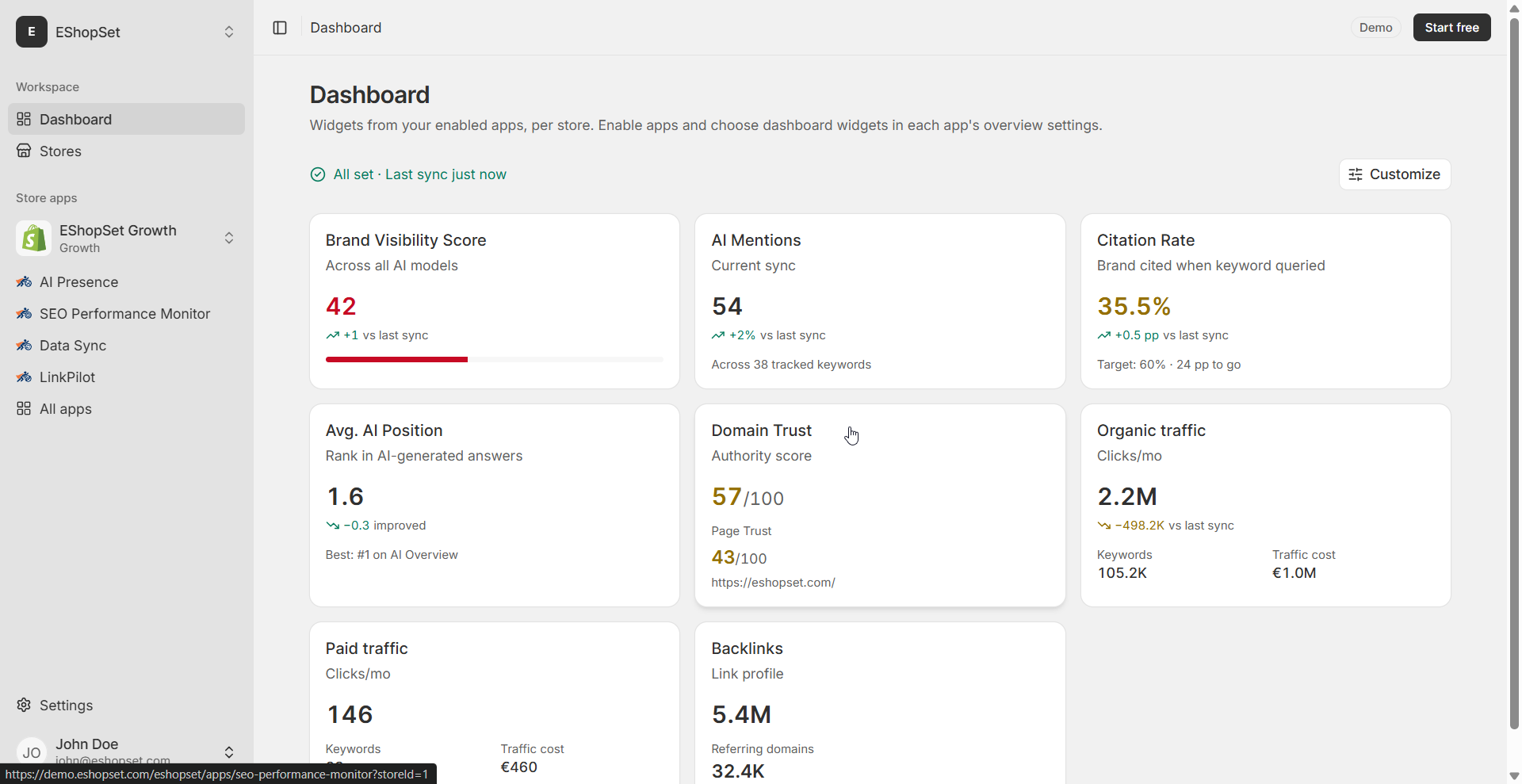
The community's insights here are spot on for Shopify merchants. We firmly believe that comparison pages are powerful assets that should be leveraged strategically, not ignored. The key is to integrate your offerings naturally and optimize for both traditional search intent and emerging AI visibility. EShopSet's SEO Performance Monitor is essential for tracking how these strategic adjustments impact your Shopify product SEO rankings and impressions, ensuring your service pages climb. Furthermore, our AI Presence app directly helps merchants understand and optimize their content to be effectively cited and presented by AI models, aligning perfectly with the advice to 'own the narrative.' Finally, while not directly an SEO tool, Sheet2Cart ensures your product data is consistent and accurate, providing a solid foundation for all your SEO efforts.
In essence, the solution isn't to abandon your high-ranking comparison content, but to integrate it smartly with your service pages. Use those comparison pages as a magnet, drawing in interested shoppers, and then guide them seamlessly to your unique solutions. By optimizing for both human search intent and AI visibility, Shopify merchants can turn their comparison page wins into significant gains for their core service and product offerings. It's all about understanding what people are searching for and then strategically positioning your store as the ultimate answer.