Solving 'Discovered - Currently Not Indexed' on Shopify: Expert Insights for Merchants
Ever logged into Google Search Console (GSC) and seen that frustrating "Discovered - currently not indexed" status for some of your Shopify store pages? You're definitely not alone. It's a common head-scratcher for many merchants, and recently, a lively community discussion shed some light on what’s really going on and, more importantly, what you can do about it.
The original poster in this discussion was grappling with this exact issue, noting that Google showed only 1-3 internal links to these problematic URLs. They wondered: is it a low internal link depth problem, or a content quality issue?
Understanding 'Discovered - Currently Not Indexed'
One expert in the thread cut straight to the chase: "Discovered - currently not indexed" means Google has found your page's URL (perhaps from a sitemap or another link), but hasn't actually crawled or processed its content yet. Think of it like Google knowing a book exists in a library, but not having opened it to read a single page.
This is a crucial distinction. At this stage, Google hasn't evaluated your content's uniqueness or value because it hasn't even looked at it. So, while content quality is absolutely vital for ranking later, it's not the reason your page is stuck in 'Discovered' limbo.
The Role of Internal Linking: More Than Just a Number
Several community members pointed fingers at low internal linking as a primary culprit. If Google only sees a few weak links pointing to a page, it might not prioritize crawling it. As one respondent put it, "If Google only finds 1-3 internal links, increasing crawl priority and improving page connections often helps before assuming it's a content quality issue."
However, another expert added a valuable nuance: internal links aren't just a "checkbox exercise." It's not just about the number of links, but their quality, relevance, and the authority of the pages linking to them. A link from a highly trafficked, relevant product category page holds more weight than a random link from an obscure blog post.
The idea of "crawl depth"—how many clicks away a page is from your homepage—was also discussed. While often a useful proxy, it's not the absolute rule. The authority of linking pages and the overall site architecture play a bigger role in signaling importance to Google.
Actionable Steps for Shopify Merchants
So, what can you do to move your pages from 'Discovered' to 'Indexed'?
- Audit Your Internal Links: Identify the pages stuck in 'Discovered' status. Then, look for highly relevant, authoritative pages on your Shopify store that could link to them. Think about category pages, popular blog posts, or even your homepage for key products. Make sure these new internal links use descriptive anchor text relevant to the target page's content.
- Focus on Relevance and Authority: Prioritize adding links from pages that Google already highly values and that are topically relevant to the 'Discovered' page. This helps Google understand the context and importance of the page you want indexed.
- Submit Sitemaps Regularly to GSC: Ensure your Shopify sitemap is always up-to-date and submitted to Google Search Console. This is Google's primary roadmap for your store.
- Consider a "Slug Refresh" (with caution): One expert suggested a bold move: making a slight edit to the URL slug (e.g., from "blue-tshirt" to "blue-cotton-tshirt"), updating internal links to this new URL, and then requesting a re-crawl. This can sometimes "unstick" pages. However, proceed with extreme caution, as incorrect URL changes can lead to broken links and further SEO issues. Ensure proper 301 redirects if you do this for existing, indexed pages.
- Don't Forget Other Search Engines: While Google is dominant, one community member shared success by focusing on other engines like Bing, Yandex, and DuckDuckGo (which uses Bing for indexing). Using tools like IndexNow can help expedite indexing on these platforms. Sometimes, getting traffic from other sources can eventually prompt Google to pay more attention. This is a good reminder that a diverse traffic strategy is always wise.
Remember, once your pages are indexed, that's when content quality, user intent, and keyword optimization truly come into play to influence your Shopify ranking distribution 1-10. Getting discovered is the first hurdle; ranking well is the marathon.
EShopSet Team Comment
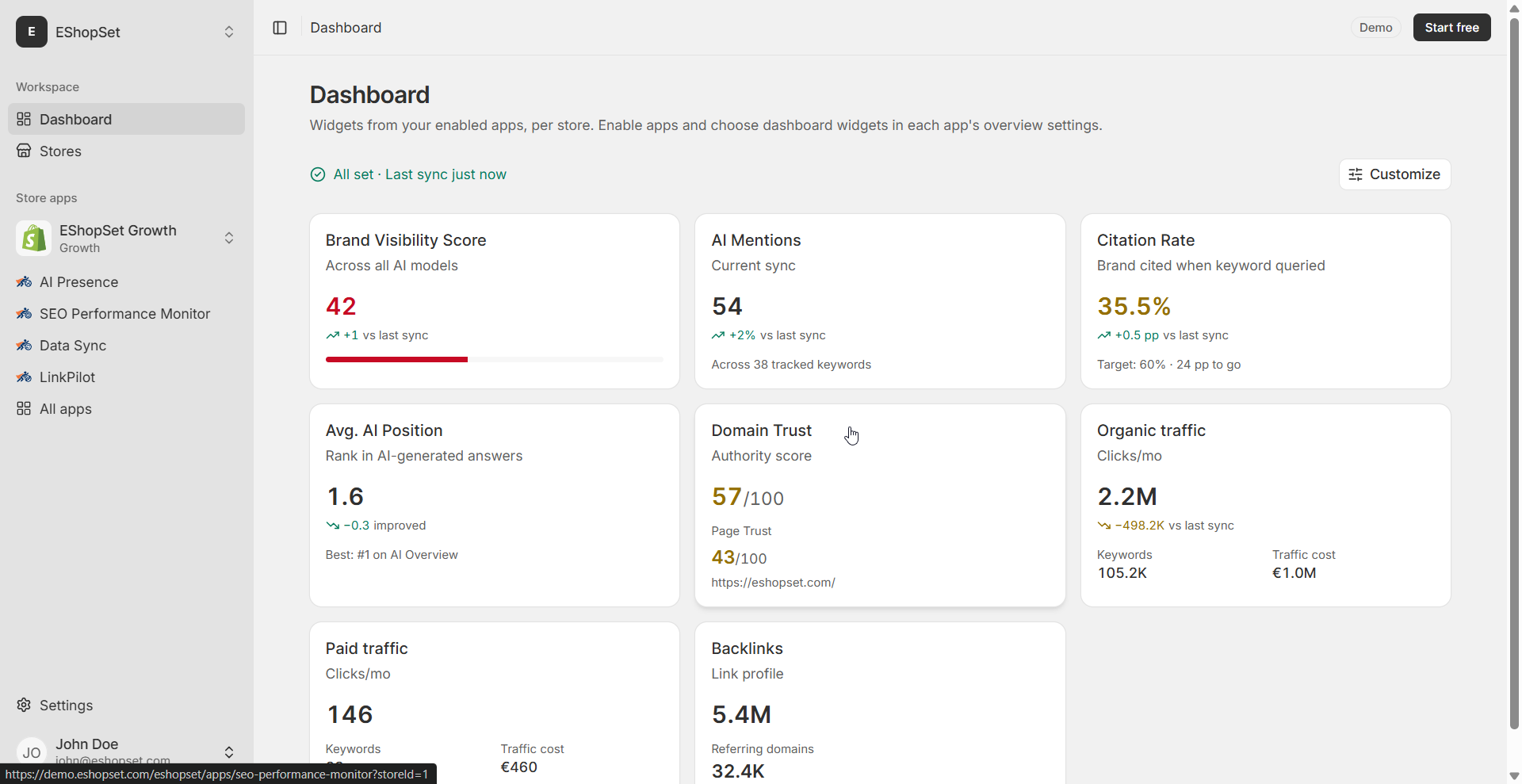
We agree with the sentiment that 'Discovered, currently not indexed' is primarily a crawling and discovery issue, not a content quality problem at this specific stage. For Shopify merchants, ensuring your site architecture and internal linking are robust is paramount. Our SEO Performance Monitor can help you track these indexing statuses across your store, quickly identifying pages Google isn't picking up. While content quality isn't the immediate fix for this specific status, once pages are indexed, our AI Presence app can help you optimize them for better visibility and user intent, moving beyond just being 'discovered' to actually ranking. For managing product data that underpins strong internal linking, Sheet2Cart ensures your product catalog is always fresh and correctly structured, which supports Google's ability to discover and understand your offerings, even letting you Shopify match products by SKU from Sheets for seamless updates.
Ultimately, solving the 'Discovered - currently not indexed' puzzle often boils down to making it as easy as possible for Google to find and understand your important pages. By strategically improving your internal linking and consistently monitoring your GSC reports, you'll be well on your way to getting those pages into the index and competing for valuable organic traffic. These steps are foundational to running efficient daily operations for your Shopify store, making them some of the best Shopify apps for store ops when combined effectively.