Navigating Google's AI Overviews: A Shopify Merchant's Guide to Thriving in the New Search Landscape
Hey there, fellow Shopify store operators! You know, we're all constantly navigating the ever-shifting sands of online retail, and lately, the ground beneath us feels a bit more turbulent thanks to Google’s latest moves with AI Overviews. I was just catching up on a really lively community discussion that got me thinking, and I wanted to share some key takeaways and what they mean for your daily operations.
The original poster in this discussion brought up a big change: Google is now pushing searchers directly into AI Mode from AI Overviews by default. This means a much fuller AI answer appears right away, often with an "Ask anything" box, potentially satisfying a user's query without them ever clicking through to a website. This sparked a flurry of reactions, and honestly, it’s a conversation we all need to be part of.
What Does Google's AI Overviews Shift Mean for Your Shopify Store?
One community member kicked things off by questioning Google's "endgame." Is it about combating the rise of standalone AI assistants? And if AI answers reduce click-through rates, how will ads remain profitable? This is a crucial point for us, because fewer clicks mean less traffic, and less traffic can mean fewer sales.
Several respondents echoed a growing concern: information-based sites are going to take a hit. One person candidly shared their traffic was down significantly, forcing them to consider leaving the publishing game. This is a stark reminder that if your business relies purely on informational content for traffic, the landscape is becoming incredibly challenging. The AI can simply summarize and present that information directly.
Where Do Shopify Stores Stand? Surviving and Thriving in the AI Era
But it's not all doom and gloom! There was a strong consensus that certain types of online presence are more resilient. "Ecommerce, apps and video survive," one community member stated, though they warned of increased competition. Another added that "local search" also holds strong. Why? Because these often require direct interaction, a purchase, or a physical visit that AI can't fully replicate.
A really insightful point came up: AI might eat informational clicks, but what about commercial or transactional queries? One expert suggested we "Split informational vs commercial queries in GSC and compare CTR and conversions." This is gold for Shopify merchants! If AI Overviews primarily satisfy users looking for general information, but those with "high purchase intent" still click through to product pages or ads, then our focus needs to shift. We need to optimize for those commercial queries where users are looking to buy, not just learn.
Think about it: AI can tell you about a product, but it can't sell you one directly (yet!). This means your product pages, your unique selling propositions, your customer reviews, and your overall shopping experience become even more vital. We need to ensure that when a potential customer is ready to make a purchase, your Shopify store is the obvious, trusted destination.
Adapting Your Strategy: Beyond Informational Content
So, how do we adapt? Here are a few strategies gleaned from the discussion and our own expertise:
- Focus on Product-Centric Content: Instead of just blogging about general topics, ensure your product descriptions are rich, detailed, and answer specific purchasing questions. Use high-quality images and videos. Think about what makes your product unique and how it solves a customer's problem.
- Leverage Unique Data & Tools: AI models are trained on existing data. If you have proprietary product data, unique customer insights, or an interactive tool on your site, that's something Google's AI can't easily replicate. This is where apps truly shine. For instance, if you're a merchant who needs to quickly and accurately handle large volumes of product data, maybe you need to Shopify import products from Google Sheets directly into your store. This ensures your catalog is always fresh and detailed, giving you an edge.
- Build Brand Authority & Direct Traffic: Don't put all your eggs in the Google search basket. Focus on building a strong brand identity. Encourage direct visits, email list sign-ups, and social media engagement. Actively monitor for Shopify brand mentions Perplexity or other AI tools, and ensure your brand narrative is consistent and strong across all channels. This helps create a loyal customer base that comes directly to you, rather than relying solely on search engine referrals.
- Optimize for Transactional Keywords: Double down on keywords that indicate purchase intent ("buy X," "best Y for Z," "X reviews," "X vs Y"). Ensure your product pages and category pages are perfectly optimized for these terms.
EShopSet Team Comment
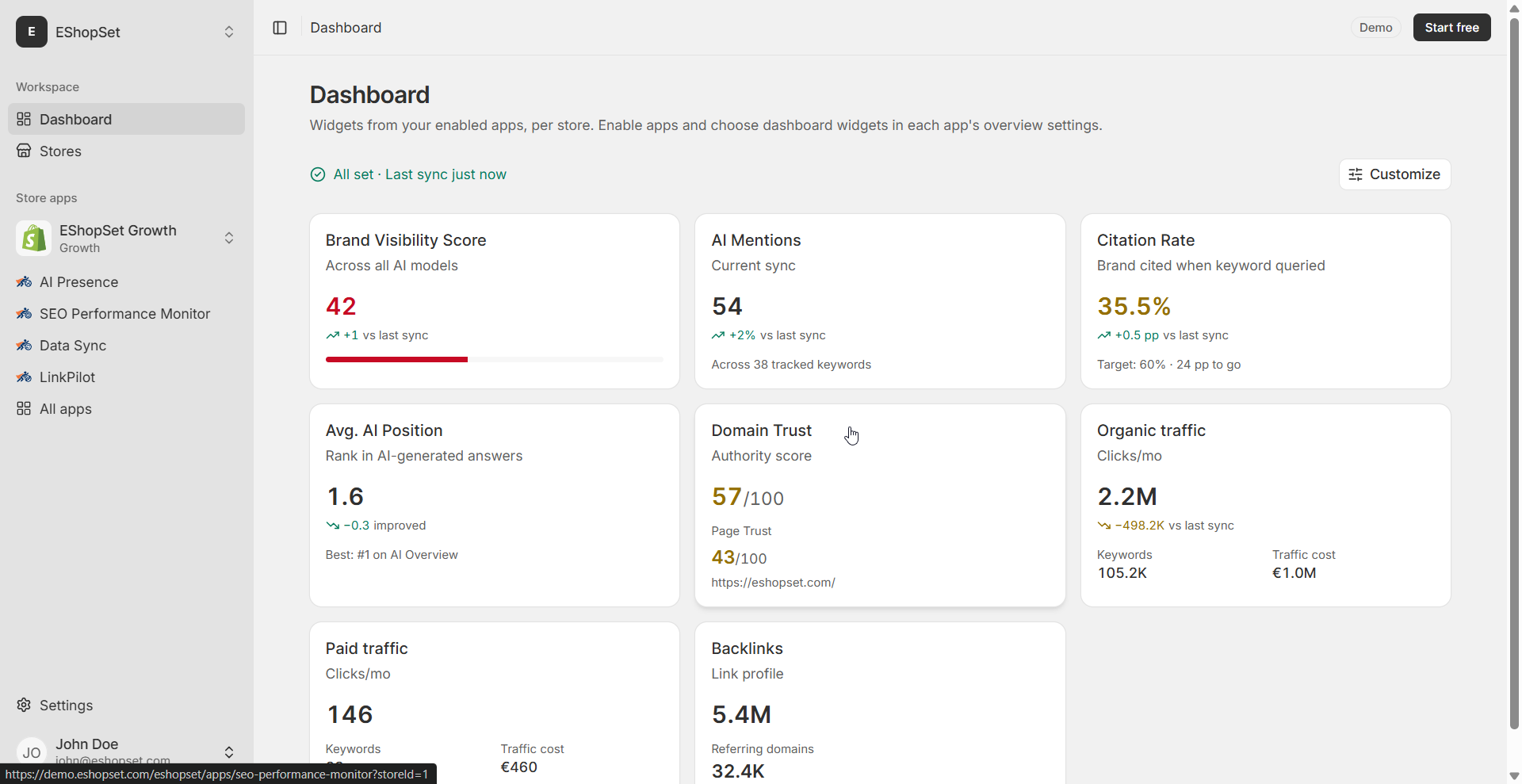
The EShopSet team views this shift in Google’s AI Overviews as a critical inflection point for Shopify merchants. While informational content may face headwinds, the core value of ecommerce – providing unique products and a seamless buying experience – remains. We believe merchants must proactively monitor their SEO performance and brand presence and maintain impeccable product data. Our SEO Performance Monitor helps you track keyword rankings and traffic shifts, while AI Presence ensures your brand is accurately represented across AI models. And for managing your product catalog efficiently, Sheet2Cart is indispensable for Shopify import products from Google Sheets, keeping your inventory up-to-date and competitive.
Ultimately, the consensus from the community discussion is clear: "Adapt and survive is true. But part of that may mean to leave dying industries." For Shopify merchants, this isn't about leaving ecommerce, but about evolving our strategies. Focus on what Google's AI can't easily replicate: the unique value of your products, the trust you build with your customers, and the seamless shopping experience you provide. By focusing on these strengths and leveraging the right tools, your store can not only survive but thrive in this exciting, albeit challenging, new era of search.