From Side Hustle to Shopify Success: Decoding Your First Steps in Online Selling
Ever felt that itch to build something that works for you, even while you’re catching some Zs? That’s exactly what the original poster (OP) in a recent community discussion was feeling. At 42, tech-savvy but completely new to the world of online sales, they shared a common dilemma: where do you even begin when you want to make your first dollar online?
The OP, a hands-on educator used to tutoring and manual labor, realized the profound appeal of passive income after dabbling in investments. They’d been experimenting with Printify, trying to grasp the basics of print-on-demand, but quickly discovered that being comfortable with technology and understanding online sales are two very different beasts. Their goal wasn't to get rich overnight, but simply to make that first $20, to prove the process works and understand the 'machine'. They asked the community: What’s the easiest way for someone starting from zero to learn how online selling works? Where would you start?
The Community Weighs In: Passion, Platform, and the Real Challenge
The responses from seasoned ecommerce veterans were incredibly insightful, cutting straight to the core of what it takes to succeed online. While some offered quick encouragement to 'start something and figure it out,' others provided a more structured roadmap.
1. Start with Passion and Product, Not Just the Platform
One recurring theme was the importance of starting with something you're genuinely passionate about or deeply understand. As one community member put it, 'You need your topic, your niche what you like doing first before your even think about all the other stuff.' Another echoed this, suggesting you figure out 'what you are actually interested in, can easily get and think people that you are around actually need.' This means identifying a product or service that resonates with you and fills a genuine market need, rather than just chasing the latest trend.
2. Shopify: A Solid Launchpad for Your Online Store
While the OP listed various platforms like Etsy, Amazon, and eBay, several respondents quickly pointed towards Shopify. For many, Shopify offers the best balance of user-friendliness for beginners and powerful scalability for growth. It provides a robust foundation for building your brand, managing products, and processing sales, making it an excellent choice for someone looking to understand the entire online selling process from end-to-end.
3. The Real Mountain: Getting Customers and Traffic
This was the most critical takeaway from the discussion, and it’s where many new merchants get stuck. As one respondent brilliantly articulated, 'i can build a computer and troubleshoot networks but that didn't teach me anything about conversion rates, customer acquisition, or why people actually buy stuff. printify is the easy part honestly, it's just a tool. the hard part is figuring out what to actually sell and getting traffic to it.' Another added, 'Building something is easy and fun... Getting customers is completely different.'
The consensus was clear: having a great product or a beautifully designed store means nothing if nobody knows it exists. The challenge lies in driving traffic, acquiring customers, and navigating the high competition, high advertising costs, and often low margins of the online world. Some suggested that being 'good at and enjoy making online content yourself' is crucial for success in this environment.
Your Action Plan: From Zero to Your First Online Sale
Based on these insights, here’s a condensed action plan for someone like our original poster, aiming for that first $20 and a clear understanding of ecommerce:
- Find Your Niche & Passion: Before anything else, identify a product or service you're passionate about or have unique access to. What problem does it solve? Who is your ideal customer?
- Choose Your Platform Wisely: For building a sustainable brand, Shopify is often recommended due to its comprehensive features and ease of use. It allows you to control your brand identity and customer experience.
- Focus on Traffic Generation: This is your biggest hurdle. Explore various strategies:
- Organic Search (SEO): Optimize your product listings and store content to improve your Shopify organic keyword rankings. This can bring in free, high-quality traffic over time.
- Content Marketing: Create valuable content (blog posts, social media, videos) around your niche to attract and engage potential customers.
- Social Media: Build a presence where your audience hangs out.
- Be Methodical & Consistent: As one community member advised, 'Build reliable systems and funnels even when traffic is low. Treat it methodically- formulate a hypothesis, a test, and a way to track. Be consistent and not impulsive.' Learn from every small win and setback.
- Understand the Economics: Always consider the cost of goods, shipping, advertising, and platform fees. Can you make a profit?
EShopSet Team Comment
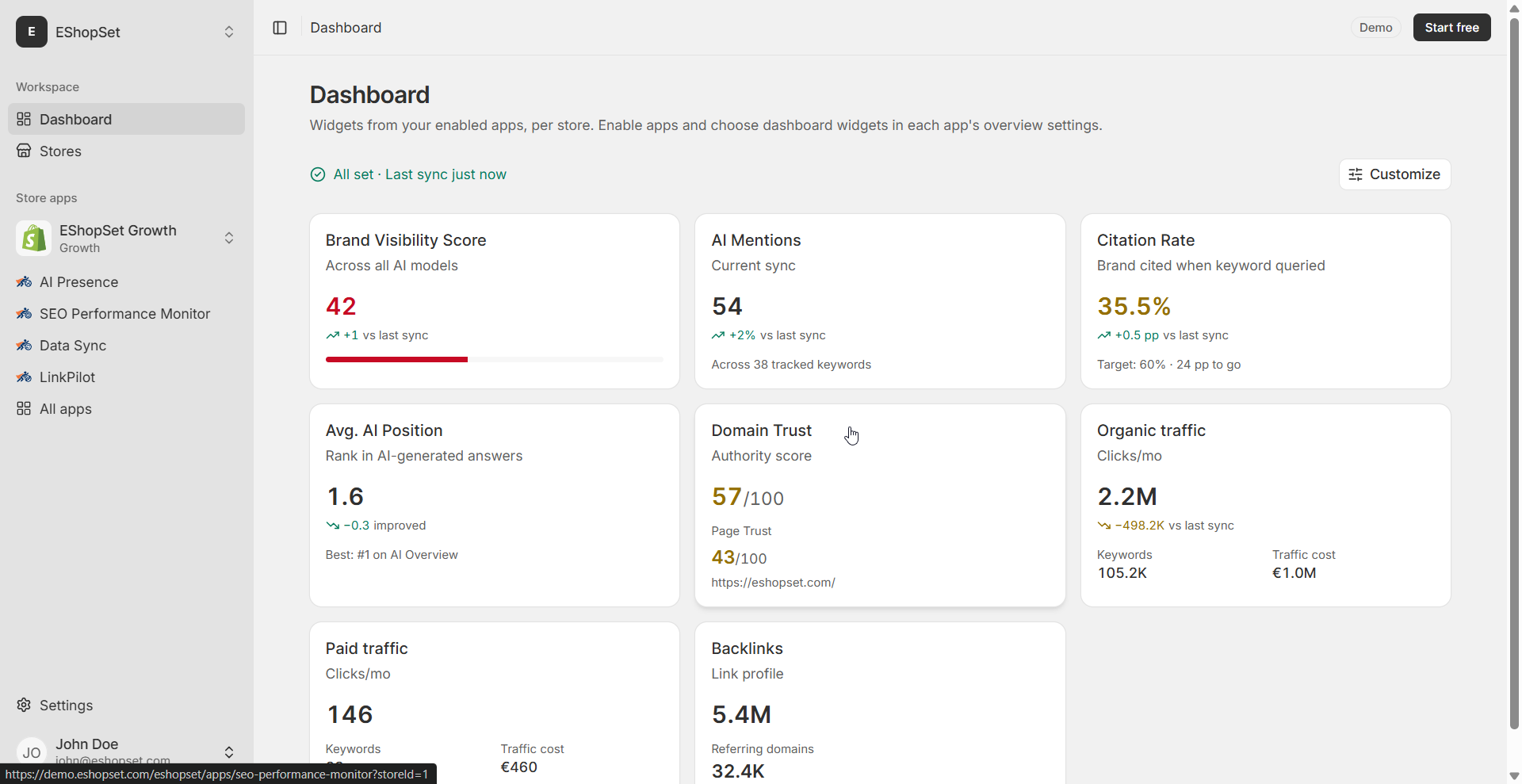
The community discussion perfectly highlights the core challenge for new Shopify merchants: building a store is often the easy part; getting customers is the real game-changer. We strongly agree that traffic and customer acquisition are paramount. This is precisely why EShopSet offers tools like SEO Performance Monitor to help you track and improve your Shopify organic keyword rankings, and AI Presence to help you create compelling content that stands out against competing domains in AI answers Shopify, driving that crucial visibility. For efficient product management, especially when you're starting and scaling, Sheet2Cart simplifies catalog updates and inventory sync, ensuring your products are always accurately represented.
Starting an online business is a journey, not a sprint. The desire to earn income while you're sleeping is a powerful motivator, but it requires diligent effort in understanding your market, attracting your audience, and continually optimizing your operations. Take that first step, learn the process, and build those reliable systems. The online world is waiting for your unique contribution!