Cracking the Code: Essential SEO KPIs & Automation for Shopify Merchants
Ever found yourself scrolling through a community forum, nodding along as experts debate the nitty-gritty of their craft? That’s exactly how I felt diving into a recent SEO mega-thread. It was a goldmine of practical insights, especially for us running Shopify stores. The core questions that popped up were universal: How do we actually measure SEO success, and what can we automate to make our lives easier?
Defining Your SEO Success: More Than Just Rankings
One community member kicked things off by asking about core KPIs (Key Performance Indicators) and metrics they report weekly to their core team and monthly to the larger team for SEO and AEO (App Store Optimization, though for us Shopify folks, it’s mostly about web SEO). This is such a critical question, right? Because if you don't know what to track, how do you know if your efforts are paying off?
A smart response quickly clarified that KPIs often depend on who you’re talking to. For the 'brand team,' the focus shifts to impressions and clicks. Think about it: impressions tell you how many people are seeing your store in search results, while clicks indicate how many are actually interested enough to visit. For a Shopify merchant, these are crucial early indicators of visibility and engagement. If your impressions are up, your store is appearing more often. If your clicks are rising, your titles and meta descriptions are doing their job, enticing potential customers to come check you out.
But for everyone else – the folks focused on the bottom line – the ultimate KPI is revenue generated in the organic search (OS) channel. This is where the rubber meets the road for ecommerce. Are your SEO efforts actually translating into sales? For Shopify store owners, this is the metric that truly validates your strategy. It’s not just about getting traffic; it’s about getting the right traffic that converts.
So, for your Shopify store, don’t just chase rankings. Focus on this hierarchy:
- Visibility: Impressions (Are people seeing you?)
- Engagement: Clicks (Are people interested enough to visit?)
- Conversion: Organic Revenue (Are those visits turning into sales?)
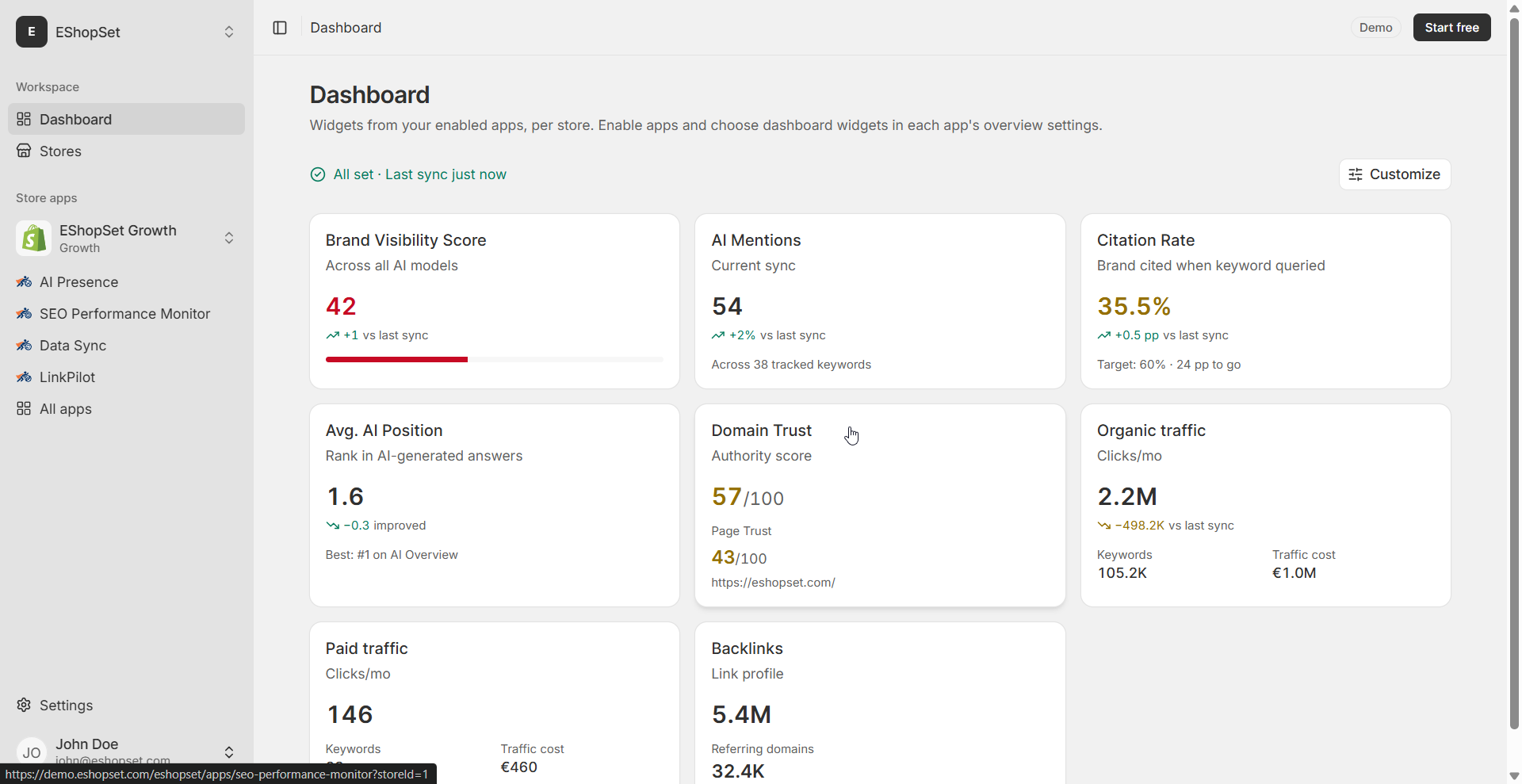
Having a robust Shopify organic traffic monitor in place helps you keep a close eye on these numbers, giving you a clear picture of your store's performance directly from search.
Automating Your SEO Operations: Work Smarter, Not Harder
Another excellent question from the thread asked about tools people are using to automate their SEO processes. This is a topic close to every busy merchant's heart!
One respondent shared a common approach: they don't automate "many things" beyond their reports, specifically using Looker Studio (formerly Google Data Studio) connected to Google Search Console and Google Analytics. This is a solid strategy for consolidating data and creating visual dashboards. For larger operations, custom dashboards can be incredibly powerful for tracking those KPIs we just discussed.
However, for many Shopify merchants, setting up complex Looker Studio dashboards might feel like a whole new project. The good news is that automation for daily SEO and operations can take many forms, often simpler and more integrated into your existing Shopify workflow.
- Automated Monitoring: Imagine getting alerts if your critical product pages drop in search rankings or if a competitor makes a significant move. This isn't just reporting; it's proactive monitoring.
- AI-Powered Content: Generating SEO-friendly product descriptions, meta descriptions, or even blog post ideas can be a huge time-saver. This ensures your content is always fresh, relevant, and optimized without hours of manual writing.
- Streamlined Data Management: Keeping your product catalog perfectly synced and optimized with keywords, descriptions, and accurate pricing across thousands of SKUs is an ongoing SEO battle. Automating this process means fewer errors and more consistent, high-quality data for search engines to crawl.
EShopSet Team Comment
We absolutely agree with the community's emphasis on tracking both top-of-funnel metrics like impressions and the ultimate bottom-line organic revenue. For Shopify merchants, clarity on these KPIs is non-negotiable for growth. We see a strong need for integrated tools that simplify both monitoring and content creation. Our SEO Performance Monitor is designed to give you that clear view of your organic traffic and rankings, while AI Presence automates the creation of high-quality, SEO-optimized content. And for keeping your product data pristine and search-engine ready, Sheet2Cart is invaluable for efficient catalog sync.
Ultimately, the insights from this community discussion highlight a universal truth: SEO success for an ecommerce store isn't just about technical tweaks. It's about knowing what truly matters (your KPIs), having a reliable Shopify organic traffic monitor to track it, and strategically automating tasks to free up your valuable time. By focusing on these areas, you can ensure your Shopify store isn't just visible, but truly thriving in the competitive online landscape.