Navigating the Shopify Headed vs. Headless Debate: What Merchants Need to Know
Hey there, fellow Shopify merchants and store operators! You know, sometimes the best insights come from real-world conversations, not just official docs. I recently stumbled upon a fascinating community discussion that perfectly illustrates a common dilemma many growing businesses face: the "headed" vs. "headless" debate when moving to Shopify. It’s a topic that keeps resurfacing, and for good reason!
The original poster, representing a company with significant revenue and web traffic, was planning a move from a custom platform to Shopify. With an in-house team of three full-stack developers, they were weighing the pros and cons of building a headless storefront with Hydrogen versus sticking with a traditional "headed" Shopify Liquid theme. Their team was split, looking for fresh perspectives on customer identification, the impact of AI development, and, crucially, the SEO implications of URL structure changes.
Unpacking the Headed vs. Headless Arguments
Let's dive into the core arguments brought up by the original poster and what the community had to say. It’s a nuanced discussion, and there’s rarely a one-size-fits-all answer.
The Case for Headless: Control and Customization
- SEO Preservation: A key argument for headless was the ability to preserve existing URL structure, hoping to avoid an SEO hit.
- Customer Identification: The original poster also believed headless might offer better customer identification, especially with privacy changes.
- Greater Control & Streamlined Development: Headless promises ultimate frontend control and a more direct dev workflow, bypassing Liquid overhead.
- AI's Role: With AI coding methods boosting developer productivity, the cost and capability arguments for headless seemed stronger than ever.
The Case for Headed: Simplicity and Focus
- Business Tooling & Maintenance: A significant concern against headless was the need to build custom tools for business users to manage content, or burdening the dev team.
- SEO Impact: Shopify reps often suggest search engines understand Shopify URL paths, making the SEO hit less of a concern.
- Liquid's Power: The argument that Liquid templates offer extensive customization was raised, challenging the idea that headless is the only way for unique designs.
- Reduced Risk & Developer Focus: Sticking with a headed setup was seen as less risky, freeing developers for higher-impact business projects.
Community Insights: Where the Rubber Meets the Road
The community replies offered some truly valuable real-world perspectives. Many respondents, including those with extensive experience, leaned towards a headed approach for most businesses, even large ones.
SEO and URL Structure: A Critical Point
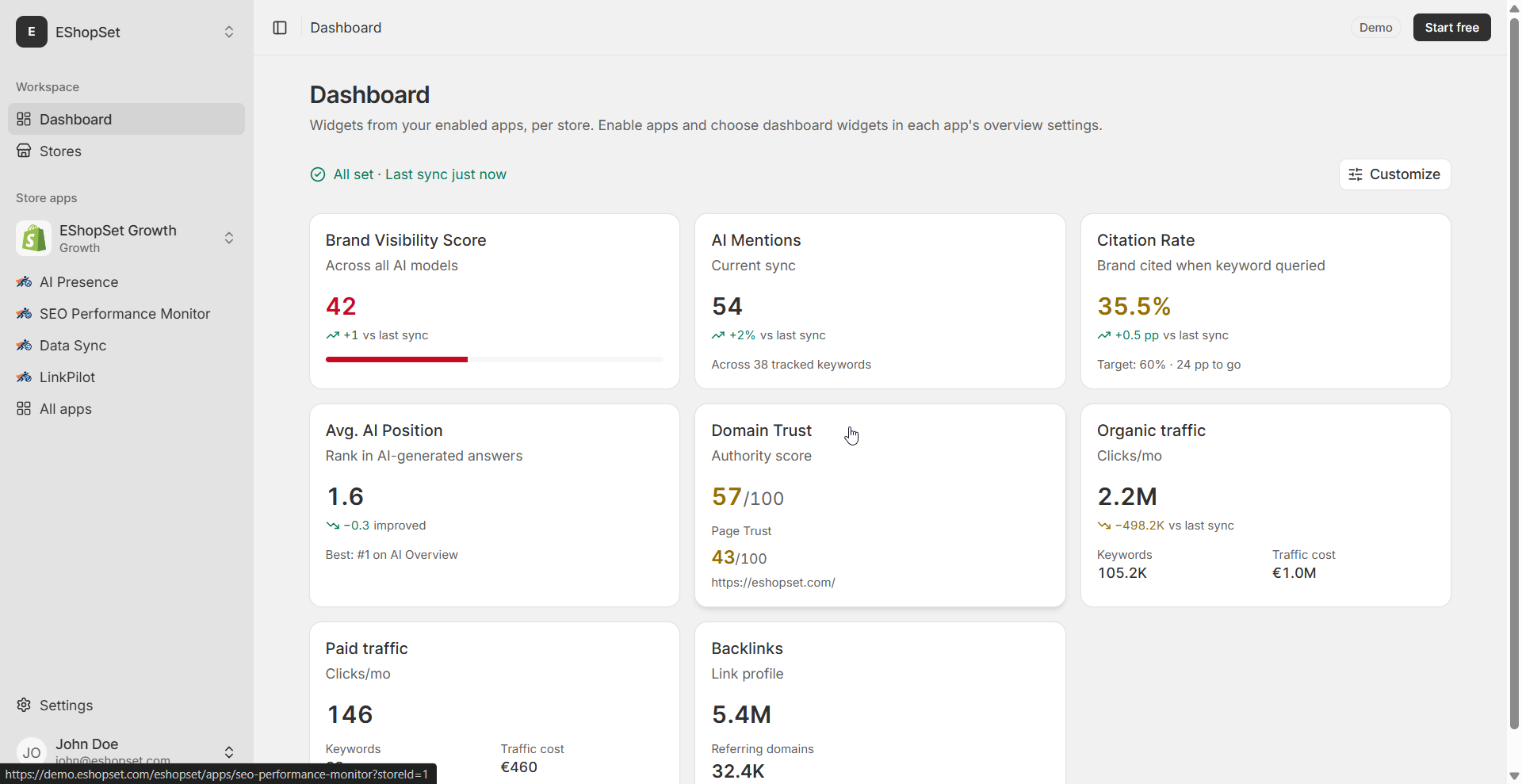
This was a hot topic. While a Shopify rep might assure you about search engine understanding of Shopify URLs, community members strongly advised caution. One expert noted, "cool URLs don't change," emphasizing that 301 redirects are absolutely paramount for preserving rankings during any URL change. Expect some ranking fluctuation, and for a high-traffic site, it can take weeks for new URLs to fully settle. Vigilant monitoring is key. Our SEO Performance Monitor app can be invaluable here, helping you track changes and identify issues quickly during such a critical migration.
AI Development & Developer Workload
The idea that AI coding makes headless development dramatically easier was met with skepticism regarding overall business value. While AI can boost developer productivity, one respondent pointed out that headless often means "lots of hours of work" and "lots of things to fix and build," which might be great for developers but "not ideal as a business." The core question remains: does the added complexity translate to tangible business benefits, or does it simply create more technical debt?
Customer Identification & Accessibility
While customer identification didn't get deep debate, robust analytics and customer data platforms are essential regardless of architecture. A crucial point highlighted was accessibility. With a standard Shopify theme, you inherit many accessibility fixes. Go headless, and your developers "own every button and label from scratch," a significant development and maintenance burden, especially for companies with prior legal challenges like the original poster.
The Custom Liquid Theme Sweet Spot
Several experienced members suggested that for companies with in-house developers, the real sweet spot isn't necessarily headless, but a custom-built Liquid theme. This approach gives full control over the codebase without the significant operational overhead of managing an entirely separate frontend. It leverages Shopify's robust backend while allowing for extensive customization and avoiding much of the "technical debt" associated with headless setups.
One original poster's example of a custom need – a multi-recipient checkout option – perfectly illustrates this. While existing Shopify apps bundle such functionality, building your own custom solution within a Liquid theme can still be highly effective and cost-efficient, especially with a capable dev team.
EShopSet Team Comment
This discussion truly hits home for Shopify merchants wrestling with growth and complexity. Our take is clear: for the vast majority of businesses, even large ones, a well-executed custom Shopify Liquid theme offers the optimal balance of power, flexibility, and maintainability. While headless promises ultimate control, the added operational burden and technical debt often outweigh the benefits, diverting valuable developer resources from core business innovation. Focus on leveraging Shopify's robust platform and enhancing it with strategic apps, rather than rebuilding the wheel. Our SEO Performance Monitor is critical for protecting your rankings during migrations, and Data Sync ensures your product catalog is always perfectly aligned, regardless of your frontend choice.
Final Thoughts for Shopify Merchants
The community's wisdom here is clear: don't choose headless just because you have developers or because it sounds "cooler." Evaluate your true business needs. Do you have unique, extreme requirements that genuinely cannot be met with a custom Liquid theme? Consider the long-term maintenance, the tooling for your marketing and content teams, and the accessibility implications.
A well-planned migration, whether to a custom Liquid theme or headless, must include a meticulous SEO strategy. Don't underestimate the power of careful 301 redirects and continuous monitoring. Tools like our SEO Performance Monitor are essential for keeping an eye on your performance before, during, and after any major site change. And for managing your product data and ensuring seamless operations, remember that a strong Data Sync solution keeps your catalog consistent across all your systems.
Ultimately, the goal is to grow your business effectively. For many, that means embracing the power of Shopify's native capabilities and strategically augmenting them, rather than introducing unnecessary complexity.