Tired of 'It's Not Working'? Streamline Shopify App Support & Diagnostics
Ever received that dreaded email, "It's not working," and then found yourself trapped in an endless back-and-forth, trying to decipher what's actually going on? If you're running a Shopify store and using various apps, or even if you're providing an app to merchants, you know this pain all too well. It's a universal challenge in the digital world, and it recently sparked a lively discussion in an online community of ecommerce professionals.
The original poster perfectly captured the frustration: "We sell a SaaS tool for Shopify stores. When customers hit a bug or can't figure something out, they email us 'it's not working.' Then starts the endless back and forth. By email #8 we finally understand the problem and fix it in 2 minutes. The actual issue resolution takes no time. The diagnosis takes forever because we can't see what they're seeing." Sound familiar?
The "It's Not Working" Dilemma: Why It Happens & Why It Hurts
As a Shopify merchant, you're juggling a lot: managing your catalog, optimizing for search engines, staying on top of inventory, and ensuring a smooth customer experience. When an app you rely on for, say, your Shopify keyword rank tracker or product syncing, suddenly seems "broken," it's natural to send a quick, albeit vague, email. You're busy! But for the support team on the other end, it's a detective game. As one community member put it, "Half our support tickets are just a detective game to figure out what the customer is actually seeing." This leads to:
- Lost Time: For both you and the support team.
- Frustration: On both sides, leading to poor customer experience.
- Potential Uninstalls & Bad Reviews: As another respondent highlighted, "They can often result in uninstalls or bad reviews."
Solutions from the Community: Bridging the Communication Gap
The good news is, the community discussion offered a treasure trove of practical advice to tackle this head-on. Here are the key takeaways:
1. See What They See: Live Screen Sharing & Recordings
- Video Calls: Several respondents immediately suggested tools like Google Meet or Teams. This is often the simplest and most direct way to see the customer's screen in real-time.
- Screen Recordings: "For those just asking them for a screen recording works as well," noted a community member. This is a great alternative for users uncomfortable with live calls, allowing them to capture the issue at their convenience.
- Cobrowse Tools: An interesting suggestion was "Fullview or a cobrowse addon on Intercom drops a script on the store so you can see their tab from the chat. They don't install anything." This is a powerful solution that allows support to view the user's browser tab directly through a chat interface, without any downloads or complex setups for the user.
2. Proactive Prevention: Better Onboarding & Smarter Forms
- Onboarding Wizards & Videos: One experienced user shared, "What I have done to remedy this is adding an onboarding wizards that guide them through the configuration... Focused videos at the end of onboarding help too." Clear, interactive onboarding can prevent many "how-to" issues before they even arise.
- Detailed Contact Forms: "You can also have a contact us form that has fields for page URL and other problem-specific questions so you can nail this on email 1." By prompting users for crucial details like the exact page, browser, and what they were trying to do, you can gather diagnostic info upfront.
3. The Future is Now: AI-Powered Diagnostics
A forward-thinking suggestion proposed leveraging AI: "Pretty good use case for a custom ai tool. Train (pre-prompt) it on your app and let it process the customer’s questions, concerns and screenshots. If it needs more data, make sure to give it the tools to ask for (and store) more until it’s resolved." This hints at an exciting future where AI can act as a first-line diagnostic assistant, reducing the load on human support and speeding up resolution.
EShopSet Team Comment
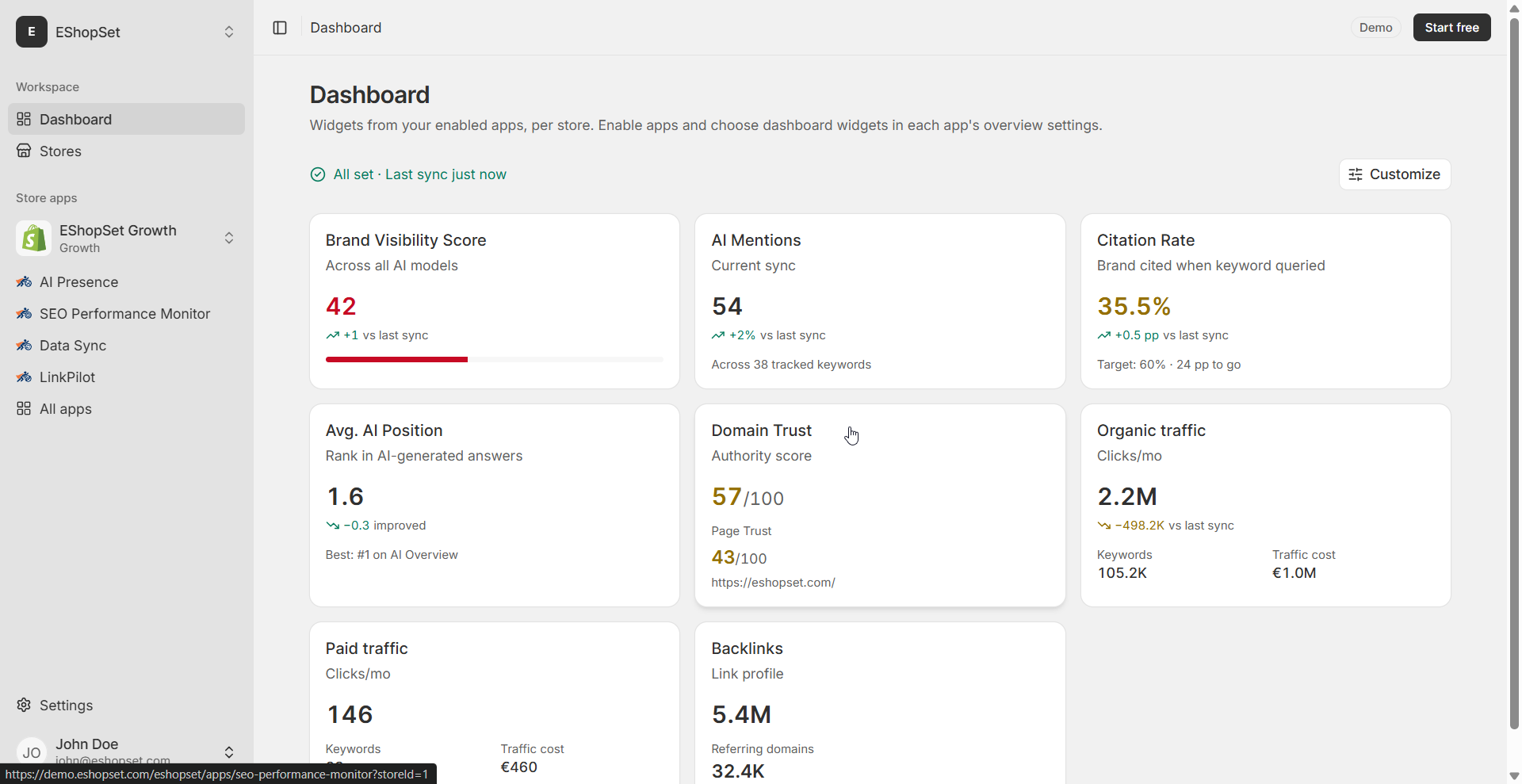
This discussion perfectly highlights a universal challenge that every Shopify merchant and app developer faces. We firmly believe that proactive tools and clear communication are paramount. While live screen sharing is great for reactive support, preventing the "it's not working" moment through robust onboarding and continuous monitoring is even better. Tools like our SEO Performance Monitor can help merchants catch potential issues with their Shopify keyword rank tracker or site health before they impact customers, and AI Presence can streamline content creation and potentially assist in understanding user intent for support. For data-related hiccups, Sheet2Cart ensures your product catalog is always in sync, minimizing data-entry errors that often lead to these vague complaints.
Ultimately, the goal is to make your Shopify operations as smooth as possible. Whether it's ensuring your product data is perfectly synced with Sheet2Cart, keeping your search rankings sharp with SEO Performance Monitor, or enhancing your store's content with AI Presence, reducing those "it's not working" moments frees you up to focus on growth, not endless troubleshooting. By adopting some of these community-tested strategies, you can transform frustrating exchanges into quick, efficient resolutions, keeping both your customers and your sanity intact.