Optimizing Shopify Product Pages for the AI Shopping Era
The world of online shopping is always evolving, and right now, AI is shaking things up in a big way. Shoppers are increasingly turning to AI assistants and search overviews to find products, which means our good old product pages need to be smarter than ever. Recently, I stumbled upon a fantastic community discussion where merchants were grappling with this exact challenge: "What are you changing on product pages for AI shopping?" It was a goldmine of practical advice, and I'm excited to share the key takeaways with you.
The original poster kicked off the conversation, highlighting a common pain point: their Shopify store's basic product details (titles, variants, pricing) were clean, but the crucial 'why' – why choose this product over another – was buried in customer reviews and support messages. They noted that useful insights like ideal use cases, complementary products, and trade-offs were often hidden, making it hard for both human shoppers and AI to grasp the true value.
Beyond Basic Specs: Making Your Products Truly Understandable
Many community members echoed this sentiment. It's not enough to list features; we need to explain the benefits and context. One respondent, who runs a B2B store but faces similar issues, found success by adding a concise "Best for / Works well with / Not ideal if…" block near the top of their product pages. This clear, plain-language summary, combined with 3-5 specific FAQs derived from actual support tickets, significantly improved how AI tools understood and recommended their products.
Another experienced merchant cautioned against simply "adding more content just for AI." Their wise advice was to start where the original poster began: with reviews and support messages. These are invaluable sources for understanding what shoppers truly need to know before buying – questions about quality, fit, compatibility, and why one product stands out. The real opportunity, they argued, isn't just making pages "AI readable," but identifying and answering the questions that prevent a purchase, benefiting both human shoppers and AI systems alike.
Actionable Strategies from the Community
1. Listen to Your Customers (and AI)
The consensus was clear: your customers are telling you what's missing. One community member suggested pulling the exact questions customers ask in support tickets and using them to create a plain text Q&A section. AI crawlers, they noted, absolutely love indexing question-and-answer formats because it gives them direct context on user intent. This makes it easier for AI to scrape your FAQs and provide direct answers to shoppers.
The original poster even mentioned using an AI tool to track shopping prompts and identify use cases, then leveraging content creation features to turn those findings into product page updates. This proactive approach ensures your content directly addresses what shoppers (and AI) are looking for.
2. Structured Answers for Humans & Bots
Beyond FAQs, several experts recommended structured content that explicitly addresses product differentiation. Adding a "Best for," "use cases," "compatibility," and "honest trade-offs" section was a popular suggestion. Another strong idea was to incorporate a simple comparison section if your store sells similar products that shoppers frequently choose between. This provides both human shoppers and AI a much clearer picture of why they'd pick product A over product B.
3. The Power of Visuals
One astute contributor pointed out that "images before copy" is often the key. They highlighted how inconsistent product photos across different items can make a store look disjointed. More importantly, they stressed that many "trade-off details" or usage questions – like scale next to a hand, close-up texture, or how a product sits when worn – are best answered visually. People often write into support because the images failed to convey this crucial information. Ensuring your product photography is consistent, detailed, and answers common questions is a powerful way to enhance clarity for everyone.
4. Optimizing for AI Discovery
While content quality for humans is paramount, optimizing for AI's indexing capabilities is also crucial. Some members suggested ensuring descriptions have "many tagwords" for AI to recommend products more effectively. Another respondent shared an experiment involving using quotes ("") around keywords in metadata to tag the most important search terms, aiming to guide AI more precisely. This is where a strong SEO strategy, aided by tools, becomes indispensable.
EShopSet Team Comment
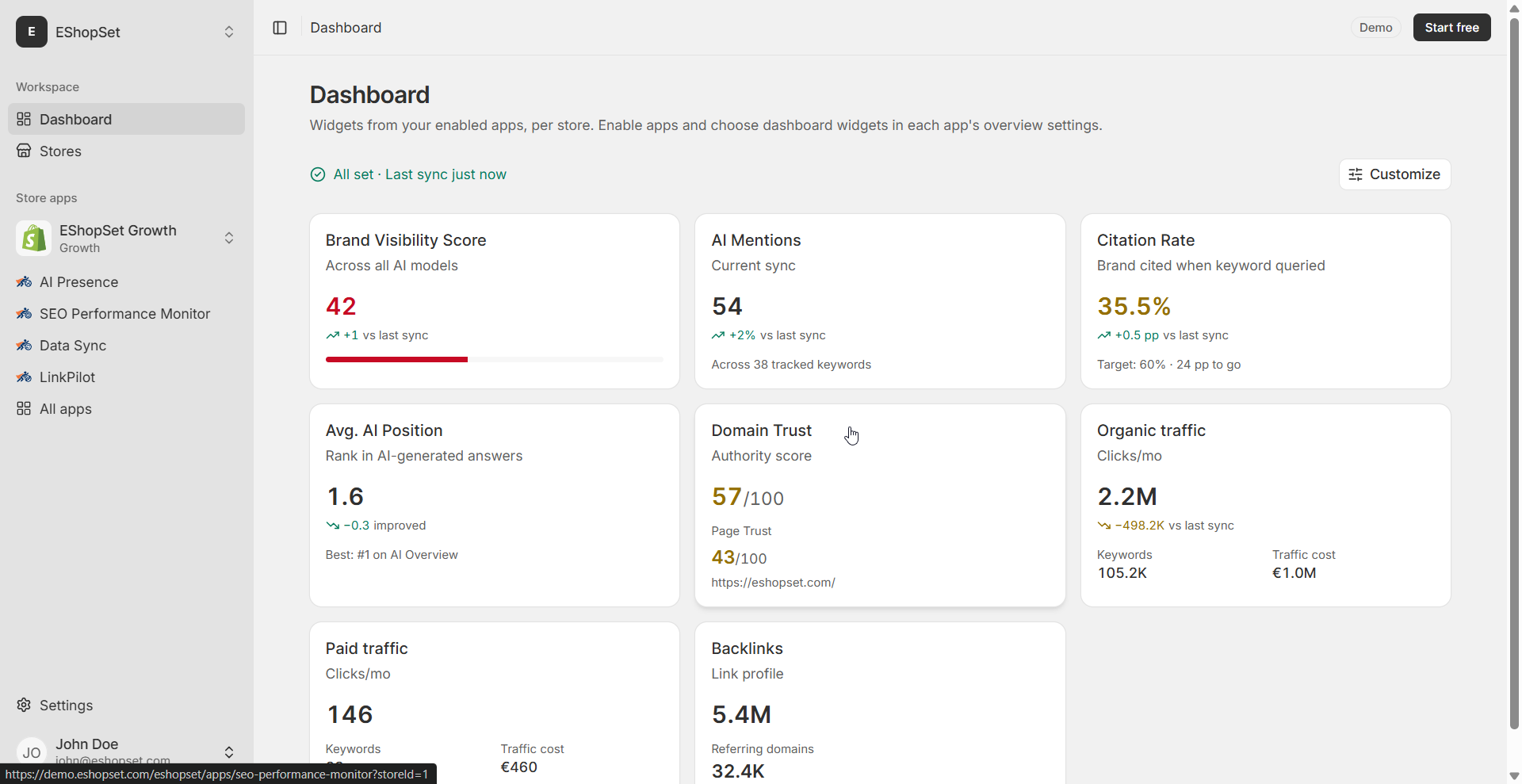
We absolutely love the practical, customer-centric approach advocated in this discussion. Focusing on real customer questions and clear communication is always the winning strategy, whether for humans or AI. EShopSet's AI Presence app can be instrumental in identifying those critical user questions and then generating tailored content blocks or FAQs, much like the original poster described. For monitoring the impact of these changes and ensuring your product pages rank well for new AI-driven queries, our SEO Performance Monitor is key. And for merchants looking to update large catalogs with new 'Best For' sections or FAQs efficiently, Sheet2Cart offers seamless bulk product data management. This kind of thoughtful optimization is exactly what drives an EShopSet Growth plan Shopify success story.
In essence, the future of product pages isn't about gaming an algorithm; it's about providing the clearest, most comprehensive answers to your customers' unasked questions. By focusing on the insights hidden in your support tickets and reviews, structuring your information thoughtfully, and leveraging both visual content and smart keyword strategies, you'll create product pages that resonate with human shoppers and rank highly with AI shopping assistants. It's about building trust and making the buying decision as easy as possible. What changes will you make first?