Combating Automated Traffic: Advanced Security for Your Shopify Store
Hey fellow Shopify merchants and store operators! We often talk about driving traffic, but what happens when you're suddenly overwhelmed by traffic you don't want? It's a frustrating, often costly problem that can cripple your store's performance, skew your analytics, and even impact your SEO.
I recently stumbled upon a community discussion that really highlighted this issue. The original poster was experiencing what they called "persistent, debilitating automated traffic." Imagine waking up to a surge of activity that looks like real users but isn't, eating into your hosting resources and slowing everything down. That's exactly what they were going through.
The Mystery of Rotating IPs and Consistent Fingerprints
The situation described was quite complex. The original poster mentioned that they were seeing a flood of traffic that started suddenly and only got worse. Their hosting provider wasn't offering much help, despite an open ticket for months. What made it particularly puzzling was that while the IP addresses and networks behind this traffic were constantly rotating, the "browser fingerprint" was surprisingly consistent. Most of the suspicious activity presented as Chrome on Windows 10, often with identical generic desktop characteristics.
As one community member pointed out, this combination of rotating IPs and a stable client profile is tricky. It suggests a sophisticated bot network trying to appear legitimate. The original poster noted, "I'm starting to think the rotating IP/network is the transport, while the browser profile and session behavior are the more useful fingerprint." This insight is crucial because it shifts the focus from simple IP blocking to behavioral analysis.
When Even Cloudflare Isn't Enough
What really caught my attention was when the original poster revealed they were already paying for Cloudflare, and their host also had Enterprise-level Cloudflare handling traffic. Yet, the debilitating traffic persisted. This underscores a critical point: while services like Cloudflare are invaluable for initial defense against common threats, sophisticated attacks require a more proactive and nuanced approach. Simply having a WAF (Web Application Firewall) isn't always enough; you need to configure it intelligently and continuously adapt your rules.
This scenario highlights a common challenge for Shopify merchants. While Shopify handles much of the underlying infrastructure, you are still responsible for your store's security posture, especially regarding app permissions and how external services interact with your site. Unwanted traffic can distort your understanding of Shopify paid vs organic traffic, making it harder to assess marketing campaign effectiveness and genuine SEO performance.
Actionable Strategies for Shopify Merchants
So, what can you do when faced with such persistent automated traffic? Here are advanced strategies to bolster your Shopify store's defenses:
1. Deep Dive into Analytics and Monitoring
- Identify Patterns: Look for anomalies in your Google Analytics (GA4) data. Sudden spikes in traffic from unusual geographic locations, specific user agents (like the Chrome on Windows 10 mentioned), or pages (e.g., homepage only) are red flags. Pay attention to bounce rates and session durations for suspicious traffic – bots often have very low engagement.
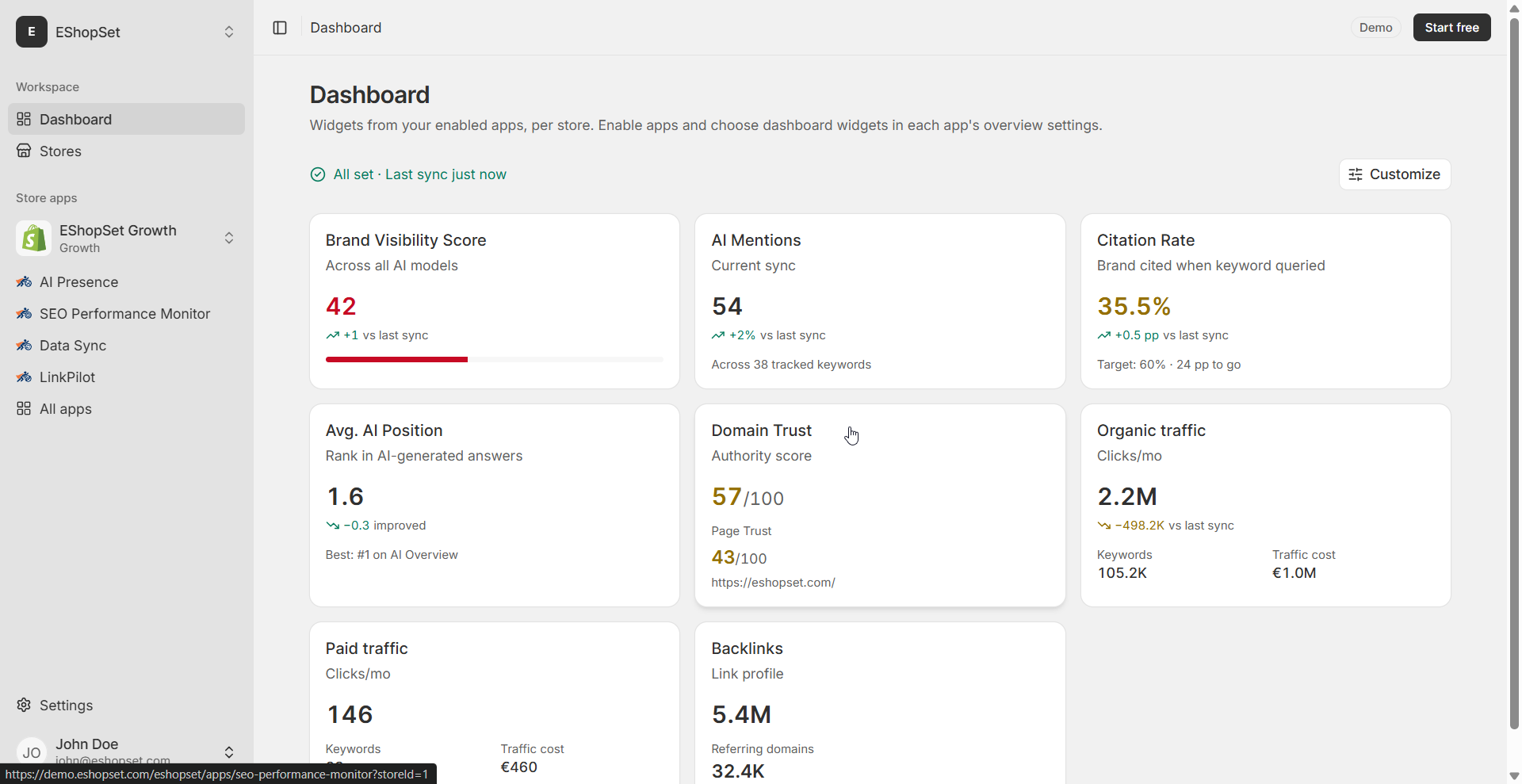
- Leverage EShopSet's SEO Performance Monitor: Our SEO Performance Monitor helps you track your store's organic visibility and crawl patterns. Unusual server load or distorted traffic metrics can mask real SEO issues or indicate bot activity affecting search engine crawlers. Monitoring your true organic performance helps distinguish legitimate search engine activity from malicious bots.
2. Advanced Cloudflare Configuration
Since the original poster was already using Cloudflare, the key is to move beyond basic settings:
- Custom WAF Rules: Create specific WAF rules to block traffic based on the consistent browser fingerprints, HTTP headers, or behavioral patterns identified. For example, if you see a high volume of requests from specific user agents that don't match typical user behavior (e.g., no JavaScript support, unusual request sequences), you can block or challenge them.
- Rate Limiting: Implement aggressive rate limiting for specific endpoints (like your homepage or product pages) to prevent a single IP or session from making too many requests in a short period. This can mitigate distributed attacks where IPs rotate but the request volume is high.
- Bot Management: Cloudflare offers advanced bot management features (often in paid plans) that use machine learning to identify and mitigate sophisticated bots. Explore options like Super Bot Fight Mode or Bot Analytics to gain deeper insights and control.
- Challenge Pages: Use JavaScript or CAPTCHA challenges for suspicious traffic. While annoying for real users, it's effective against many bots.
3. Protecting Your Data and Operations
Automated traffic isn't just about bandwidth; it can impact the integrity of your store's data and operations.
- Sheet2Cart for Data Integrity: With Sheet2Cart, you can ensure your product catalog remains accurate and up-to-date, even if bots are scraping or attempting to manipulate product pages. Maintaining a daily Google Sheets Shopify sync helps you quickly restore or update product information, manage inventory, and even allows you to Shopify archive products from sheet if specific items are being targeted by malicious activity. Clean, reliable product data is your foundation.
- AI Presence and Data Skew: EShopSet's AI Presence app helps you generate compelling content and optimize your online presence. If bot traffic is interacting with your site's AI-driven elements (e.g., search, recommendations), it can skew the data used for content generation or personalization. Protecting your site from bots ensures your AI tools are learning from legitimate user interactions, leading to more effective content and better SEO outcomes.
4. Shopify App Permissions and Security Best Practices
- Review App Permissions: Regularly audit the permissions granted to all Shopify apps. Ensure apps only have access to the data and functionalities they absolutely need. Malicious or compromised apps can be a backdoor for unwanted activity.
- Strong Authentication: Enforce strong, unique passwords and Two-Factor Authentication (2FA) for all Shopify admin accounts and integrated services.
- Stay Informed: Keep an eye on Shopify's security announcements and best practices. While Shopify protects its core platform, you are responsible for your store's configuration and app ecosystem.
Conclusion
Combating sophisticated automated traffic requires vigilance and a multi-layered defense strategy. It's not just about blocking IPs; it's about understanding behavioral patterns, leveraging advanced security tools, and ensuring the integrity of your store's data and operations.
By combining robust external defenses like advanced Cloudflare rules with internal monitoring capabilities from EShopSet's SEO Performance Monitor, and maintaining data hygiene with Sheet2Cart, you can significantly strengthen your Shopify store against persistent bot attacks. Protect your valuable traffic, secure your data, and ensure your store remains a thriving hub for legitimate customers.