Navigating GTINs and EANs: Your Essential Guide for Shopify Merchants Selling on Marketplaces
Hey there, fellow Shopify merchants and store operators! I recently stumbled upon a really insightful community discussion that hit home for many of us just starting out or expanding our product lines. The original poster was diving into the world of ecommerce, planning to sell raw products under their own brand on Amazon and Etsy, specifically targeting the EU market. Their big hurdle? No EAN/GTIN from the manufacturer, and a natural desire to avoid extra costs right at the beginning.
This is a classic dilemma, isn't it? You've got a fantastic product, a solid brand vision, but then you hit the wall of product identifiers. Let's break down what came out of that conversation and what it means for your Shopify store.
The GTIN/EAN Conundrum for New Brands
The original poster's question was straightforward: can I sell without an EAN/GTIN, or can I just use my MPN (Manufacturer Part Number)? They were worried about the cost and just wanted to get started. This is a completely valid concern for any budding entrepreneur.
The short answer, especially for platforms like Amazon and often Etsy, is that GTINs (Global Trade Item Numbers), which include EANs (European Article Numbers) and UPCs (Universal Product Codes), are pretty much essential. These aren't just arbitrary numbers; they're unique identifiers that help marketplaces and search engines understand exactly what your product is. They prevent duplicate listings, improve search accuracy, and are often a requirement for listing new products, particularly when selling in the EU.
Using an MPN alone usually isn't enough, as MPNs are internal to a manufacturer and not globally unique in the same way GTINs are. Marketplaces need that universal identifier to maintain data integrity across millions of products and ensure compliance with various regulations.
Your Options for Obtaining GTINs
The community discussion quickly honed in on the main solutions:
1. The Official Route: GS1
One respondent immediately pointed to GS1. This is the global standard for obtaining legitimate, unique GTINs. GS1 is a non-profit organization that assigns these identifiers, ensuring they are globally unique and recognized by all major retailers and marketplaces worldwide. When you purchase GTINs directly from GS1, you are essentially licensing a block of numbers that are registered to your brand. This provides undeniable legitimacy and avoids potential issues down the line.
- Pros: Undisputed legitimacy, global recognition, no risk of duplicate or invalid numbers, crucial for large-scale operations and major retailers.
- Cons: Can be more expensive upfront, especially for a small number of products, as you typically purchase in blocks.
- Best For: Brands planning long-term growth, selling on multiple major marketplaces, or needing to comply with strict retail requirements.
2. Alternative: UPC Resellers
Another community member later mentioned purchasing UPCs directly from a reseller, citing 'barcodestalk' as an example. This route involves buying UPCs from third-party vendors who often acquired them in bulk from GS1 years ago, before GS1 changed its licensing model. These numbers are typically much cheaper than going directly through GS1.
- Pros: Significantly lower cost, quick acquisition of numbers.
- Cons: Potential for legal disputes (though less common for older numbers), risk of numbers being previously used or not recognized by all platforms (though reputable resellers often guarantee their numbers). Marketplaces like Amazon have become stricter, sometimes requiring proof of GS1 ownership.
- Best For: Small businesses or startups with a limited budget, selling on platforms that are less stringent about GTIN verification, or for products where the cost of GS1 numbers is prohibitive. Always research the reseller thoroughly.
When You Might Not Need a GTIN
While GTINs are generally essential, there are specific scenarios where you might not need them:
- Selling Exclusively on Your Shopify Store: If you're only selling on your own Shopify storefront (eshopset.com), you are not typically required to have GTINs. Your internal SKUs are usually sufficient for your own inventory management.
- Handmade or Custom Products on Specific Marketplaces: Platforms like Etsy often have exemptions for truly handmade or vintage items. Amazon also has a GTIN exemption process for certain categories or unique products.
- Bundles or Multi-Packs: Sometimes, if you're selling a bundle of products, the bundle itself might not require a new GTIN if the individual components already have them.
Streamlining Product Data & Presence with EShopSet
Regardless of how you acquire your GTINs, managing product data efficiently is paramount for any Shopify merchant. This is where the EShopSet bundle of apps truly shines, helping you maintain a robust online presence and streamline daily operations.
Effortless Product Data Management with Sheet2Cart
Once you have your GTINs, entering them into your Shopify store can be tedious, especially for a large catalog. Sheet2Cart simplifies this process immensely. It allows you to import and update product data, including GTINs, directly from a spreadsheet. This is perfect for a Shopify one-time product import Sheets operation when you're launching a new line or making bulk updates. You can ensure all your product identifiers are accurate and consistent across your store, saving you countless hours and reducing errors.
Boosting Discoverability with SEO Performance Monitor
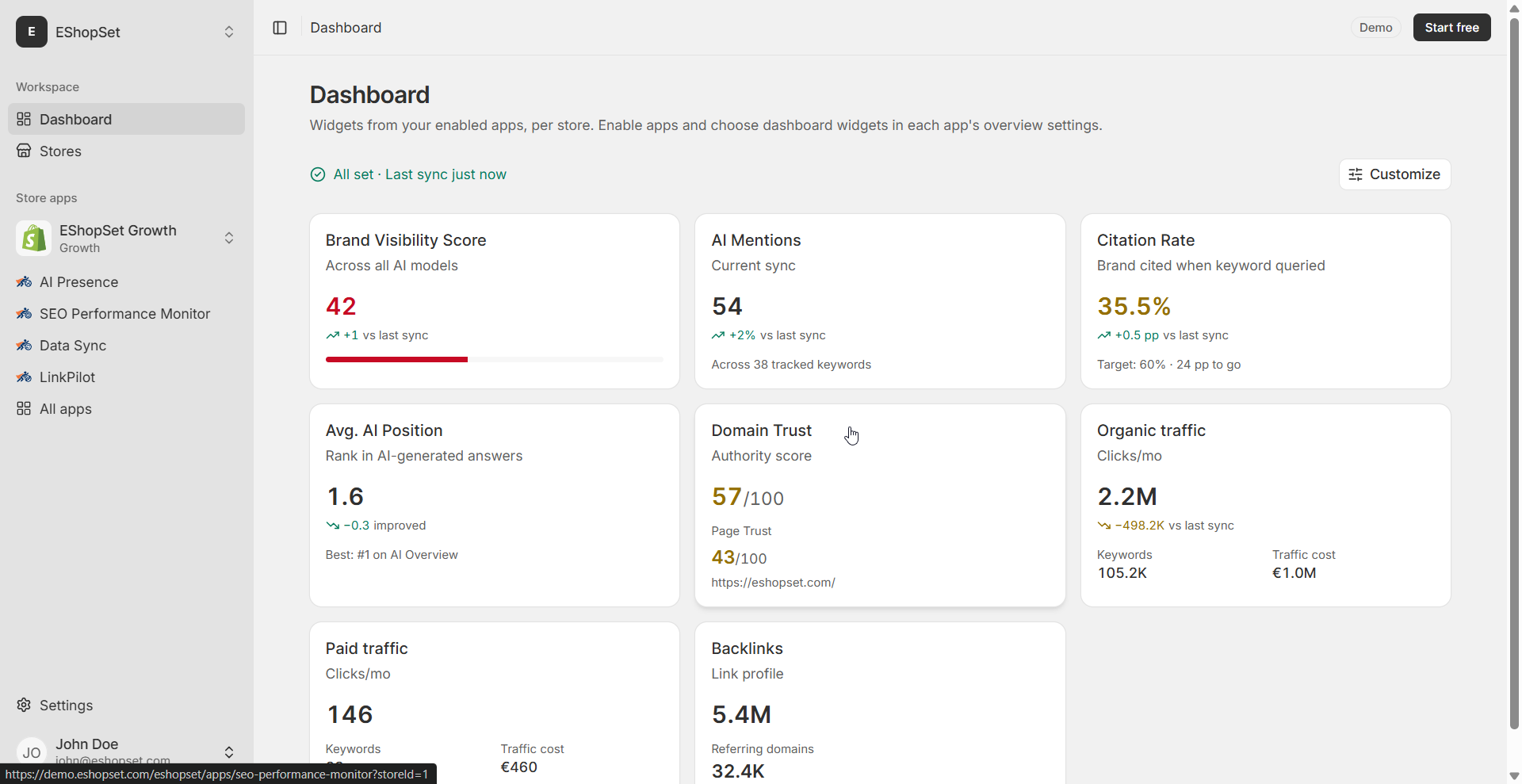
Accurate product data, including GTINs, plays a crucial role in your store's SEO. Search engines use these identifiers to understand your products better and display them in relevant search results. Our SEO Performance Monitor app helps you track your store's visibility and identify opportunities for improvement. By ensuring your product data is correct and comprehensive, you're laying a strong foundation for better search rankings and increased organic traffic. Monitoring how your products perform and where your Shopify brand mentions Perplexity in search results can guide your optimization efforts.
Enhancing Product Descriptions with AI Presence
Beyond identifiers, compelling product descriptions are key to converting visitors into customers. Our AI Presence app leverages artificial intelligence to generate engaging and SEO-friendly product descriptions. While GTINs provide the technical backbone, AI Presence gives your products the voice they need to stand out. It ensures your descriptions are rich in keywords, highlight key features, and resonate with your target audience, further enhancing your product's online appeal and discoverability.
Final Thoughts for Shopify Merchants
Navigating the world of GTINs and EANs can seem daunting at first, but it's a critical step for any Shopify merchant looking to expand their reach to major marketplaces. Whether you choose the official GS1 route or opt for a reputable reseller, ensuring your products have valid, unique identifiers is an investment in your brand's legitimacy and long-term success. With tools like EShopSet's app bundle, managing this data and optimizing your online presence becomes a much smoother journey. Focus on building your brand, and let EShopSet handle the heavy lifting of your daily operations.