Shopify Store Migration: Clean Up SEO Issues or Preserve History?
Migrating your Shopify store to a new theme, platform version, or even undergoing a full rebrand? It's an exciting time, promising fresh aesthetics and improved functionality. However, this journey often brings up a tricky question that can keep even seasoned store operators scratching their heads: What do you do with all those old SEO issues?
Do you seize the opportunity to finally clean up years of accumulated redirects, questionable canonicals, and outdated URL structures? Or do you play it safe, preserving as much as possible to avoid rocking the SEO boat? This exact dilemma recently popped up in a vibrant online community discussion, and the insights shared are gold for any Shopify merchant facing a similar move.
The Great Migration Debate: Cleanup vs. Preservation
The original poster in the discussion perfectly captured the core challenge: "CMS migrations always create this awkward choice. Do you preserve the old URL structure as much as possible, or use the migration to finally clean things up?" They highlighted the risk of changing too much at once, a fear many of us can relate to.
One community member offered a fantastic perspective, suggesting that a CMS migration often signifies a pivot in business objectives or even a rebrand. Their advice? Let your execution follow those new objectives. This means you should feel empowered to create new pages, delete irrelevant ones, or combine content where necessary to align with your fresh vision. It's an opportunity to streamline your content and make it more effective, ensuring every page serves a purpose in your new strategy.
However, another expert chimed in with a crucial counterpoint: if you have valuable traffic and backlinks pointing to existing pages, there's "no question we are routing it properly and where possible retaining exact URL structure." This highlights the importance of protecting your hard-earned SEO authority. Simply deleting pages with strong backlinks or changing URLs without proper redirects is akin to throwing away years of effort and risking significant drops in search engine rankings.
Protecting Your SEO Assets: The Power of 301 Redirects
The consensus leans towards a balanced approach: clean up strategically, but preserve what matters. For any URLs that change, implementing proper 301 redirects is non-negotiable. A 301 redirect signals to search engines that a page has permanently moved, passing most of its SEO value (link equity) to the new destination. Failing to implement these can lead to 404 errors, a frustrating experience for users, and a signal to search engines that your site is poorly maintained.
How long should these redirects stay in place? While Google traditionally advises keeping 301s for at least a year, community members, including the original poster, suggested extending this duration. With the increasing presence of AI crawlers and the general delay in how search engines process changes, maintaining redirects for longer periods can provide an extra layer of safety, ensuring that even very old links eventually resolve to the correct new pages.
The Golden Rule: Test, Test, Test Before Launch
Regardless of whether you choose to clean up or preserve, one piece of advice resonated universally: find the problems *before* the migration, not after launch. "Everything should be done in a development environment and have technical crawlers discover the technical issues ahead of time," advised one contributor. This proactive approach is critical.
Before your new Shopify store goes live, thoroughly test all redirects, check for broken links, verify canonical tags, and ensure all new pages are crawlable and indexable. This pre-launch scrutiny can save you from costly post-launch SEO disasters.
At EShopSet, we understand that managing these complexities can be daunting for Shopify merchants. That's why our suite of apps is designed to streamline your daily operations and ensure your SEO health, especially during critical times like migrations.
EShopSet Solutions for a Smooth Migration and Beyond
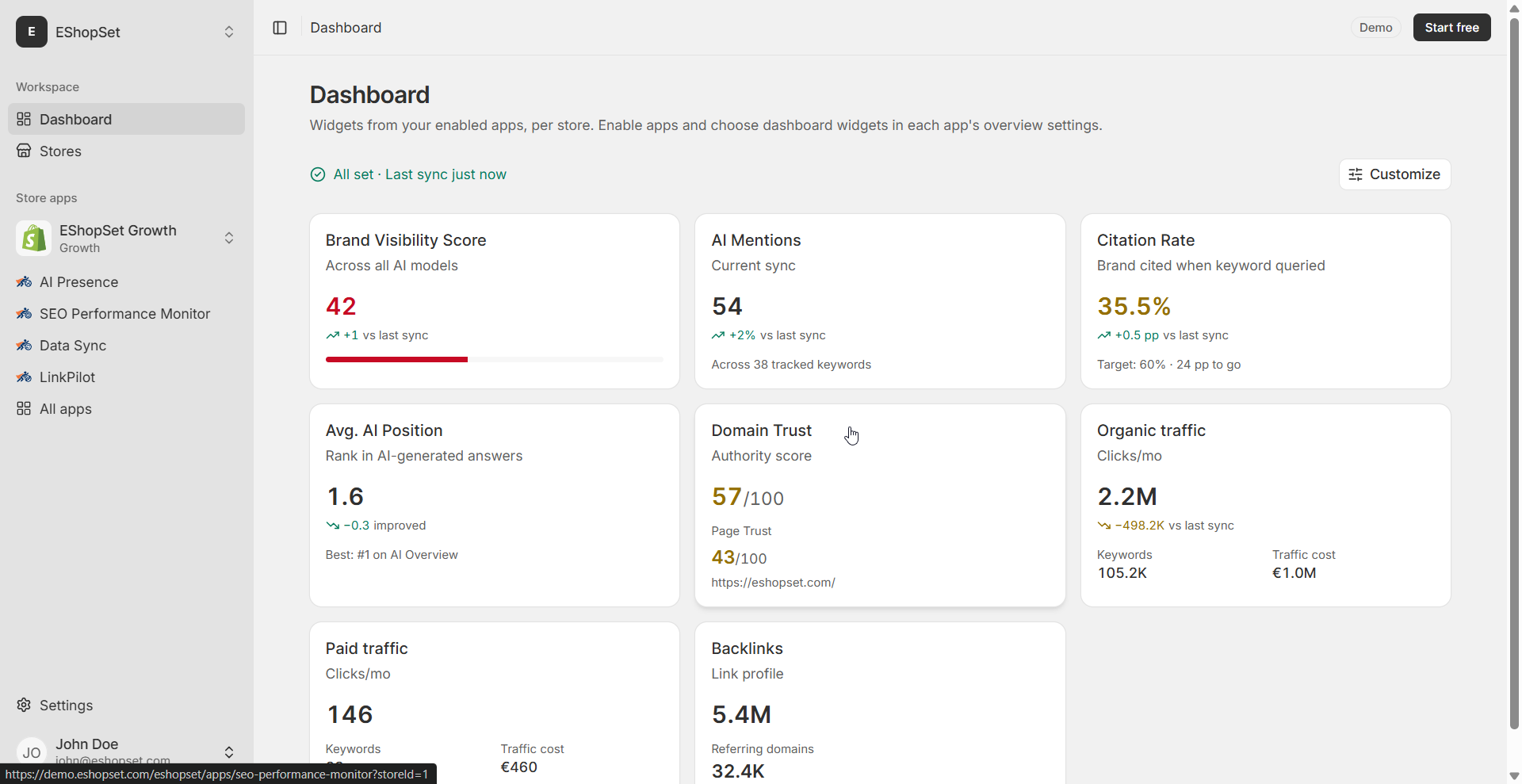
- SEO Performance Monitor: Before you even think about migrating, use SEO Performance Monitor to conduct a comprehensive audit of your current store. Identify existing broken links, crawl errors, problematic canonicals, and underperforming pages. Post-migration, this app becomes your vigilant watchdog, continuously monitoring your site for new SEO issues, tracking keyword rankings, and ensuring your redirects are functioning correctly. It provides the insights you need to quickly address any post-migration dips or errors.
- Sheet2Cart: Migrations often involve updating product catalogs, descriptions, pricing, and inventory. If you're looking to efficiently update or add new product data to your Shopify store, Sheet2Cart is your go-to solution. It simplifies the process of Shopify sheet to catalog import, allowing you to bulk upload and update product information directly from a spreadsheet. This is invaluable for ensuring your new store launches with clean, accurate, and optimized product data, preventing a host of SEO and operational issues.
- AI Presence: A rebrand or migration is the perfect time to refresh your content. AI Presence empowers you to generate high-quality, SEO-friendly product descriptions, blog posts, and marketing copy. Ensure your new store's content is engaging, optimized for search engines, and consistent with your brand's refreshed voice, helping you capture new traffic and improve conversions.
Post-Migration Monitoring and Continuous Improvement
The work doesn't stop once your new store is live. Ongoing monitoring is essential. Regularly check your Google Search Console for crawl errors, indexation issues, and performance changes. Keep an eye on your analytics to spot any unexpected drops in traffic or conversions.
The digital landscape is constantly evolving, with search engine algorithms and AI crawlers becoming more sophisticated. What works today might need adjustment tomorrow. By continuously monitoring your SEO performance and being ready to adapt, you ensure your Shopify store remains competitive and visible.
Conclusion
A Shopify store migration is a significant undertaking, but it doesn't have to be an SEO nightmare. By adopting a strategic approach that balances cleanup with preservation, meticulously testing your changes, and leveraging powerful tools like EShopSet's SEO Performance Monitor, Sheet2Cart, and AI Presence, you can navigate the transition smoothly. Embrace the opportunity to refine your store's foundation, protect your hard-earned SEO authority, and set the stage for future growth.