Navigating EU Product Regulations: A Shopify Merchant's Guide to Compliance with EShopSet
We've all been there: a new regulation drops, and suddenly your carefully tuned daily operations feel like they've hit a bureaucratic wall. That's exactly the sentiment buzzing in a recent community discussion I followed, where Shopify merchants were sharing their exasperation over the latest EU demands, specifically around mandatory barcodes and product identifiers.
The original poster kicked things off by highlighting the frustration of dealing with mandatory barcodes or three other identifiers, noting the risk of customs rejection. For them, it was the final straw after previous mandates like the 'cool off button,' leading them to seriously consider removing EU countries from their shipping destinations. It's a relatable pain point: dealing with customers who won't pay fees, only to waste time on resolutions and returns.
The Heart of the Challenge: Compliance vs. Business Reality
This sentiment echoed across the thread. Many merchants, particularly small businesses, feel pummeled by regulations seemingly designed for large corporations. As one respondent put it, "Having high standards is one thing but pummeling small businesses by treating them as if they were huge, profitable corporations is just pointless." The debate quickly turned to consumer protection versus the burden on small businesses. While some argued that high standards protect consumers and ensure product safety, others countered that these regulations stifle innovation and push small players out, leaving the market to giants.
A community member also brought up a crucial parallel: shipping to the US from other countries presents similar headaches, with DDP (Delivered Duty Paid) becoming high-risk due to ever-changing customs regulations. It seems the struggle with cross-border shipping complexity isn't unique to the EU.
The core issue for many Shopify merchants is the practical implementation. For items that are client-configured or independently produced, standard barcodes (GTINs) simply don't exist. The suggestion of using an exemption code like Y081 offers a temporary workaround, but it underscores the broader need for robust product data management to navigate these evolving requirements effectively.
EShopSet: Your Partner in Operational Excellence
At EShopSet, we understand that managing daily operations for your Shopify store involves more than just sales; it's about seamless execution, compliance, and efficiency. Our bundle of Shopify apps is designed to empower merchants to tackle challenges like these head-on, turning potential headaches into streamlined processes. Let's explore how our tools can help you master the complexities of global trade and product data.
Mastering Product Data with Data Sync
The new EU demands highlight the critical importance of accurate and complete product data. Missing barcodes, GTINs, or other identifiers can lead to customs delays, rejections, and a significant drain on your time and resources. This is where Data Sync becomes an indispensable tool for Shopify merchants.
- Automated Data Management: Data Sync allows you to centralize and automate the management of your product information. Instead of manually updating individual product listings, you can manage your inventory and product attributes from a single source.
- Seamless Integration: For merchants needing to update a large catalog with new identifiers, a Shopify Google Sheets product import feature can be a lifesaver. Prepare your data, including all required EU identifiers, in a spreadsheet, and Data Sync will handle the bulk upload to your Shopify store.
- Ensuring Compliance: With scheduled Shopify product sync capabilities, you can ensure that your product data is always up-to-date and compliant with the latest regulations. Set it and forget it, knowing that your product identifiers, pricing, and inventory levels are consistently accurate across your store. This minimizes the risk of customs rejections and keeps your delivery operations running smoothly.
Elevating Product Presence with AI Presence
While Data Sync handles the structured data, AI Presence helps ensure your product descriptions are not only engaging but also comprehensive enough to meet regulatory needs. Imagine an AI assistant that can help you craft rich, detailed product descriptions, ensuring all necessary fields—including mentions of compliance-related identifiers or safety standards—are present. It can help you maintain consistency across your catalog, reducing the chance of oversight that could lead to compliance issues.
Boosting Visibility Through Compliance with SEO Performance Monitor
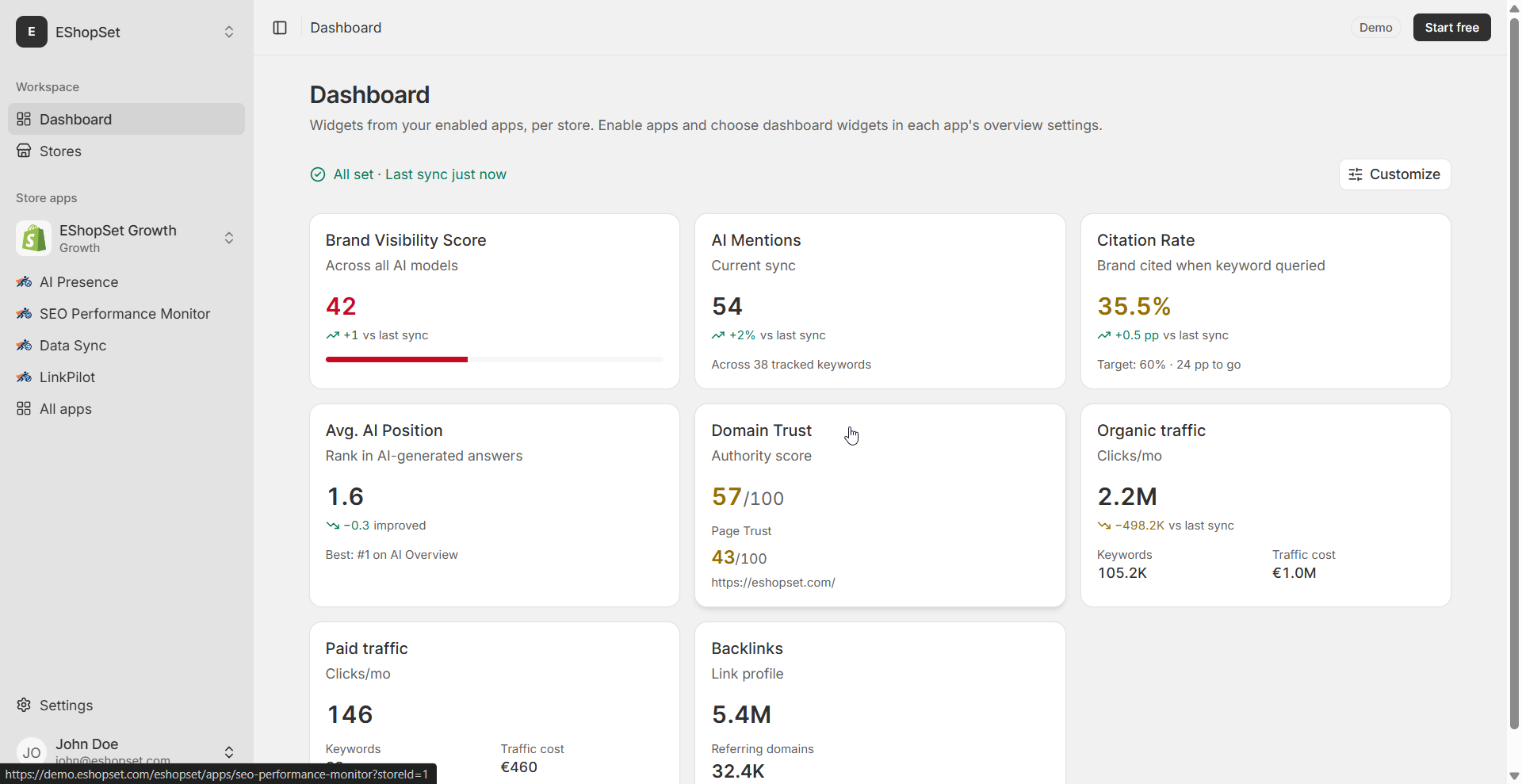
Accurate and complete product data isn't just about compliance; it's also a cornerstone of effective SEO. Search engines reward well-structured, detailed product information. SEO Performance Monitor helps you track and improve your store's visibility. By ensuring your product listings are rich with correct identifiers and comprehensive details—facilitated by Data Sync and AI Presence—you naturally improve your SEO. This means your compliant products are more likely to be discovered by customers, both domestically and internationally. Good data hygiene, driven by compliance, directly translates to better search rankings and sales.
Future-Proofing Your Shopify Store
The global e-commerce landscape is constantly evolving, with new regulations emerging regularly. Instead of viewing these changes as insurmountable obstacles, see them as opportunities to refine your operations and strengthen your business. By leveraging powerful tools like EShopSet's bundle of apps, you can transform the challenge of compliance into a competitive advantage.
We encourage you to explore how EShopSet can streamline your daily operations, from managing complex product data to enhancing your online presence. If you know other merchants grappling with these challenges, please refer Shopify merchants EShopSet to help them navigate the complexities of modern e-commerce. With EShopSet, you're not just reacting to demands; you're proactively building a more resilient and efficient Shopify store.