Decoding Your Shopify Conversion Rate: Bots, Data, and Real Sales
Ever logged into your Shopify dashboard, seen your conversion rate (CVR) plummet, and felt that sinking feeling? You check your orders, do a quick calculation, and scratch your head because your numbers just don't match what Shopify is telling you. Sound familiar?
Recently, a merchant shared this exact frustration in an online community. Their CVR had reportedly halved overnight, from a healthy 1.5% to a dismal 0.6%, despite their own calculations showing it was much higher. They hadn't made any changes to their Google Ads or website, leading them to wonder: had Shopify changed something? Is it hiding bot traffic?
The Mystery of the Missing Conversions: What's Really Happening?
This isn't an isolated incident, and it's a critical issue for any Shopify merchant relying on accurate data for daily operations. The community discussion quickly uncovered a few key possibilities:
Is It a Reporting Glitch or a Real Drop?
One of the first things experts pointed out is the difference in how CVR can be calculated. While many of us might instinctively divide total orders by total sessions, Shopify's online store conversion rate is specifically based on sessions that resulted in an order divided by total sessions. These two numbers won't always match exactly, especially if the number of sessions per buyer changes.
As one respondent wisely put it, the first step is to determine if you're dealing with a reporting difference or an actual drop in sales. If your raw order numbers look normal but the reported CVR is suddenly off, it's time to investigate tracking and reporting before panicking about your sales strategy.
Another community member highlighted the importance of testing your checkout process end-to-end. Shipping rate errors, payment gateway timeouts, or other technical glitches can cause a sudden conversion collapse without appearing in standard analytics. Always perform a real test order on various devices and payment methods to rule out these basic, yet critical, issues.
The Bot Invasion: Your CVR's Hidden Enemy
This was by far the most common culprit suggested by community members. If your orders are relatively flat but your reported CVR has suddenly dropped, a spike in sessions is often the cause. And increasingly, those extra sessions are coming from bots or AI crawlers that inflate your denominator (total sessions) without ever intending to convert. These bots might be scraping product data, looking for Shopify price and inventory update Sheets, or simply crawling the web, but they won't add to your sales.
Indicators of bot traffic include:
- Sudden, inexplicable spikes in traffic, especially from countries you don't sell to.
- Traffic from unrecognized referrers.
- Sessions that visit only one page (e.g., a blog post or a product page) and then leave without further interaction.
- A high number of "full carts" with hardly any checkouts, as observed by another merchant in the thread.
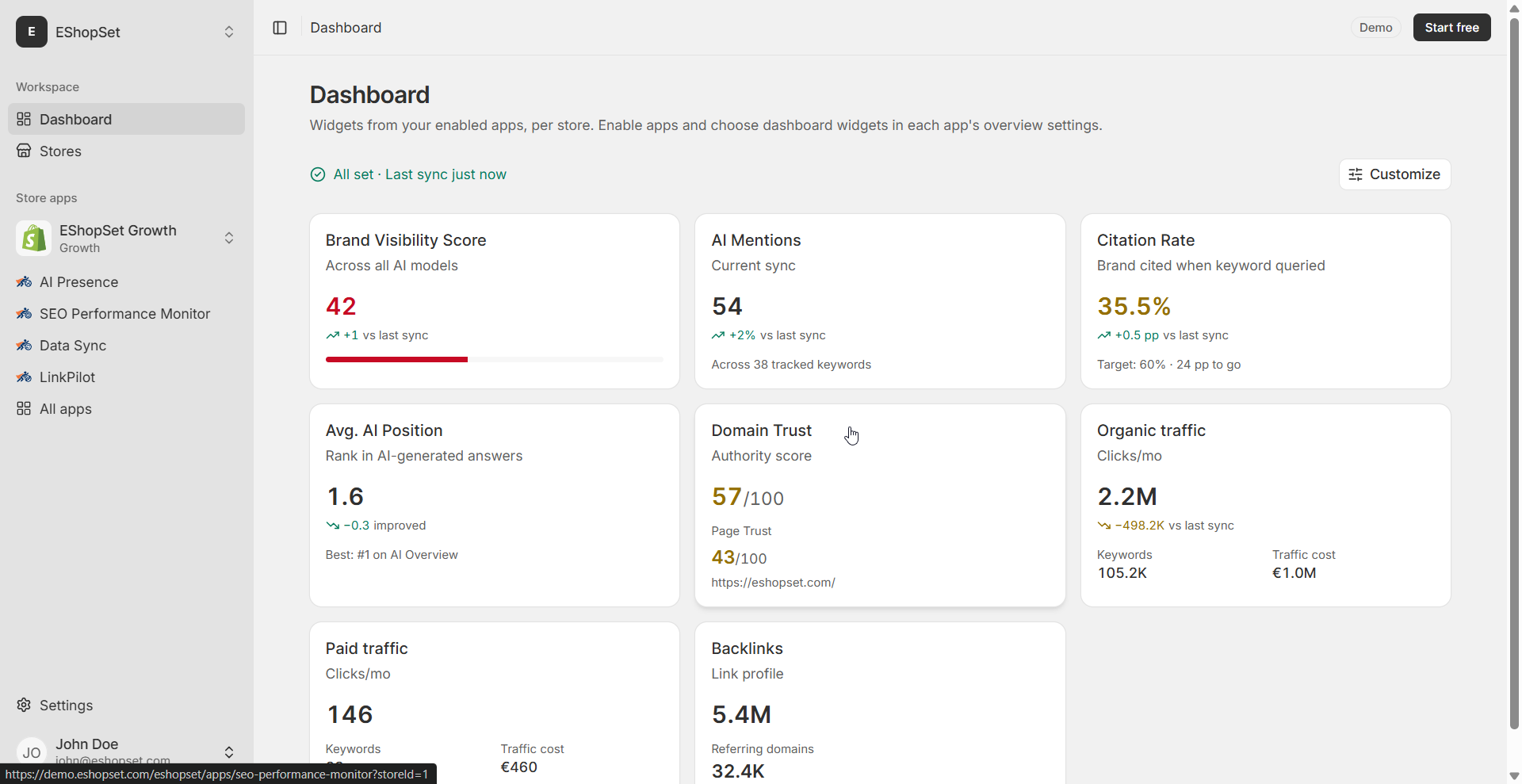
Aggressive filtering of traffic is becoming essential. Tools like EShopSet's SEO Performance Monitor can help you identify unusual traffic patterns and sources, allowing you to distinguish genuine customer interest from automated noise. By understanding where your traffic truly comes from, you can get a clearer picture of your actual conversion potential.
Beyond Bots: Other Factors Affecting Your Conversion Rate
While bots are a significant factor, other elements can also contribute to a misleading or genuinely declining CVR:
- Tracking Discrepancies: Different analytics platforms (Shopify, Google Analytics, Google Ads) can calculate metrics differently. Always compare raw daily orders and sessions across platforms to identify where the discrepancy lies. Don't make optimization decisions based on a single, potentially flawed, CVR number.
- Recent Changes: Have you installed a new app? Made a recent website design tweak? Updated your ad campaigns? Even minor changes can sometimes have unintended consequences on tracking or user experience.
- Product Data Accuracy: If your product listings have incorrect prices, outdated inventory counts, or missing information, real customers might abandon their carts. Ensuring your catalog is always accurate is paramount. EShopSet's Sheet2Cart app simplifies managing product data, allowing you to quickly update prices, inventory, and other details directly from a spreadsheet, ensuring your store always reflects the correct information.
- Competitive Landscape: Sometimes, a real drop in CVR can be due to external market forces. While not directly covered in the thread, understanding your market position relative to Shopify competitors by shared keywords can provide context for actual performance shifts. SEO Performance Monitor can offer insights into your organic visibility compared to rivals, helping you identify if a drop is due to increased competition rather than internal issues.
Actionable Steps for Shopify Merchants
Don't let a fluctuating conversion rate leave you guessing. Here’s how to take control:
- Audit Your Data Sources: Compare raw session and order numbers from Shopify's dashboard against any external analytics (e.g., Google Analytics). Understand how each platform defines "sessions" and "conversions."
- Perform a Full Checkout Test: Go through your entire purchase flow as a customer would. Test different payment methods, shipping options, and devices (especially mobile).
- Analyze Your Traffic Quality:
- Examine traffic sources and referrers for unusual spikes or unknown origins.
- Look for disproportionate traffic from non-target geographies.
- Investigate sessions with very short durations or single-page views that don't convert.
This is where EShopSet's tools become invaluable. Use SEO Performance Monitor to track organic traffic quality and identify suspicious patterns. For deeper behavioral analysis, consider AI Presence, which leverages advanced AI to help you understand user intent and distinguish genuine engagement from bot activity, allowing you to optimize for real customers.
- Maintain Impeccable Product Data: Ensure your product prices, inventory levels, and descriptions are always up-to-date and accurate. Sheet2Cart is designed precisely for this, streamlining bulk updates and preventing data discrepancies that can deter buyers.
- Monitor App Performance: Keep an eye on any recently installed or updated apps. Sometimes, an app can inject extra page views or interfere with tracking.
A sudden drop in your Shopify conversion rate can be alarming, but it's often a signal to dig deeper into your data. By systematically investigating reporting discrepancies, identifying bot traffic, and ensuring your operational data is flawless, you can accurately assess your store's performance. EShopSet's bundle of apps—SEO Performance Monitor, AI Presence, and Sheet2Cart—provides the essential tools to help Shopify merchants navigate these challenges, ensuring you're always optimizing for real conversions and sustained growth.