Cracking the Indexing Code: Why Your Shopify Store Isn't Showing Up on Google (Yet!)
Ever felt that nagging frustration when you’ve done “everything right” for your Shopify store’s SEO, but Google just isn’t showing your pages in search results? You’re not alone. I recently stumbled upon a community discussion where an original poster was tearing their hair out over zero indexed pages after two weeks, despite valid robots.txt, successful sitemap processing, and some crawl requests.
This scenario is incredibly common for Shopify merchants, especially when launching a new store, making significant updates, or even after a domain migration. Let's dig into the insights from that discussion and translate them into actionable steps for your Shopify operations.
Beyond the Basics: Why Your Pages Aren't Getting Indexed
The original poster had checked the fundamental boxes: robots.txt, sitemap, and even saw some crawl requests. But as one community member pointed out, getting crawled doesn't automatically mean getting indexed. Think of it this way: GoogleBot might visit your store, but it needs a reason to put your pages into its vast library.
1. The Critical Role of Discovery (Links!)
Several respondents highlighted a key factor often overlooked: discovery. While a sitemap tells Google what you want crawled, it doesn't guarantee discovery. Google needs to find your site through external links from other indexed pages. If your new Shopify store is an island, Google might not even know it exists.
- Action for Merchants: Secure a few high-quality backlinks from relevant sites. Think about industry blogs, directories, or even social media profiles that Google already knows.
2. The Domain Change Debacle: A Common Indexing Killer
Here’s where the discussion took a crucial turn. The original poster revealed a recent domain name change. Bingo! This is a massive red flag for indexing issues. A community expert chimed in, outlining a robust checklist for domain migrations:
- 301 Redirects: Ensure every old URL 301-redirects directly to its matching new URL. This tells Google, "Hey, this page moved permanently to a new address!"
- Self-Canonicalization: Your new pages should clearly state they are the preferred version of that content using canonical tags. A warning about canonical tags, as the original poster noted, is a serious issue.
- Updated Internal Links & Sitemap: All internal links and your sitemap must exclusively use the new domain.
- Google Search Console Verification & Change of Address: Verify both old and new domains in Google Search Console. If it was a full domain move, submit a Change of Address request.
Without these steps, Google gets confused. It might still be trying to index your old domain, or worse, see your new domain as duplicate content or a completely new, unlinked entity. This is where consistent data management becomes paramount. Manual Shopify CSV import for product updates might miss updating internal links or handling redirects for old product handles, whereas a robust data sync vs Shopify CSV import strategy, perhaps using an app like EShopSet's Sheet2Cart, can ensure your product URLs and associated redirects are handled systematically, minimizing indexing headaches.
3. Content Quality and Value: The Long Game
While the immediate problem was indexing, not ranking, several community members emphasized the importance of high-quality, unique content. In the "AI slop era," as one put it, Google is increasingly prioritizing truly helpful content. If your pages offer little unique value, even if crawled, they might not be deemed "index-worthy."
- Action for Merchants: Regularly audit your product descriptions, collection pages, and blog posts. Are they unique? Do they answer customer questions? EShopSet's AI Presence can be a powerful tool to help you craft compelling, unique descriptions and content that stands out and signals value to Google.
4. Monitoring & Maintenance: Your Ongoing SEO Health Check
The discussion also highlighted the need for continuous monitoring. A community member suggested using the URL Inspection tool in Google Search Console to check specific URLs for Google's selected canonical, crawl status, and any noindex or soft 404 signals. Low crawl frequency (16 requests in 90 days) is a sign that Google isn't prioritizing your site, reinforcing the need for more discovery links and high-quality content.
For Shopify merchants, this means:
- Regularly check Google Search Console: Pay attention to "Pages" reports (especially "Not indexed" reasons), "Crawl stats," and "Sitemaps."
- Manage Product Lifecycle: When you Shopify archive products from sheet or remove them manually, ensure their URLs are handled correctly. Redirect old product pages to relevant new ones, or implement 404s for truly gone products. Leaving dead links or low-value pages can negatively impact your overall site quality signals to Google. Sheet2Cart can assist in maintaining a clean product catalog, ensuring that when products are archived or updated, your website's structure and redirects remain optimized for search engines.
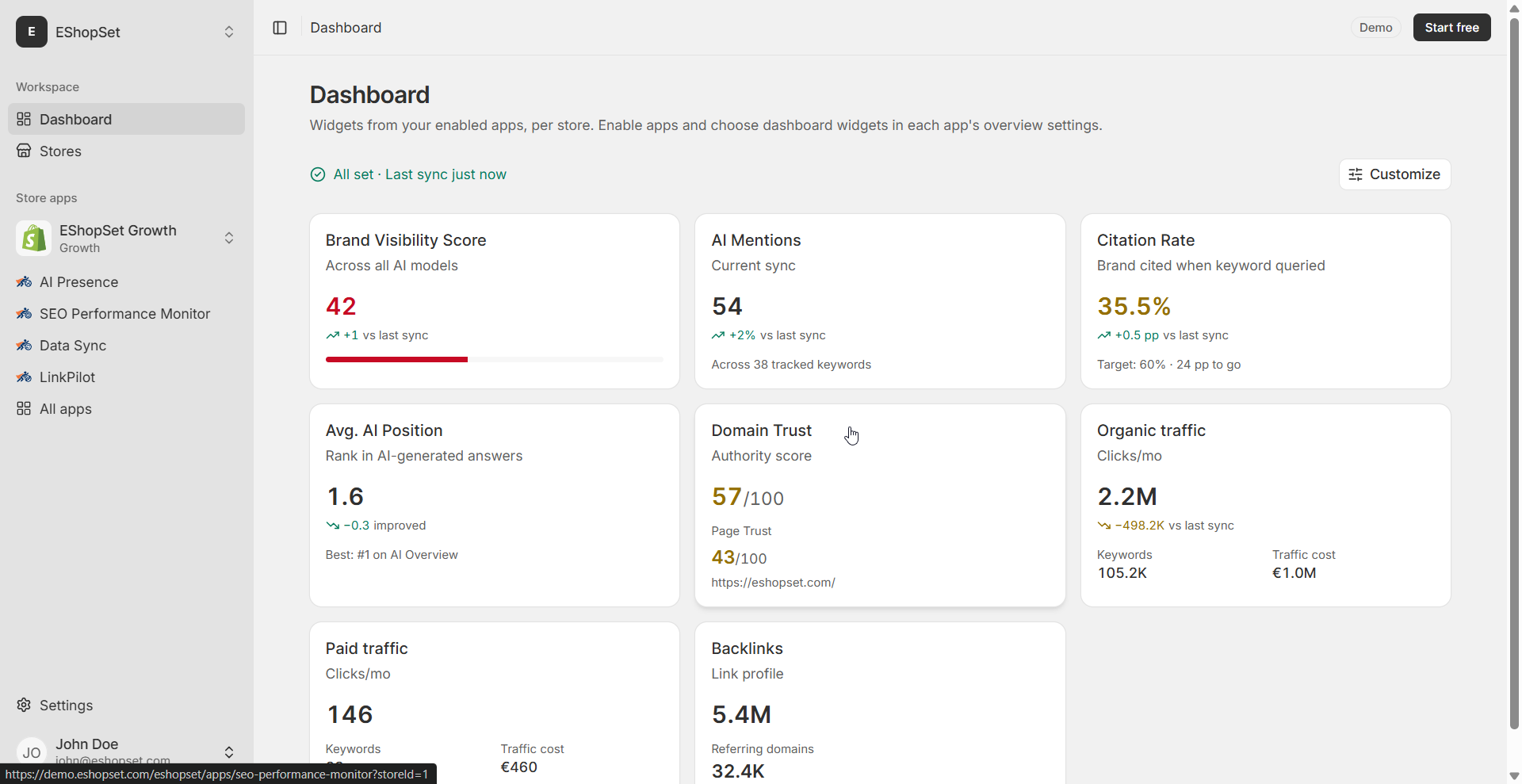
- Track Performance: Tools like EShopSet's SEO Performance Monitor can keep an eye on your indexing status, identify crawl errors, and alert you to issues like canonical tag warnings, giving you the real-time insights you need to react quickly.
EShopSet Team Comment
This discussion perfectly illustrates that foundational SEO isn't a one-time setup; it's ongoing maintenance, especially around critical events like domain changes or major catalog updates. We strongly agree that while technical prerequisites are essential, Google's indexing decisions are heavily influenced by a site's overall quality and discoverability. For Shopify merchants, proactive monitoring with SEO Performance Monitor, intelligent content creation with AI Presence, and streamlined, SEO-conscious catalog management via Sheet2Cart are indispensable for ensuring your store gets indexed and thrives in search results.
Getting your Shopify store indexed by Google might seem like a dark art sometimes, but as this community discussion shows, it often comes down to a few key areas: ensuring proper discovery through links, meticulously handling domain changes and canonical tags, and consistently offering valuable content. By paying attention to these details and leveraging the right tools, you can move from "0 indexed pages" to a thriving presence on Google.