Cracking the Code: Prioritizing Technical SEO Fixes for Your Shopify Store
Ever stared at an SEO audit report with hundreds, even thousands, of 'findings' and felt a wave of dread? You're not alone. It's a common scenario for Shopify merchants and store operators, where identifying technical SEO issues feels like the easy part, and deciding what to fix first feels like trying to herd cats. The original poster in a recent community discussion perfectly captured this dilemma, asking how veteran SEOs prioritize when they can't fix everything at once.
The RICE Model: A Strategic Approach to Prioritization
One brilliant approach that resonated deeply in the discussion was the RICE model: Reach, Impact, Confidence, and Effort. Imagine assigning a score from 1-10 to each of these for every identified issue. Here's how it breaks down for your Shopify store:
- Reach: How many URLs or pages are affected? For a Shopify store, this could be the percentage of your product pages or collection pages with a particular issue.
- Impact: How much potential organic traffic or revenue could this fix bring? A community member suggested hooking into Google Analytics to see the percentage of traffic affected by these URLs. For example, if fixing an issue on a few key product pages could significantly boost Shopify traffic by country SEO for your target markets, that's high impact.
- Confidence: How sure are you that this fix will actually work and deliver the expected results? This is where your expert judgment comes in.
- Effort: How much time, resources, and technical skill will it take to implement? A simple meta description update is low effort, while a complex site architecture overhaul is high effort.
By calculating (Reach * Impact * Confidence) / Effort, you get a priority score. This helps you isolate the top issues that give you the most bang for your buck.
Group for Efficiency and Focus on Business Impact
Beyond individual issue scoring, several experts highlighted the power of grouping. As one respondent put it, "fix one, fix 100 at a time." Many issues stem from a common root cause (e.g., a template error affecting all product pages). Addressing the root cause often resolves hundreds of 'findings' simultaneously.
This ties into a crucial mindset shift: an SEO audit isn't just a checklist of technical flaws. It's a tool to help your business. Another community member emphasized that our job is to "help the business – so do whatever puts the business in a better situation." This means prioritizing issues that directly impact revenue, improve user experience, or protect your store from potential penalties. If a technical issue is preventing your best-selling products from ranking, that's a business problem, not just a technical one.
A Tiered Approach to Technical SEO
Another practical framework shared was a tiered approach to technical SEO prioritization:
- Tier 0 (Foundation):
- Crawlability: Ensure search engines can actually find and read your pages (robots.txt, sitemap, noindex consistency). If Google can't crawl it, it can't rank it.
- Performance: Page speed is crucial for both user experience and rankings. Fast loading times (Time To First Byte, no blocking elements) are non-negotiable.
- Tier 1 (Core Health):
- Broken Links & Images: Fix these immediately. They hurt user experience and waste crawl budget.
- Page Taxonomy: Is your site structure logical and easy for both users and search engines to navigate?
- Thin/Doorway Pages: Identify and improve or remove low-value content.
- Tier 2 (Optimization & Refinement):
- Title Tags & Meta Descriptions: While some rules about length are outdated, compelling titles and descriptions still drive clicks.
- Schemas/Structured Data: Enhance your listings with rich snippets to stand out in search results.
- Redirect Chains: Clean up unnecessary redirects that slow down page loading and dilute 'link juice'.
- Tier 2+ (Advanced & Ongoing):
- Improving Markup: Continual refinement of titles, descriptions, and other on-page elements.
- EEAT (Experience, Expertise, Authoritativeness, Trustworthiness): Building your brand's credibility.
The consensus was clear: tackle the foundational issues first. There's a lot of '80/20 Pareto' at play here, where a small number of critical fixes can have a huge impact.
EShopSet Team Comment
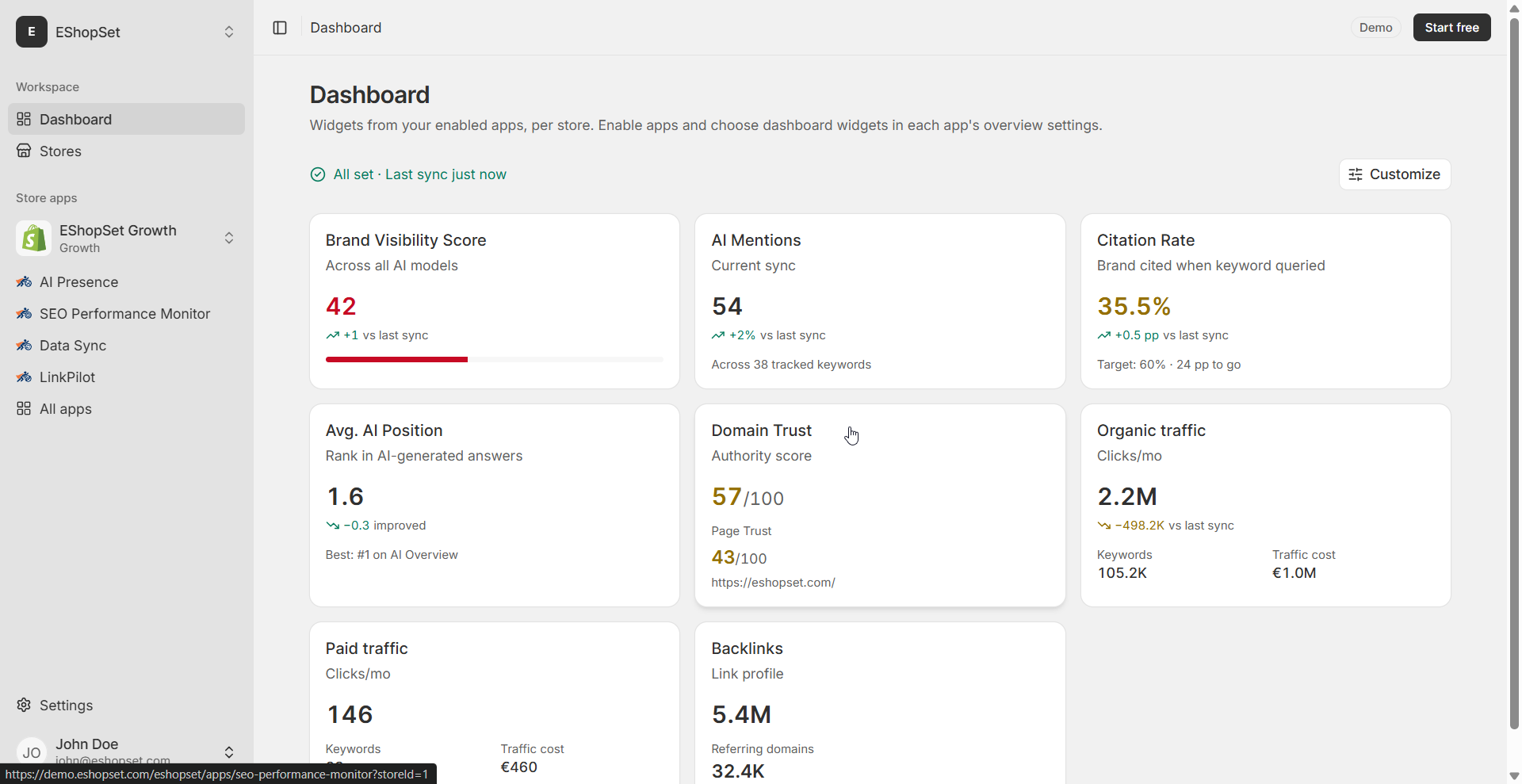
We wholeheartedly agree that overwhelming audit reports are counterproductive; a good audit should always come with clear priorities. For Shopify merchants, focusing on issues that directly impact your sales and visibility is paramount. Our SEO Performance Monitor app is designed to help you identify critical issues and track their impact, so you can make informed decisions about what to fix first. For bulk updates, like ensuring your product handles are SEO-friendly or fixing missing alt text across thousands of products, Sheet2Cart can be a lifesaver, especially when you need to Shopify match products by handle from Sheets for efficient data management.
Putting it into Action with EShopSet Apps
Implementing these fixes, especially for a large Shopify catalog, can seem daunting. This is where smart tools come in. If your audit reveals widespread issues like missing alt text or inconsistent product descriptions, manually fixing them one by one is a nightmare. Using a tool like Sheet2Cart allows you to export your product data to a spreadsheet, make bulk edits, and then re-import, ensuring you can quickly update thousands of products. This is particularly powerful when you need to Shopify match products by handle from Sheets to ensure accurate and efficient updates, whether you're optimizing product titles, descriptions, or even updating product handles for better keyword targeting.
For ongoing monitoring, our SEO Performance Monitor keeps a watchful eye on your store's SEO health, alerting you to new issues and helping you track the improvements from your efforts. It's like having a dedicated SEO expert constantly checking your store's pulse, giving you the data to refine your prioritization strategy. And for enhancing your brand's overall online presence and content quality, AI Presence can assist in crafting compelling descriptions and engaging copy, supporting your EEAT efforts once the technical groundwork is solid.
Ultimately, prioritizing technical SEO isn't about ticking off every single item on a giant list. It's about strategic action that drives real business results for your Shopify store. Focus on the foundational elements, group similar issues for maximum efficiency, and always keep the business impact at the forefront of your decisions. With the right mindset and the right tools, those hundreds of 'findings' can transform from an overwhelming challenge into a clear roadmap for growth.