Agency vs. App: Mastering Your Shopify Store's AI Visibility & SEO Rankings
Hey fellow Shopify merchants and store operators!
I recently stumbled upon a really interesting discussion in an online community that got me thinking, and I wanted to share some insights with all of you. The original poster kicked things off by asking a question that's probably on a lot of our minds: "Do we even still need to hire an agency for this AI visibility stuff?" They mentioned being quoted a hefty $3000 for an audit and $400 monthly for monitoring how their brand shows up across AI models like ChatGPT and Gemini, when there are already tools out there doing similar things for much less.
This conversation really hit home because it touches on a crucial point for small to medium-sized Shopify stores: how do we effectively manage our online presence, particularly as AI continues to reshape the digital landscape, without breaking the bank? Let's dive into what the community had to say and what we can learn.
The Great Agency vs. Tool Debate
The sentiment was pretty clear: a $3000 audit for merely monitoring your brand's AI mentions feels steep, especially for a two-person operation. Many community members echoed this, suggesting that if an agency is primarily delivering reports and screenshots, you might be better off with a dedicated tool. As one respondent wisely put it, "Paying $3k for a prettier dashboard and recommendations is hard to justify."
The core takeaway here is distinguishing between measurement and action. Tools are fantastic for measurement. They can track your mentions, show you where you appear (or don't), and highlight competitors. But the real value, according to several experts in the thread, comes from what happens after the audit. An agency truly earns its premium if it can translate those findings into concrete, actionable changes that improve your visibility and, ultimately, your sales.
What an Agency Should (and Shouldn't) Do
Several community members highlighted that an agency's role should extend far beyond just reporting. They should be identifying why you're missing from certain AI answers, pinpointing which pages or content influence those answers, and then actively making or recommending changes to your site and content. This includes things like:
- Fixing product data: Ensuring your product descriptions, specifications, and attributes are rich, detailed, and structured in a way that AI models can easily quote. Brochure copy simply won't cut it.
- Improving source coverage: Making sure your brand appears on high-quality external sites, roundups, and forums, as these are often sources for AI-generated answers.
- Creating missing comparison content: Filling content gaps that address common customer questions and comparisons.
- Connecting visibility to conversion: Measuring not just mentions, but how those mentions translate into qualified traffic, shopper behavior, and actual purchases. As one expert noted, "visibility → qualified traffic → shopper behavior → conversion" is the journey an agency should help you navigate.
If an agency isn't offering this level of strategic implementation, many agreed that the ongoing $400/month retainer just to "watch a number" is "backwards" – you should invest in changing things first, then measure the impact.
Your Shopify Store: Taking Control of AI Presence and SEO Rankings
For small Shopify stores, the consensus leaned towards starting with self-service tools. One excellent suggestion was to start by manually testing 20-30 questions your customers might ask AI before buying. See where you appear, who your competitors are, and why. This DIY audit can give you a baseline and highlight immediate gaps.
The discussion also reinforced the enduring importance of solid SEO fundamentals. Improving your Shopify product SEO rankings and overall site authority is still paramount, as AI models draw heavily from well-optimized, authoritative sources. This means focusing on your content strategy, ensuring your product pages are comprehensive, and maintaining a robust online presence.
Effective management of your product catalog is also critical. If your product data is inconsistent or incomplete, it will hinder both traditional SEO and your AI visibility. A streamlined Shopify Google Sheets catalog workflow, for instance, can ensure your product information is always up-to-date and rich with the details AI models crave.
Practical Takeaways for Merchants:
- Start with Tools: Before committing to a costly agency, explore inexpensive monitoring tools or even conduct a manual audit yourself. Understand your current AI presence.
- Demand Action, Not Just Reports: If you do engage an agency, ensure their deliverables include concrete implementation plans and measurable changes to your site and content, not just reports.
- Optimize Your Shopify Content: Focus on creating detailed, quotable content on your product and collection pages. Think about specific materials, dimensions, compatibility, and use cases.
- Enhance Product Data: Ensure your product data is accurate, complete, and consistently updated. This is foundational for both AI visibility and traditional SEO.
EShopSet Team Comment
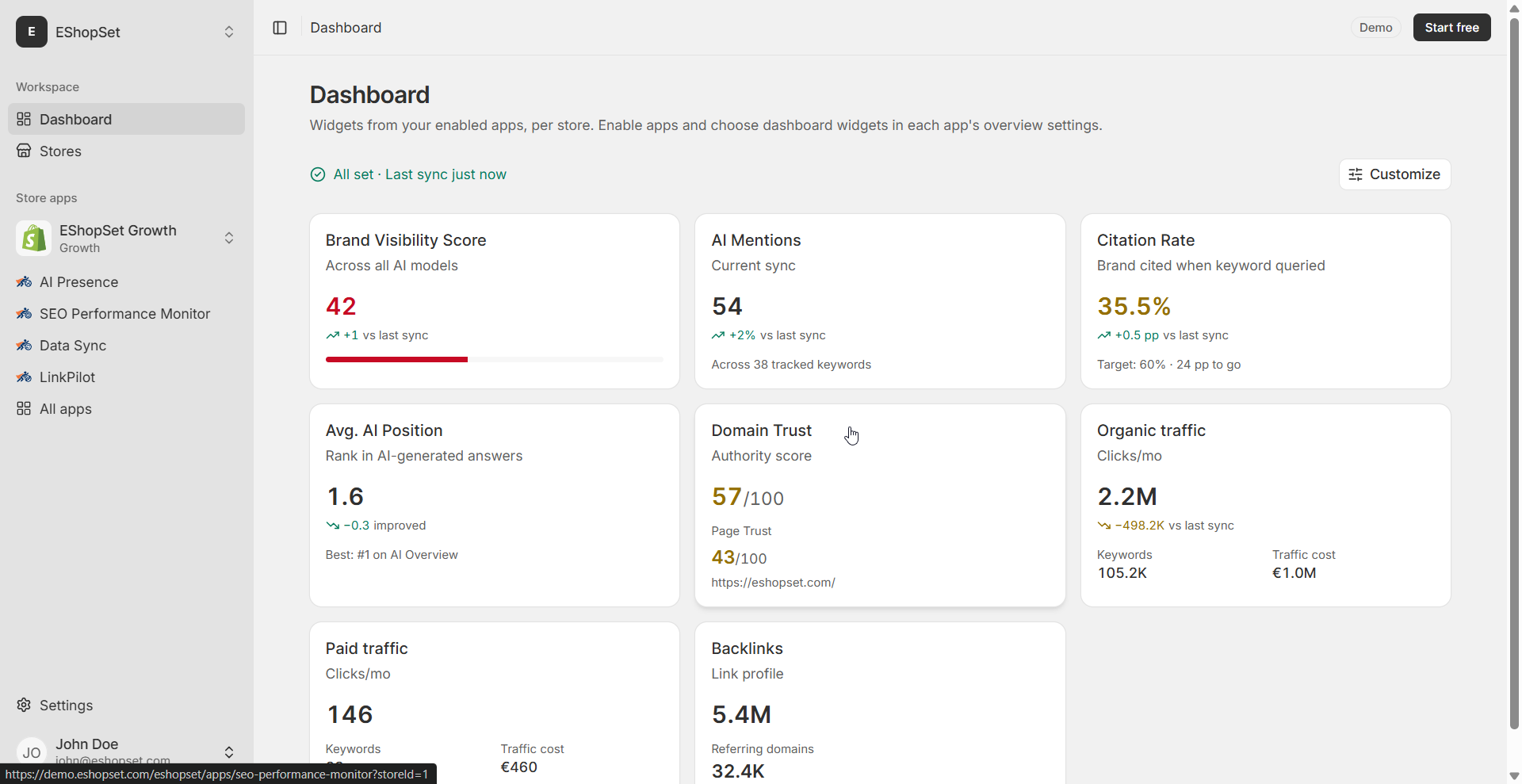
This discussion perfectly illustrates the evolving landscape of ecommerce operations. We strongly agree with the community: for most Shopify merchants, investing in smart tools first empowers you to take control. Our AI Presence app is built exactly for this—giving you direct insight into your brand's AI citations and helping you understand where you stand, without the prohibitive agency costs. Coupled with SEO Performance Monitor for broader Shopify product SEO rankings and Sheet2Cart for efficient product data management, you have a powerful bundle to drive visibility and conversions directly from your Shopify store.
The bottom line is, you have more power than ever to influence how your brand appears across search and AI. By leveraging the right tools and focusing on high-quality, structured content and product data, you can significantly boost your visibility and stay ahead in the competitive ecommerce space. Don't just measure; empower yourself to act!