Navigating Post-Migration SEO Dips: A Shopify Merchant's Guide to Recovery and Growth
Hey there, fellow Shopify merchants and store operators! Ever felt like your SEO performance took an unexpected nosedive despite your best efforts? You're not alone. We recently saw a fascinating community discussion highlighting the complexities of technical SEO, especially after a major site migration.
The original poster shared a tough situation: their Italian e-commerce site, migrated from a subdomain (e.g., it.yourdomain.com) to a subfolder (e.g., yourdomain.com/it), saw its Googlebot crawl budget plummet by a staggering 78%. SERP rankings dropped significantly, averaging page 7.5 for key terms. The kicker? A long-standing partner had 24,000 backlinks pointing to the old subdomain URLs. The poster suspected these 'wrong' links were causing massive crawl delays and budget waste.
The Migration Maze: Subdomains vs. Subfolders
It's tempting to blame a huge number of broken backlinks. However, as one community member wisely pointed out, 24,000 links from a single domain are rarely the sole issue. Their advice? First, verify redirects, internal linking, crawl logs, and indexation status. This is a vital first step for any Shopify store owner facing similar issues – always check your own house first!
Another respondent emphasized the bigger picture: Google treats subdomains as independent entities, while a subfolder is part of the main domain. This fundamental shift necessitates a complete migration check, going far beyond just backlinks. The original poster confirmed they'd followed best practices for their 1:1 transfer, yet the site had "essentially tanked." They acknowledged a content gap but prioritized the significant crawl budget waste.
When migrating, even with 301 redirects in place, search engines need time to discover and re-evaluate the new structure. A sudden drop in crawl budget often signals that Googlebot is struggling to process the changes efficiently. This is where continuous monitoring becomes critical.
Beyond Backlinks: Your Foundational SEO Checklist
While external backlinks are important, a solid internal foundation is paramount. After a migration, you must rigorously check:
- Redirects: Are all old URLs 301 redirecting to their new counterparts? Are there any redirect chains exceeding 3 links?
- Internal Linking: Have all internal links been updated to point to the new subfolder structure? Broken internal links can severely impact crawlability and user experience.
- Crawl Logs and Indexation: What is Googlebot actually crawling? Are your important pages being indexed? Are there any unexpected 404s or 500s?
- Sitemaps: Is your sitemap updated and submitted to Google Search Console, reflecting the new URL structure?
- Robots.txt: Is your robots.txt file correctly configured, allowing search engines to crawl all necessary pages while blocking irrelevant ones?
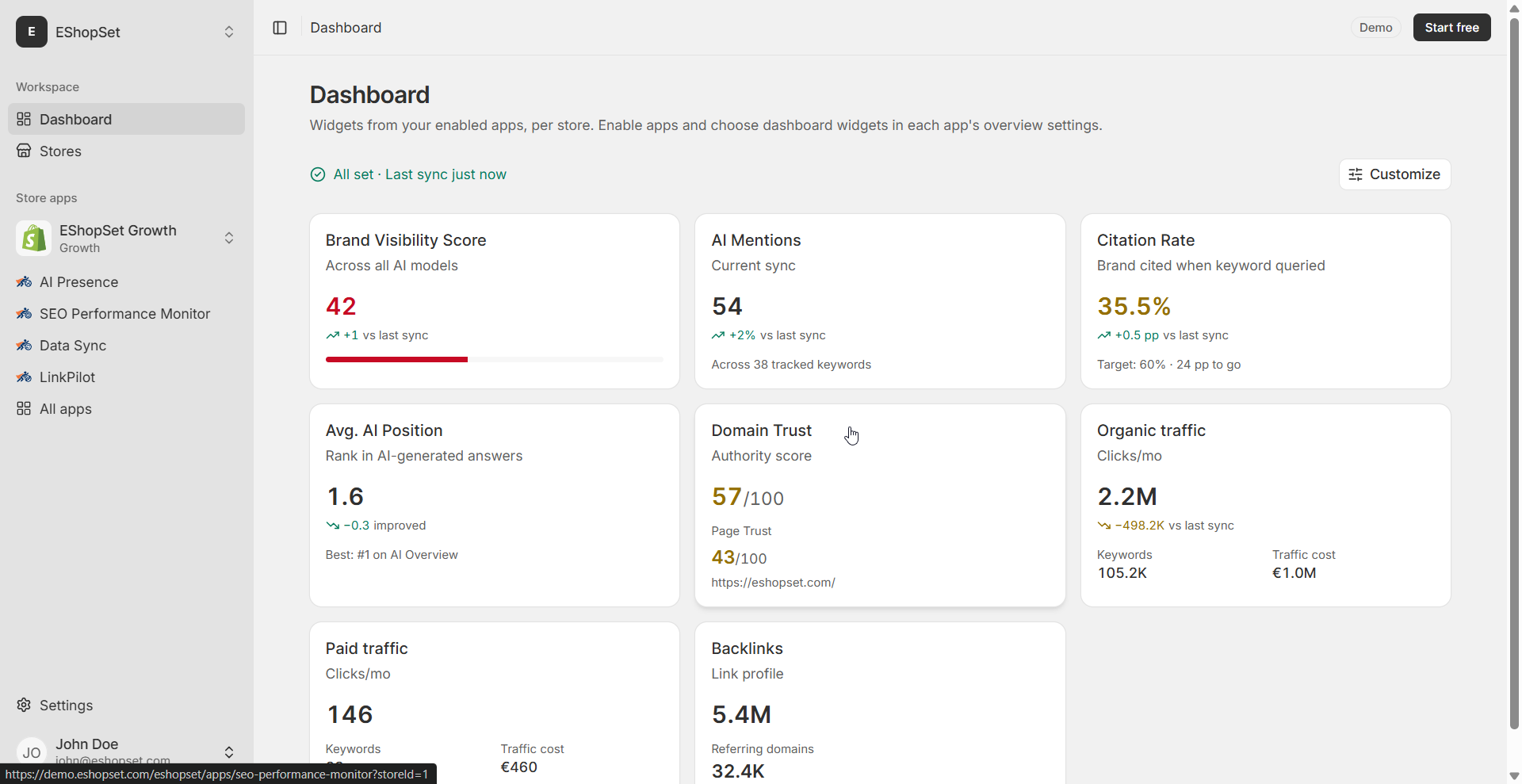
For Shopify merchants, keeping a close eye on these technical elements can feel overwhelming. That's why tools like EShopSet's SEO Performance Monitor are invaluable. It provides a clear overview of your store's SEO health, helping you identify issues like crawl anomalies, indexation problems, and redirect errors before they severely impact your rankings. It's also crucial for understanding your Shopify traffic by country SEO, allowing you to pinpoint if specific regional versions of your store are underperforming, as was the case in the community discussion.
The Performance Puzzle: Core Web Vitals and Mobile Speed
When initial checks don't reveal the cause, dig deeper. A community member suggested looking at Google core updates and, crucially, Core Web Vitals. Bad website performance impacts SEO. The original poster admitted their mobile site was a bit slow, a common issue for many e-commerce stores.
Google prioritizes user experience, and slow loading times – especially on mobile – can significantly hurt your rankings and conversion rates. Core Web Vitals (Largest Contentful Paint, First Input Delay, Cumulative Layout Shift) are direct indicators of this experience. Even if your other regional sites are performing well, a single underperforming region can drag down overall efforts.
Monitoring and improving your Core Web Vitals is an ongoing task. SEO Performance Monitor can help you track these metrics over time, giving you actionable insights to pass to your development team for optimization.
Illustration:

Bridging Content Gaps with AI Presence
The original poster also mentioned a "content gap" they were addressing. After a migration, it's possible that some content didn't transfer perfectly, or perhaps the new subfolder structure requires a fresh approach to content strategy. Moreover, for international sites, ensuring localized, high-quality content is paramount.
This is where EShopSet's AI Presence app can be a game-changer. It helps Shopify merchants generate compelling product descriptions, blog posts, and other marketing copy tailored to specific audiences and SEO needs. If your Italian site is struggling across the board, as indicated in the thread, AI Presence can help you quickly fill content gaps with optimized text, ensuring your product pages and category descriptions are rich, relevant, and engaging for your target market.
Streamlining Your Catalog: The Power of Data Sync
Managing product data across thousands of SKUs, especially after a site migration or for a multi-regional store, can be a monumental task. Ensuring every product detail, price, and image is accurate and consistent is crucial for both SEO and customer trust. The manual process of updating product information can be prone to errors and consume valuable time.
Consider the efficiency of EShopSet's Sheet2Cart. This app allows you to easily manage and update your Shopify product catalog directly from a spreadsheet. This provides a clear advantage in Data Sync vs Shopify CSV import. While Shopify CSV import is a viable option for one-off bulk uploads, Sheet2Cart offers a more robust, continuous data synchronization solution. You can maintain a master spreadsheet, make changes, and then sync them directly to your Shopify store, ensuring accuracy and saving countless hours. This is particularly beneficial for large catalogs or stores with frequent inventory and pricing updates, preventing data inconsistencies that could indirectly impact SEO by creating poor user experiences or outdated product information.
Illustration:

Your Proactive SEO and Operations Strategy
The community thread serves as a powerful reminder that technical SEO is a dynamic and complex field, especially for e-commerce stores. A site migration, even when following best practices, can uncover unexpected challenges. Proactive monitoring and a holistic approach are key to recovery and sustained growth.
By leveraging a comprehensive suite of tools like SEO Performance Monitor, AI Presence, and Sheet2Cart from EShopSet, Shopify merchants can not only diagnose and fix post-migration issues but also build a resilient foundation for daily operations, content strategy, and long-term SEO success. Don't let technical hurdles derail your e-commerce journey – empower your store with the right tools.
Ready to optimize your Shopify store's SEO and streamline your daily operations? Explore the EShopSet app bundle today at eshopset.com/apps/.