Beyond Gross: Unlocking True Profitability with White Label Products on Shopify
Hey there, fellow Shopify merchants and store operators! Let's talk about something that's always on our minds: margins. Specifically, how to ensure you're actually making money when you're diving into the exciting world of white label products. I recently saw a fantastic discussion in an online community that really hit home for anyone looking to launch or scale their own branded goods.
The original poster in this discussion was gearing up to launch a line of white label sports glasses. They had found a manufacturer and were looking at what seemed like a healthy 70-80% gross margin on the product cost, including shipping. Sounds good, right? Well, that's where the community stepped in with some invaluable wisdom, reminding us that the journey from a manufacturer's quote to a profitable sale is paved with many hidden costs.
Beyond the Basic Product Cost: Unpacking Your True Margins
One of the first and most crucial points raised by several community members was to look beyond just the manufacturing and shipping costs. A 70-80% margin on just the product cost might feel great on paper, but it's rarely the full picture. As one respondent wisely put it, you need to calculate your 'true landed cost' and then some. What does that include?
- Import Duties and VAT: Especially important if you're in Europe, like the original poster. These can add a significant chunk to your costs.
- Packaging: Custom packaging, labels, inserts – it all adds up to create that branded experience.
- Payment Processing Fees: Every transaction comes with a fee, chipping away at your revenue.
- Returns and Replacements: Factor in the cost of handling faulty products, customer returns, and the associated shipping.
- Warehousing and Fulfillment: Even if you're self-fulfilling, there's a cost for storage, inventory management, and your time.
Ignoring these elements can quickly turn a seemingly profitable product into a financial drain. It's about understanding your contribution margin – what's left after fulfilling and acquiring one customer – that truly determines scalability.
The Elephant in the Room: Customer Acquisition Costs (CAC)
Another critical factor highlighted in the discussion, and often underestimated, is Customer Acquisition Cost (CAC). A community member suggested a rule of thumb: aim for a selling price at least 5x the landed product cost to leave sufficient room for CAC. This is because, for many new brands, marketing and advertising will be your largest spend, often dwarfing the product cost itself.
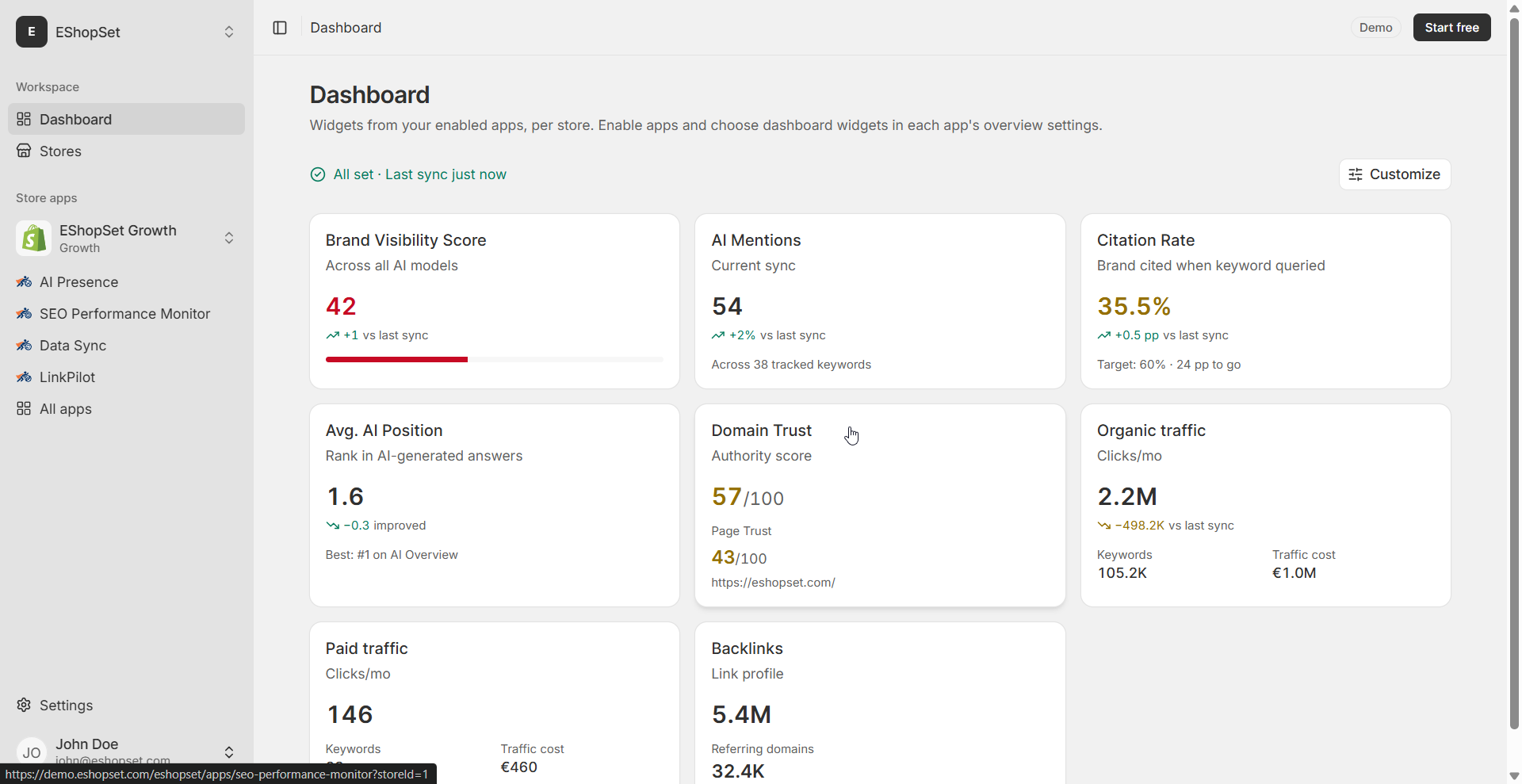
This is where strategic operational tools become invaluable. For Shopify merchants, optimizing your online presence can significantly reduce your reliance on expensive paid advertising. EShopSet's SEO Performance Monitor, one of our powerful embedded Shopify Admin apps, helps you track your organic search performance, identify competitive gaps, and improve your visibility. By ranking higher in search results, you attract more qualified traffic naturally, lowering your CAC over time and directly boosting your white label profit margins.
Strategic Pricing and Competitive Intelligence
The community thread also emphasized the importance of competitive research. Before settling on a price, merchants should thoroughly investigate what similar products are selling for on platforms like Google Shopping, Amazon, and other Shopify stores in their target markets. The original poster, for instance, found competitors selling between €40 and €66, while their product cost was €6-8, aiming for a €40-53 selling price. While this gross margin looked healthy, the advice was clear: calculate backward from a realistic selling price, rather than simply adding a percentage to your supplier cost.
Understanding your competitive landscape isn't just about pricing; it's about identifying opportunities for differentiation. The SEO Performance Monitor can also provide insights into competitor strategies, helping you position your white label product effectively.
Operational Efficiency: The Unsung Hero of Margins
Managing a growing product catalog, especially with white label goods that might have frequent updates to pricing, inventory, or descriptions, can be a time sink. Manual data entry is prone to errors and can quickly erode your operational efficiency, indirectly impacting your margins. This is where tools like EShopSet's Sheet2Cart become indispensable.
With Sheet2Cart, you can achieve a seamless daily Google Sheets Shopify sync, allowing you to manage product data, inventory, and pricing directly from Google Sheets. This automation minimizes errors, saves countless hours, and ensures your store always reflects the most accurate information. Streamlined operations mean lower labor costs and fewer costly mistakes, directly contributing to healthier net margins.
Beyond Price: Differentiating Your White Label Product
Finally, several community members stressed that competing purely on price is a race to the bottom. For white label products, differentiation is key. How can you justify a higher price point than your competitors? Consider:
- Premium Branding: High-quality packaging, compelling brand story, and a consistent aesthetic.
- Sustainability/Certifications: Highlighting eco-friendly materials or ethical manufacturing processes.
- Origin Story: If applicable, 'Made in Europe' or 'Designed in [Your Country]' can add perceived value.
- Unique Features or Quality: Even with white label, you can often choose higher-quality components or add unique design elements.
EShopSet's AI Presence app can be a game-changer here. It helps you craft compelling, SEO-friendly product descriptions, engaging marketing copy, and a consistent brand voice that resonates with your target audience. By effectively communicating your product's value and unique selling propositions, you can justify premium pricing and cultivate a loyal customer base.
Conclusion: A Holistic Approach to Profitability
The journey to profitability with white label products on Shopify is complex, extending far beyond the initial manufacturing cost. It requires a holistic view of all expenses, from landed costs and operational overhead to the critical investment in customer acquisition. By meticulously calculating your true margins, strategically pricing your products, differentiating your brand, and leveraging powerful Shopify apps like SEO Performance Monitor, AI Presence, and Sheet2Cart, you can transform a seemingly good gross margin into robust, scalable net profits. Don't just sell; sell smart.